
BYD Tang 2024: A Refined Giant for Family Travel
 Jean-Pierre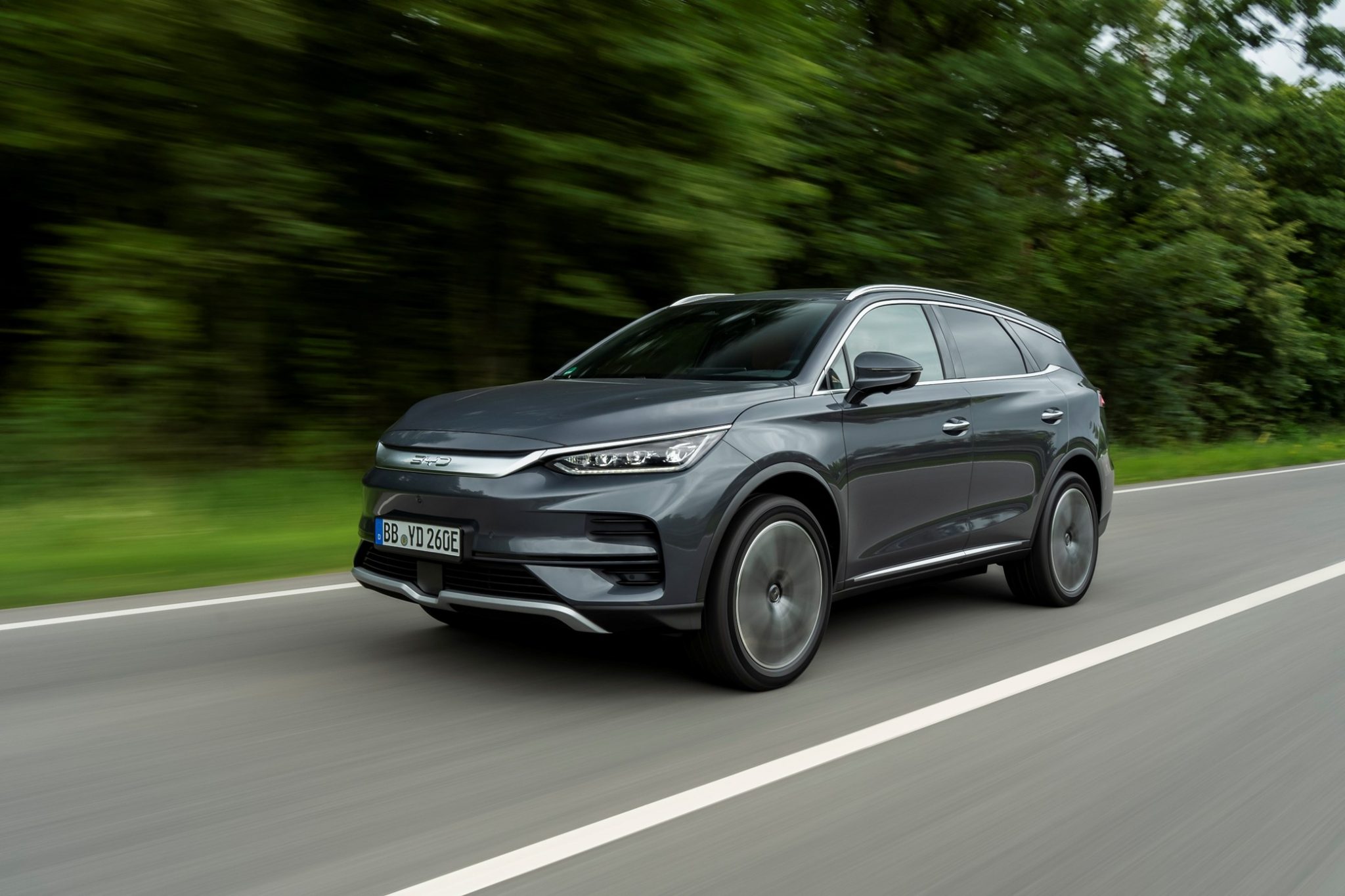
Few years ago, hardly anyone in Belgium had heard of BYD. But the Chinese electric giant has wasted no time making its mark. With models like the Dolphin, Atto 3, and Seal, the brand has positioned itself as a serious player. Now, it’s the Tang’s turn to shine — a fully electric, seven-seater SUV that’s just had a major refresh. We had the chance to test it, and here’s what we took away.
Bold Dimensions, Assertive Design
From the moment you see it, the BYD Tang makes a strong impression. Nearly five meters long (4.97 m to be precise), it’s muscular yet more elegant than before. The redesigned front — dubbed the “Dragon Face” — finally gives the Tang real presence. Sharp LED headlights, taut body lines, the disappearance of the old grille and the arrival of a sleek BYD panel: it’s a welcome transformation. With wheels up to 21 inches and satin-finish details, the Tang now carries a premium edge we hadn’t seen before.
In practical terms, it lands squarely in the family SUV segment with real versatility: seven seats are available, though the third row is best suited to kids or short trips. Boot space ranges from 235 to 1,655 litres depending on seat configuration. In short: this is a big car, and it’s proud of it.


A Cabin Designed for Comfort
Inside, the updated Tang takes a real step forward. Materials feel more upscale: quilted Nappa leather, suede-style dashboard trim, and subtle lighting details create a warm, almost lounge-like atmosphere. The ambient lighting system features 31 colors, and the panoramic glass roof floods the cabin with natural light.

The standout feature is the infotainment: a 15.6-inch rotating touchscreen (which can switch between portrait and landscape modes), paired with a 12.3-inch digital instrument cluster. Sound is handled by a 12-speaker Dynaudio system that delivers a rich audio experience. For added convenience, BYD’s app lets you control climate settings, lock the doors, or roll the windows remotely.

Power and Range to Match the Size
Powering the Tang are two electric motors that deliver a combined 517 horsepower and 700 Nm of torque, with all-wheel drive. It accelerates from 0 to 100 km/h in just 4.9 seconds — impressive for a vehicle that weighs 2,630 kg.
The real technical leap lies in its battery: a new 108.8 kWh Blade LFP battery, free from cobalt and nickel, offering enhanced safety and thermal management. Official WLTP range is 530 km, and in real-world conditions we managed around 450 km. DC fast charging tops out at 170 kW, while AC charging is possible at up to 11 kW. The car is also equipped with a V2L (vehicle-to-load) function, allowing you to power external devices directly from the battery.
Driving Experience: Smooth But Not Sporty
On the road, the Tang prioritizes comfort over sportiness — and that’s just fine. The adaptive suspension absorbs road imperfections with ease, and the cabin remains impressively quiet. The seats are supportive, and the driving position is relaxed.
However, it’s not without flaws. The steering lacks precision, especially at higher speeds, and some of the driver assistance systems are a bit overzealous. Overall, though, the Tang offers a smooth, comfortable ride. We averaged around 25 kWh/100 km during our test, a reasonable figure for such a large vehicle.
Verdict: A Confident Outsider Worth Noticing
The 2024 facelift marks a turning point for the BYD Tang. With a more polished design, a significantly improved cabin, and real road presence, it’s now a serious contender in the large electric SUV segment. Yes, there are still areas to improve — notably the steering and slightly clunky driver alerts — but the Tang surprises with its maturity and overall quality.
The pros:
- Refined and distinctive design
- Spacious, well-finished interior
- Generous standard equipment
- Solid range and fast charging
- Excellent ride comfort
The cons:
- Vague steering feedback
- Third row not easily accessible
- Heavy curb weight