Test drive – Mazda MX-5 1.5 Skyactiv-G : Last turn for this sports car?
 Jean-Pierre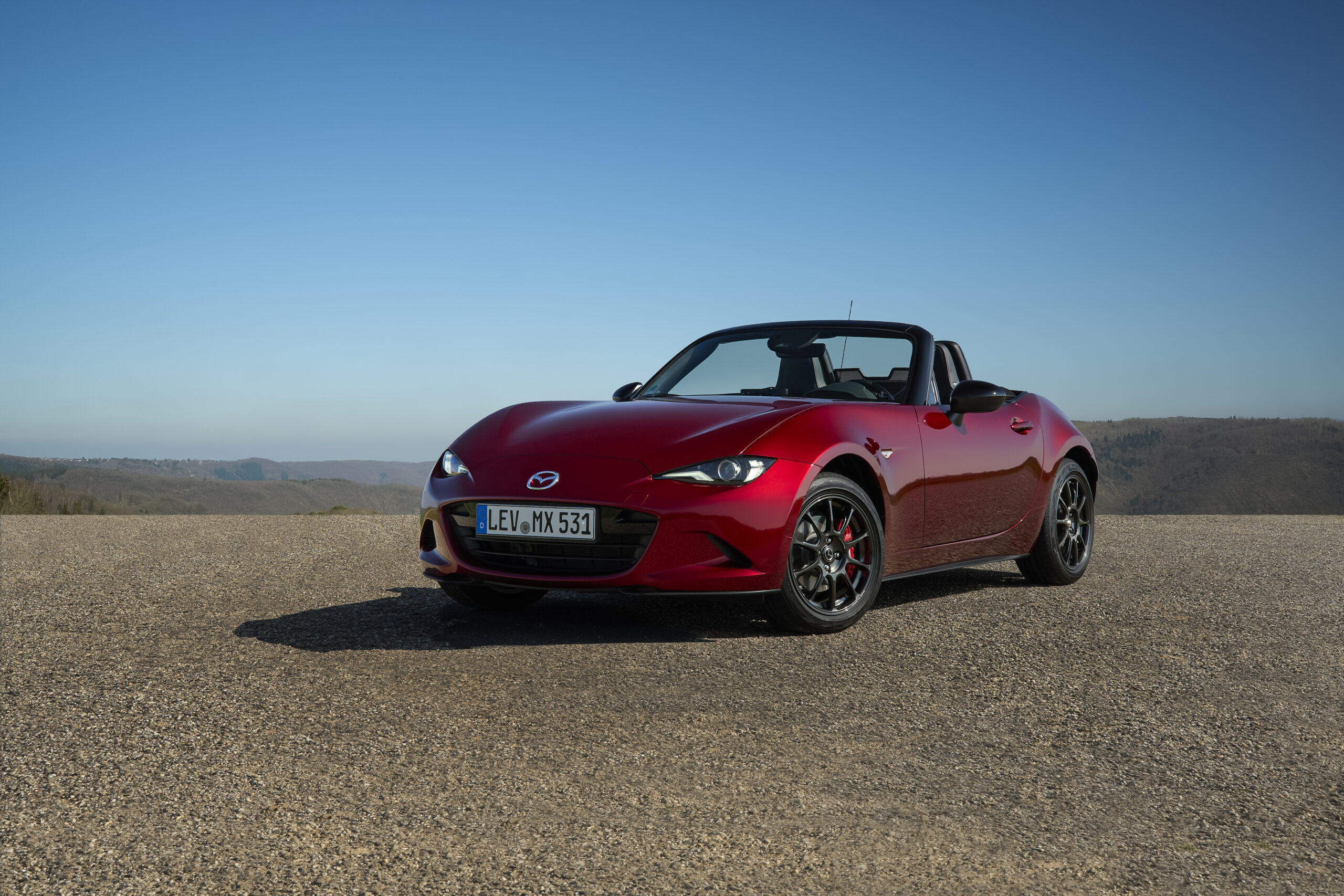
At 35 years old, the Mazda MX-5 continues to defend a now rare idea: a sports car does not need huge power figures to be appealing. For 2025, the update is light, almost cautious. The goal is clear; preserve the formula rather than reinvent it.
Dimensions and exterior design
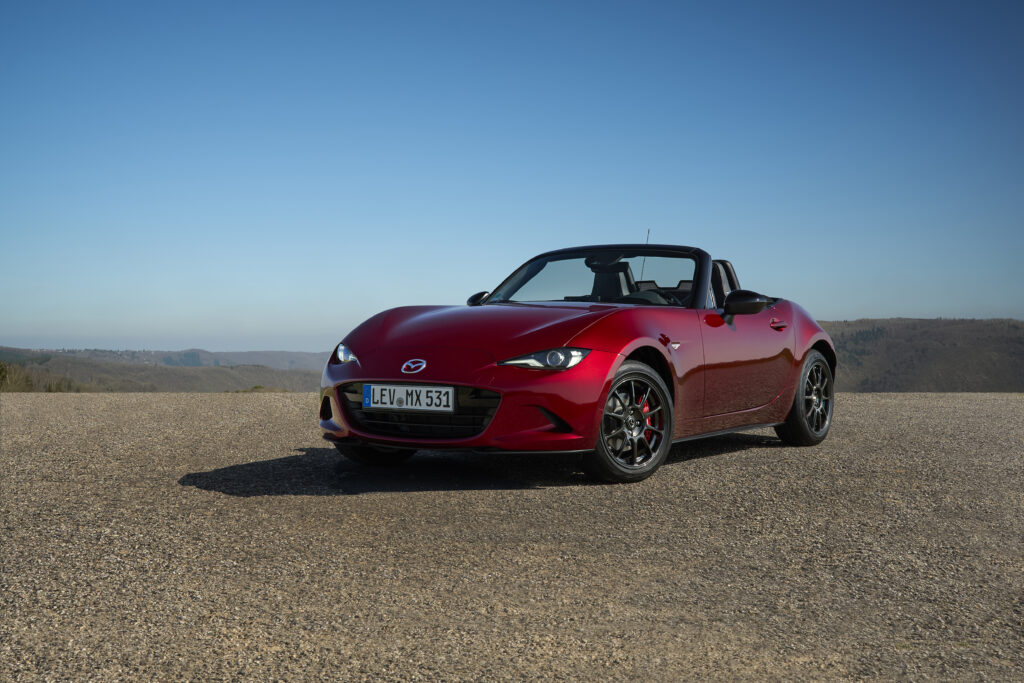
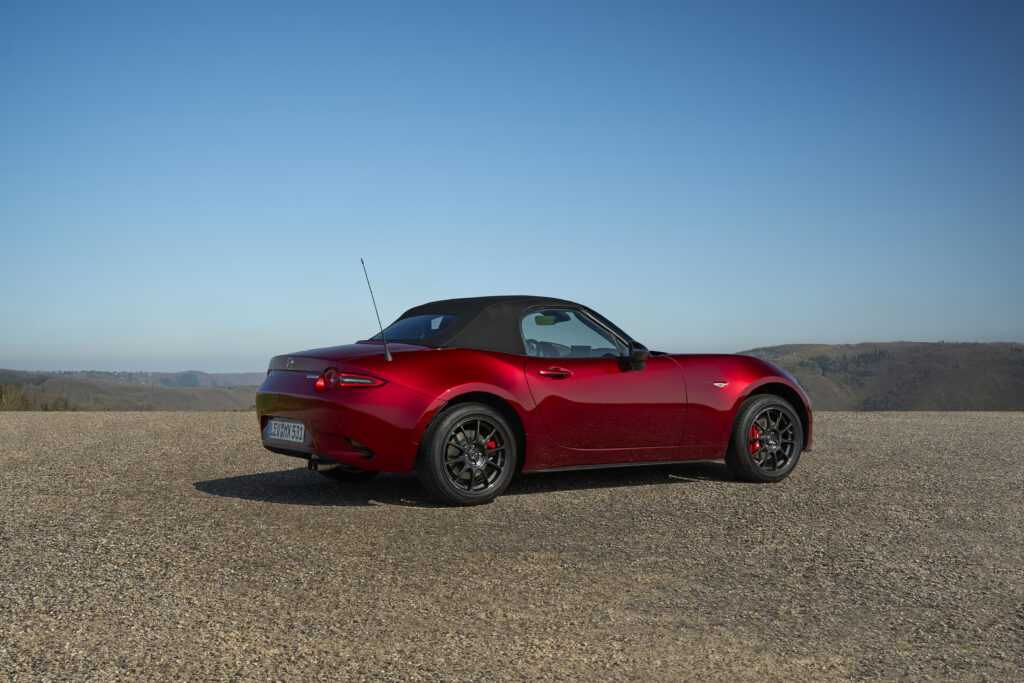
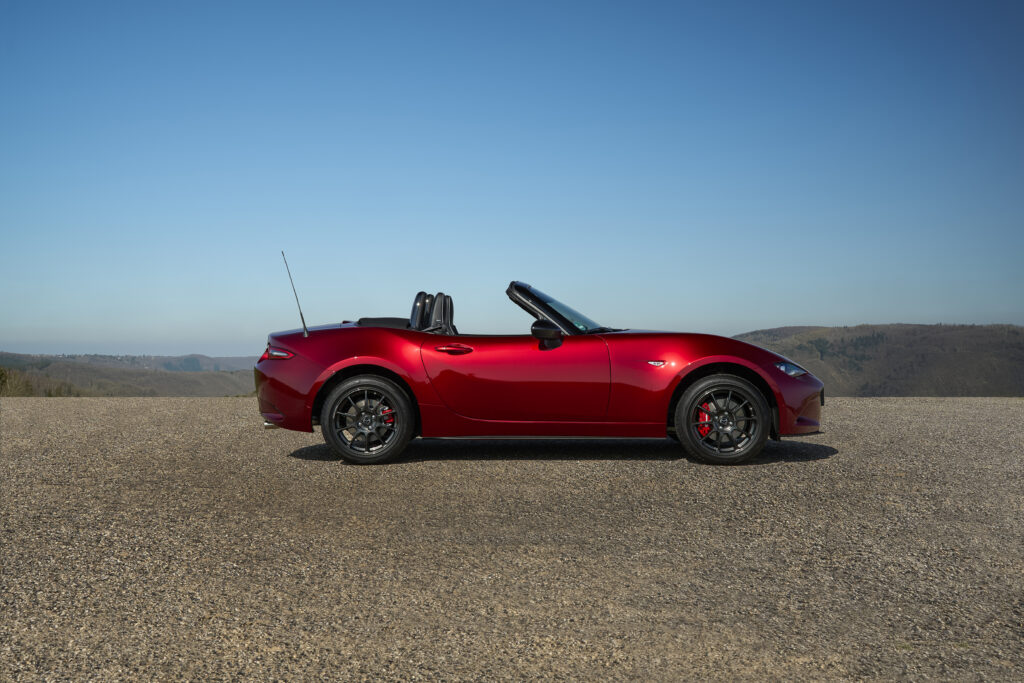
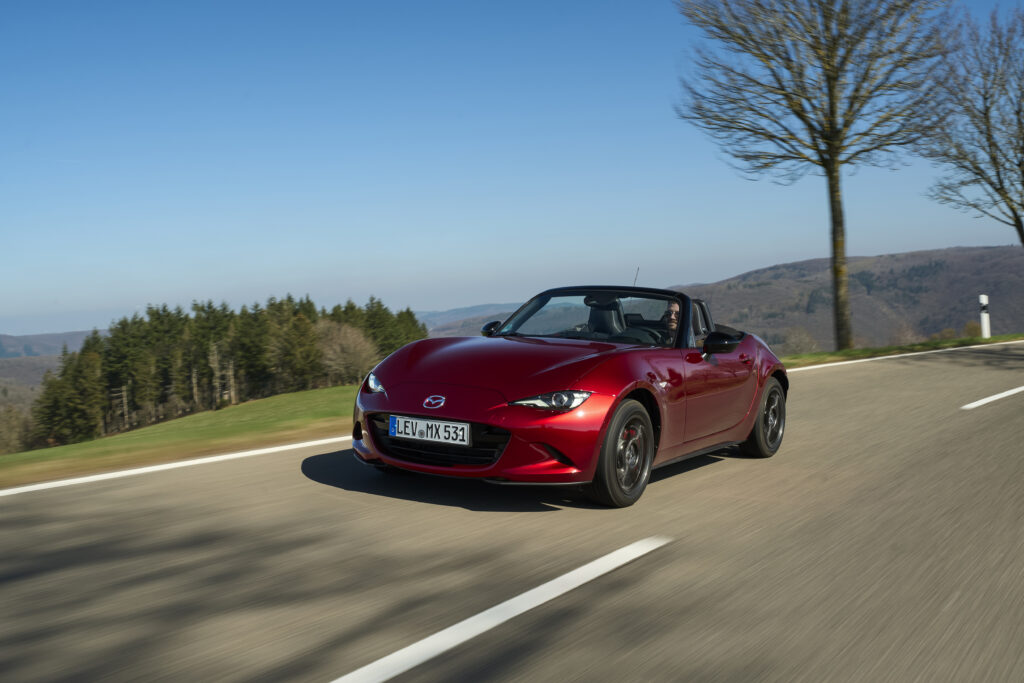
The MX-5 remains a compact, low and slim roadster, with a fabric soft top that perfectly matches its spirit. Its design evolves very little, to the point where it may seem almost unchanged. This is deliberate; there is no attempt to chase a “new model” effect at all costs.
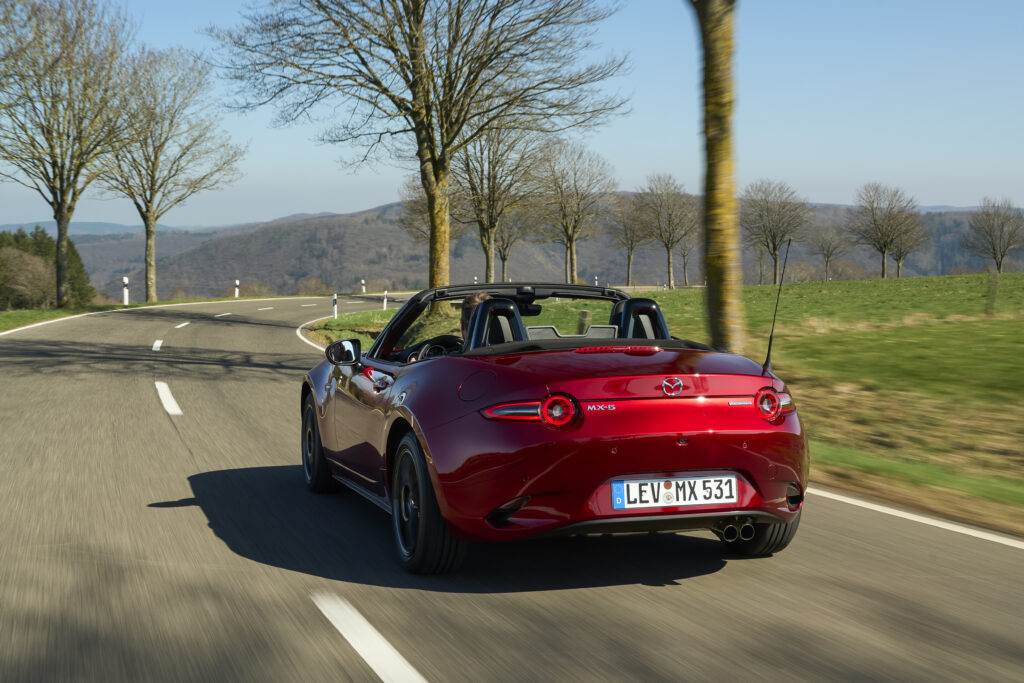
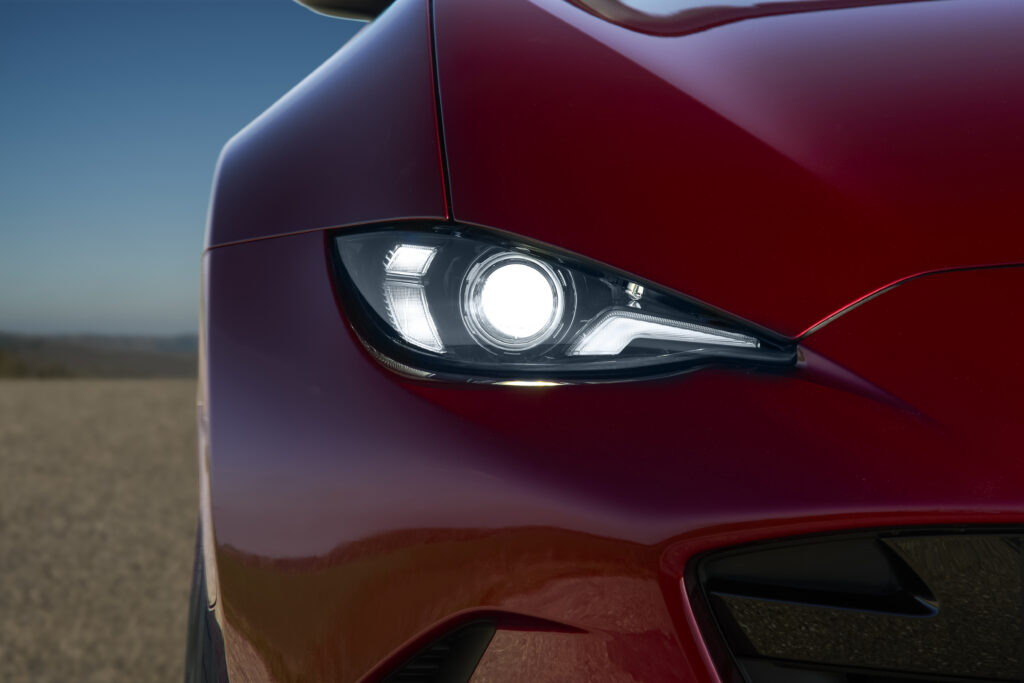
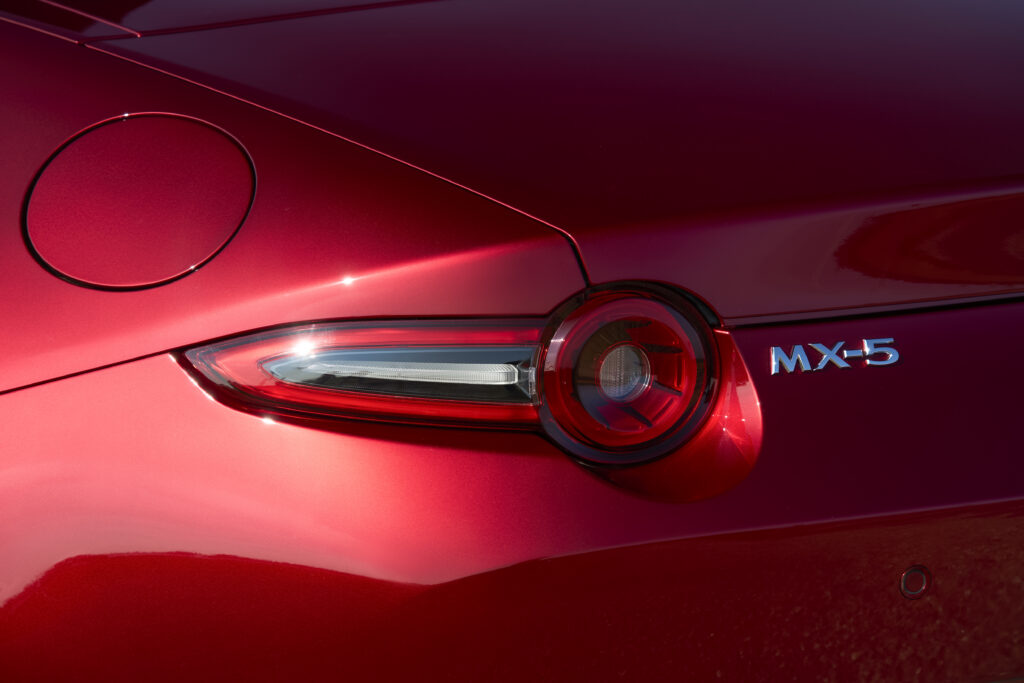
The updates are mainly in the details. The front and rear light signatures are revised, lighting switches to LEDs, and a new Aero Grey colour appears to mark the anniversary. Depending on the version, the wheels also adopt a new design. Nothing spectacular, but the overall look remains coherent and timeless.
Interior design and ergonomics
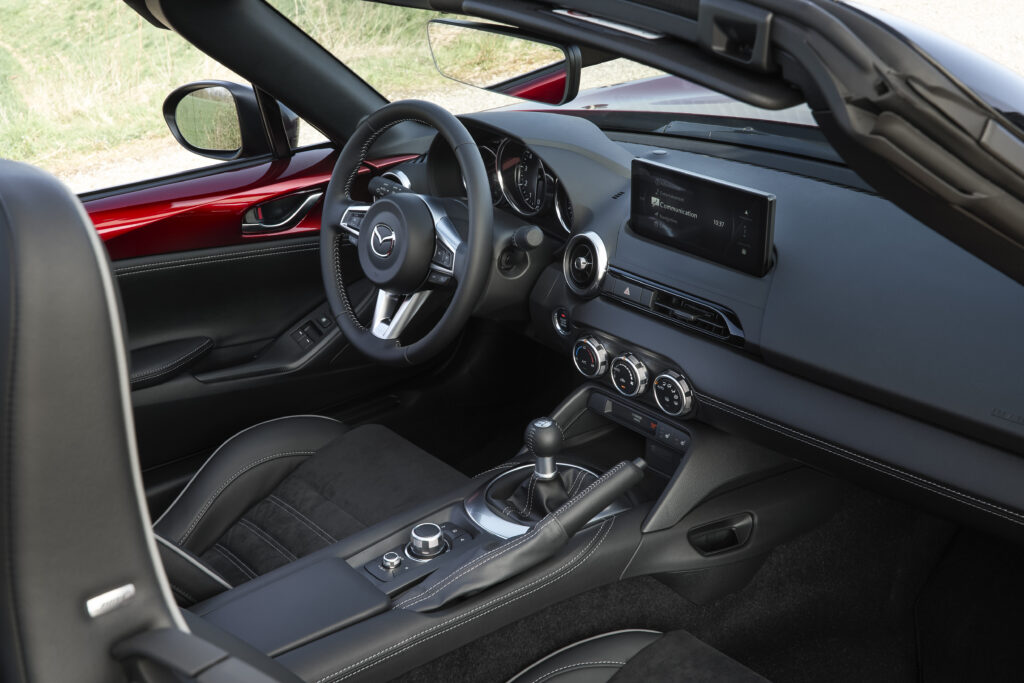
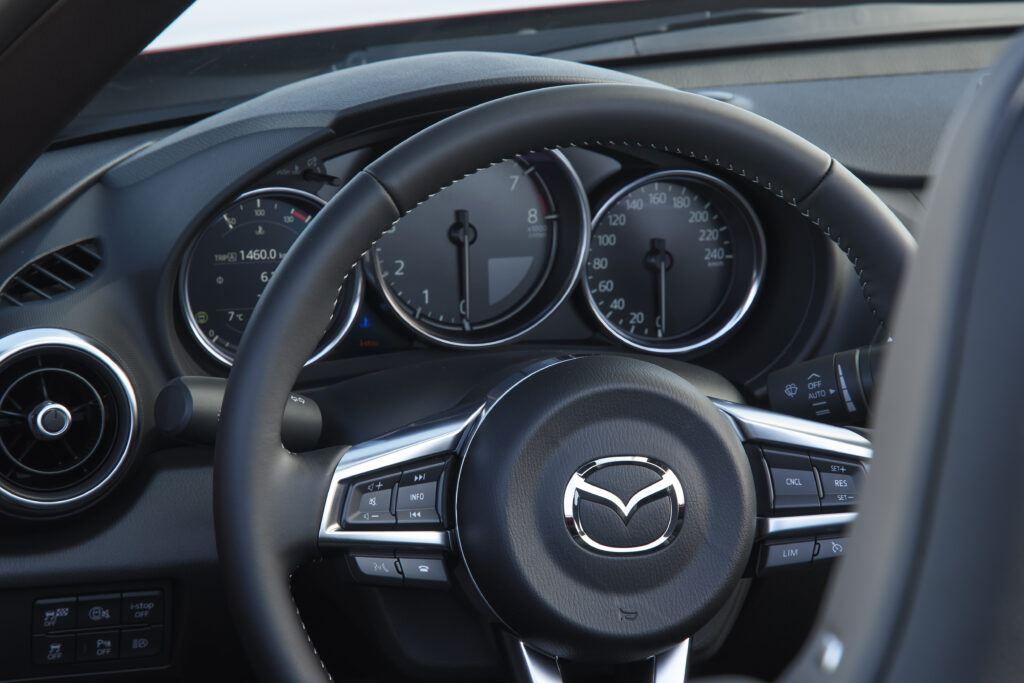
Inside, Mazda continues to resist trends. Analogue dials, a manual handbrake and physical climate controls are all still there. The central screen grows to 8.8 inches, without trying to dominate the cabin.
Space remains unchanged: narrow, low, and clearly designed to make you feel in the car rather than above it. Storage is limited, with little room in the doors and no proper glovebox. The lockable compartment between the seats, however, proves useful day to day.
The boot, at around 130 litres, is a real plus for a small convertible. It is not a luggage hauler, but a weekend away for two is perfectly realistic if you pack light.
Powertrains
The biggest news concerns the engines. The 184 hp 2.0-litre is becoming increasingly rare in Europe, often limited to dealer stock rather than new orders. In practice, the 1.5-litre is now the easiest version to obtain.
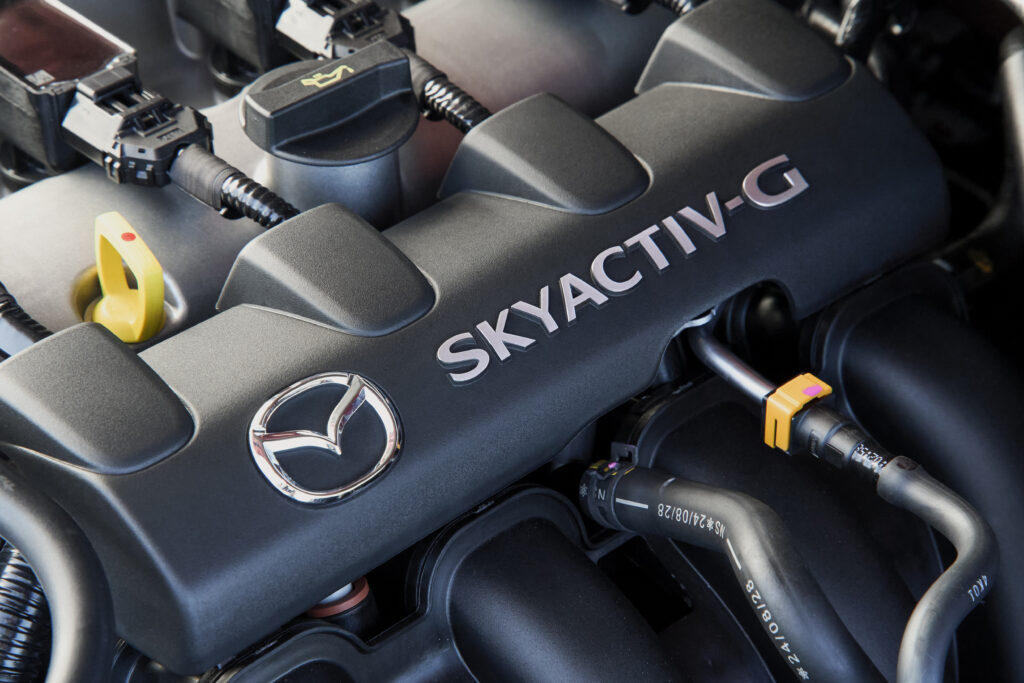
This 1.5-litre Skyactiv-G engine is also the one we tested. With 132 hp and 152 Nm, it delivers modest figures on paper: 0–100 km/h in 8.3 seconds and a top speed of 204 km/h. Yet once behind the wheel, those numbers quickly fade into the background. Thanks to the car’s low weight, the engine feels lively enough and rewards drivers who are willing to work the gearbox and explore the upper reaches of the rev range.
It is not about straight-line performance. The Skyactiv-G 1.5 encourages a committed, flowing driving style, where maintaining momentum matters more than raw acceleration. It may lack punch for quick overtakes, but in return it offers a level of involvement that fits perfectly with the MX-5’s philosophy.
Driving experience
Once on the move, everything feels right. The driving position is low, controls fall naturally to hand, and the six-speed manual gearbox remains one of the car’s greatest pleasures. There is a genuine, almost mechanical connection between driver and car.
With the 1.5, commitment is required. Overtakes demand anticipation, downshifts and high revs. It is an old-school approach, but also a more engaging one. The 2.0 brings extra flexibility and ease, without turning the car into a brute-force machine.
In 2024, mandatory driver aids in Europe also make their appearance, sometimes intrusive. Fortunately, most can be deactivated, even if not always with a single button. A new Track mode allows later intervention from the systems, making the car more playful when driven hard.
On the downside, familiar compromises remain: noticeable wind noise, limited sound insulation, and firmer comfort on more sport-oriented setups. These are accepted, because the overall experience makes up for them.
Conclusion: pros and cons
The 2024 MX-5 does not aim to be the fastest or the most spectacular. It aims to be right. In a world where sports cars grow heavier, more powerful and more digital, this approach feels refreshing.
One question remains: as engines disappear and regulatory pressure increases, how much longer will cars like this be allowed to exist in their current form?
Pros
- Pure, accessible driving pleasure
- Outstanding manual gearbox
- Sensible pricing; surprisingly usable boot
Cons
- Tight cabin, especially for taller drivers
- Wind noise; limited sound insulation
- 1.5-litre sometimes lacks punch for overtaking