Test drive – Volvo EX90 : a pleasant surprise in the electrification of the XC90
 Jean-Pierre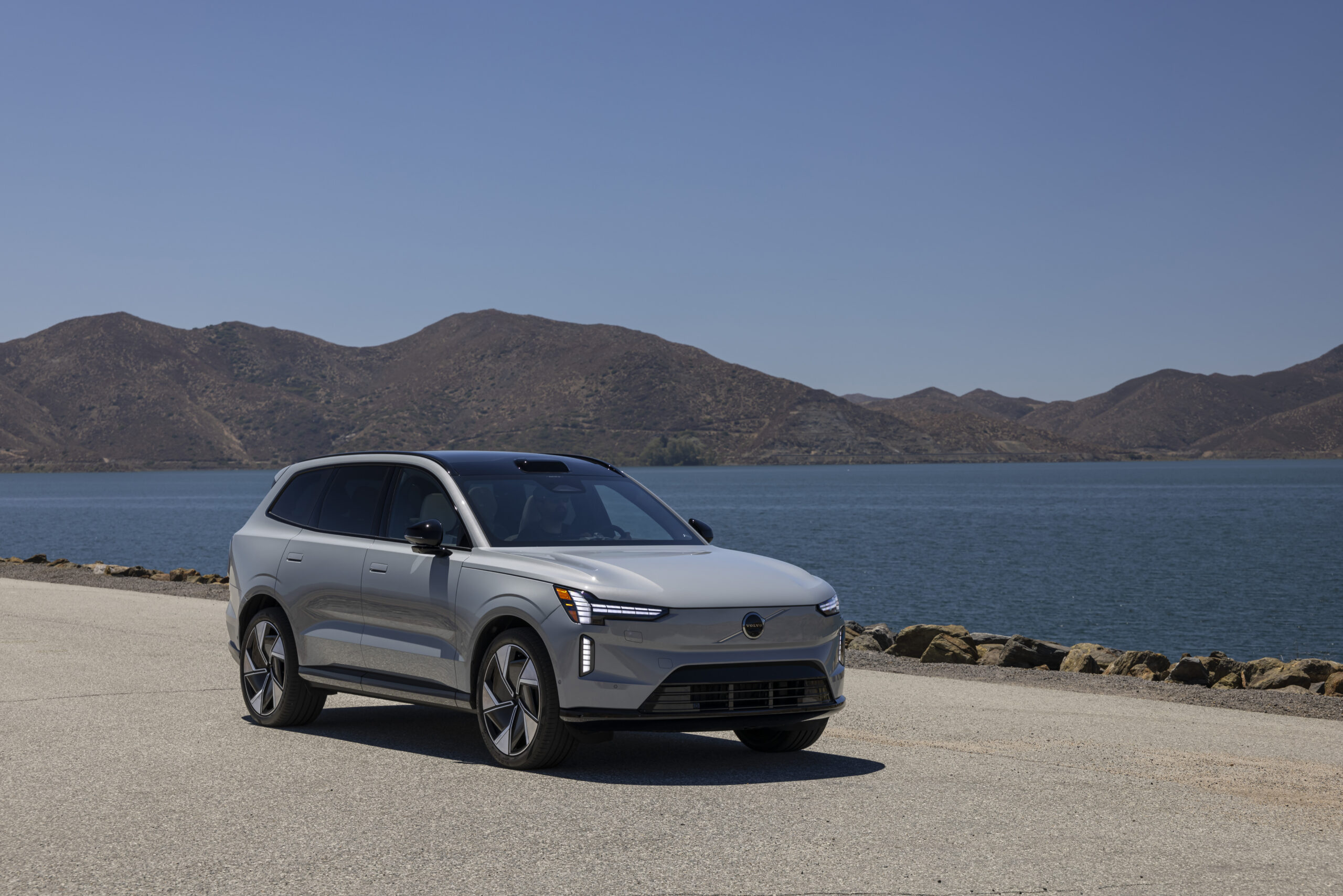
We had been waiting for the EX90 as Volvo’s new flagship, and the moment it appears, we understand it is not simply a XC90 with a different badge. It feels like a shift of era, and not only because it is fully electric. This is a large SUV designed as a high tech cocoon, capable of carrying a full family far, quickly, and above all in a calm that can feel almost disorienting. Even with its imposing size, the ambition is not to dominate the road, but to make it softer.
Dimensions and exterior design
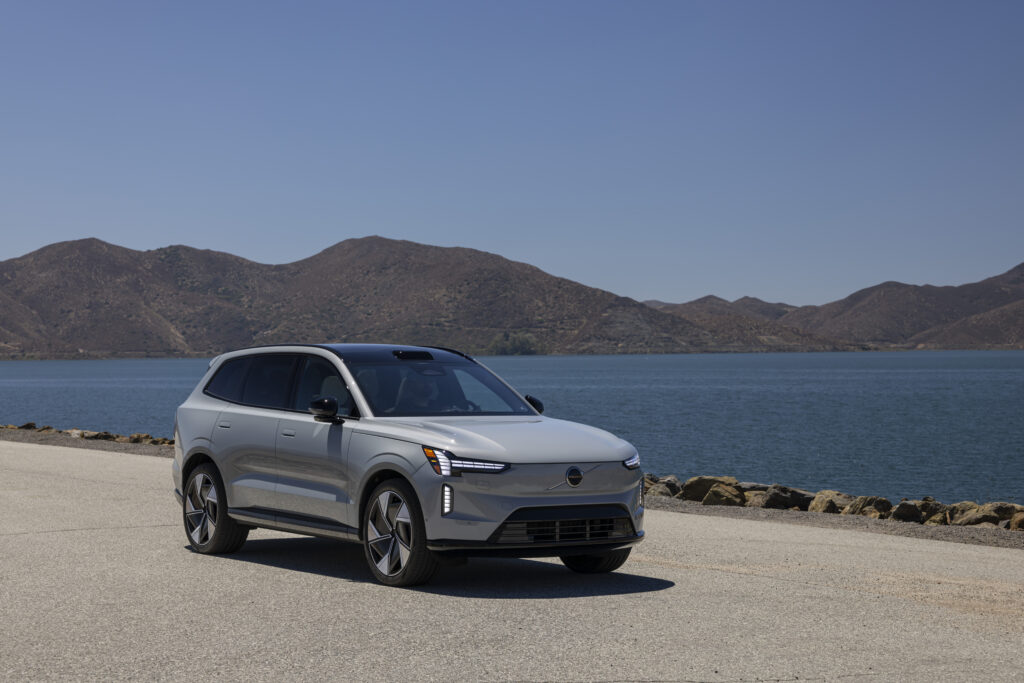
At 5.04 metres long, the EX90 clearly belongs in the world of true full size SUVs, the kind that occupy space and naturally command attention in the mirrors. It is also wide and tall, with a stance that feels almost American in spirit, which makes sense given how Volvo first showcased it on wide open roads where this format looks natural. Here at home, the reality is different: it is a vehicle that asks for anticipation in cities, but rewards you with reassuring presence and the visibility of a long distance cruiser.
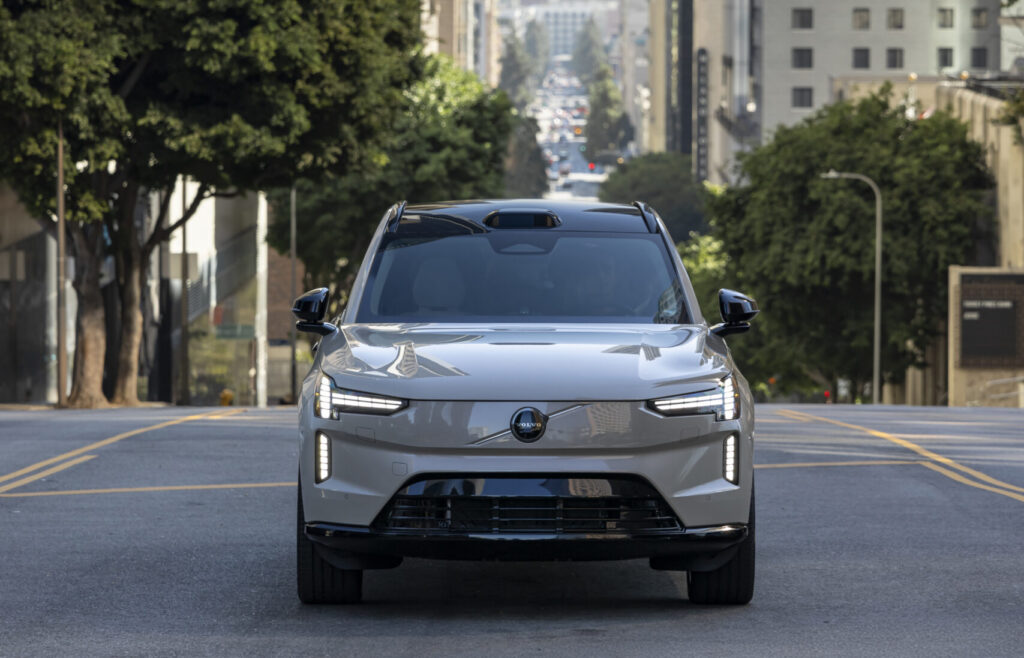
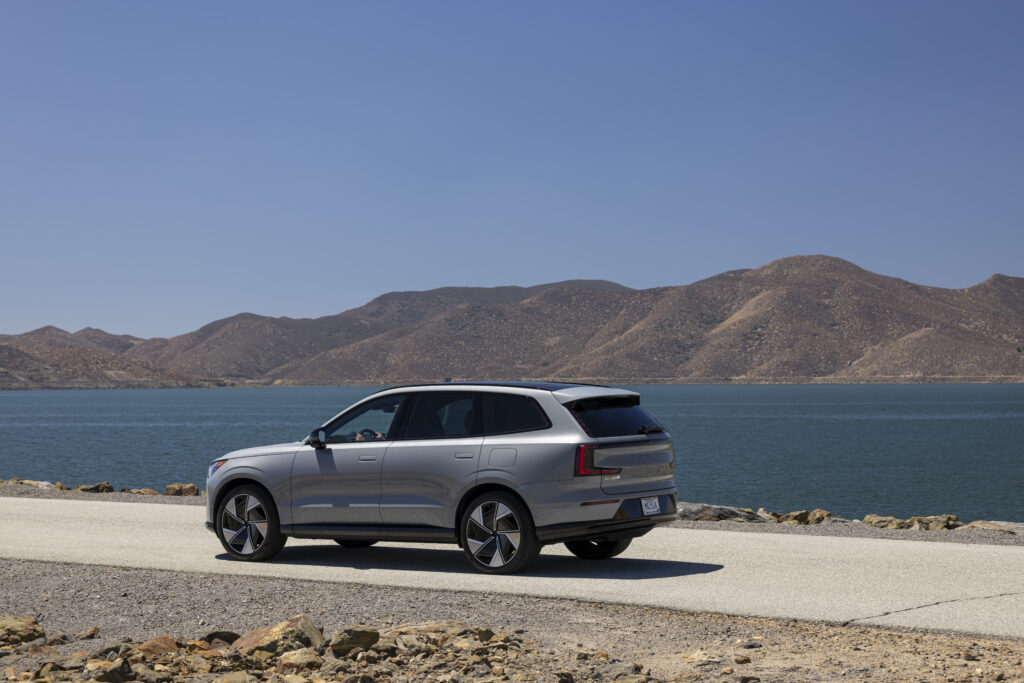
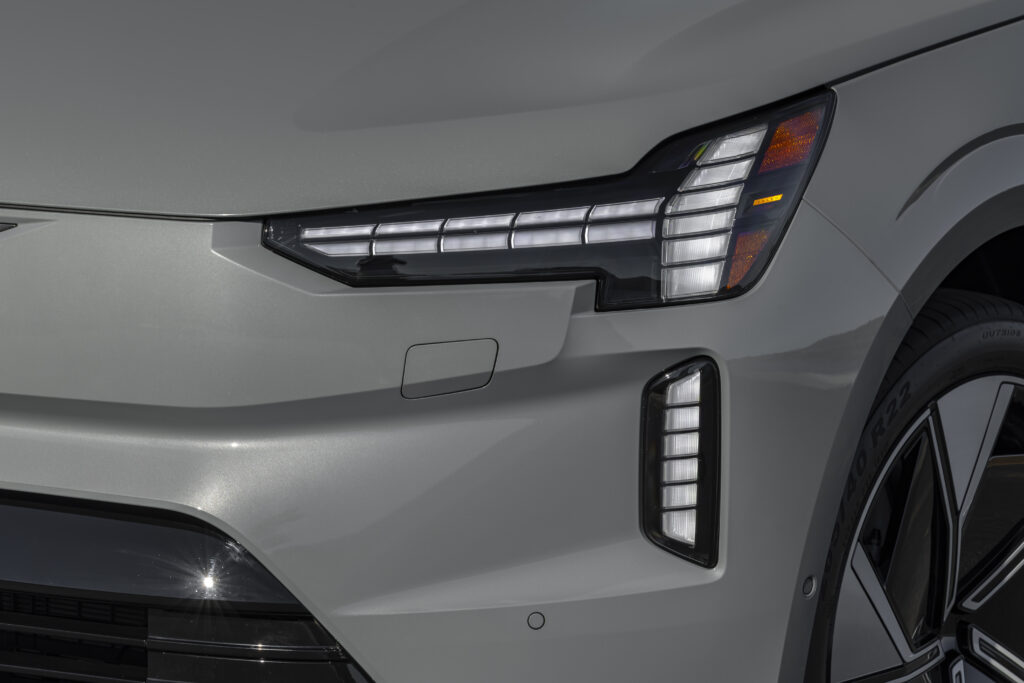
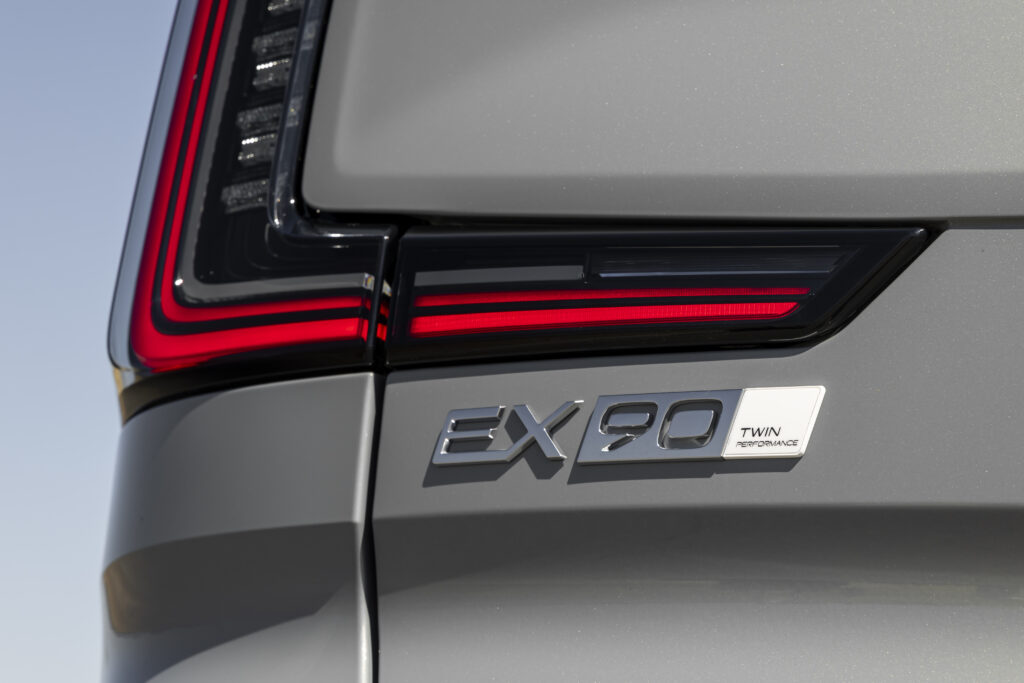
The styling stays faithful to Volvo. Clean surfaces, little showmanship, and a Scandinavian elegance that prefers restraint over drama. The front remains unmistakably Volvo, while the rear stands out more thanks to the boomerang shaped tail lights that cut into the tailgate and add a modern touch without upsetting the balance. And then there is one detail that defines the EX90 at a glance: the LiDAR unit above the windscreen, a discreet but obvious piece of tech that signals exactly where Volvo is heading in safety and driver assistance.
Interior design and ergonomics
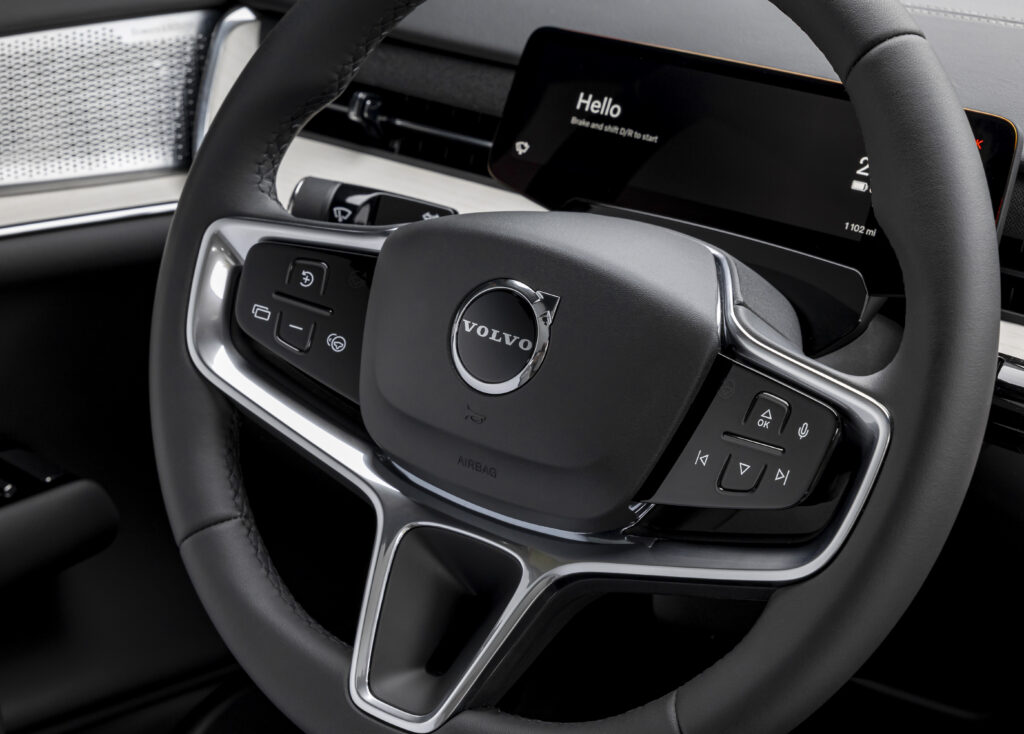
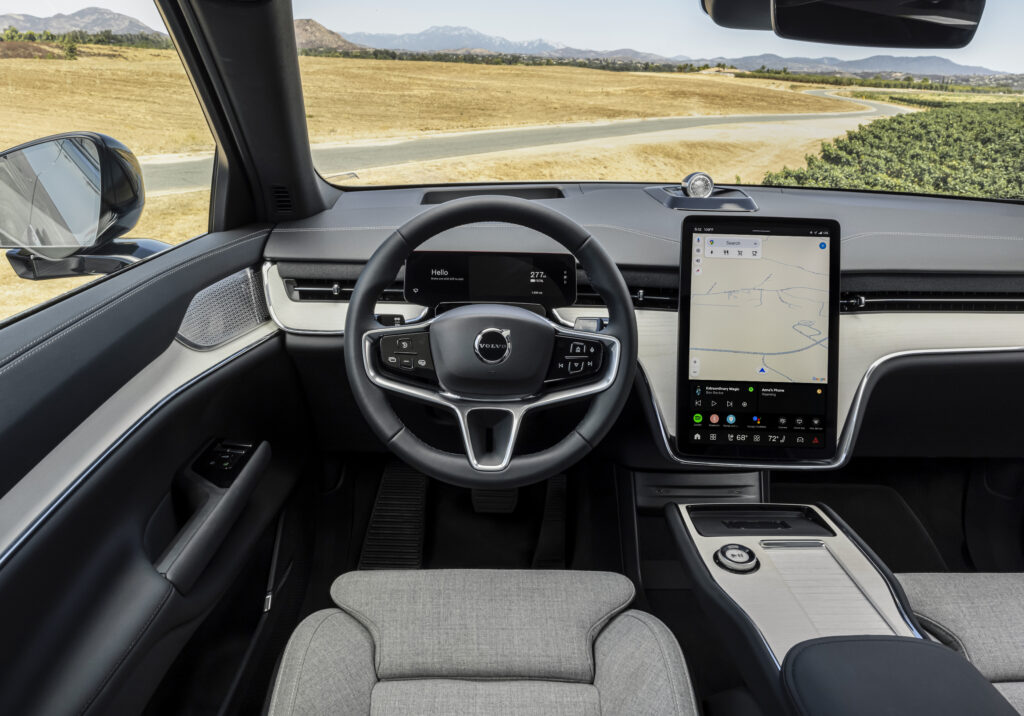
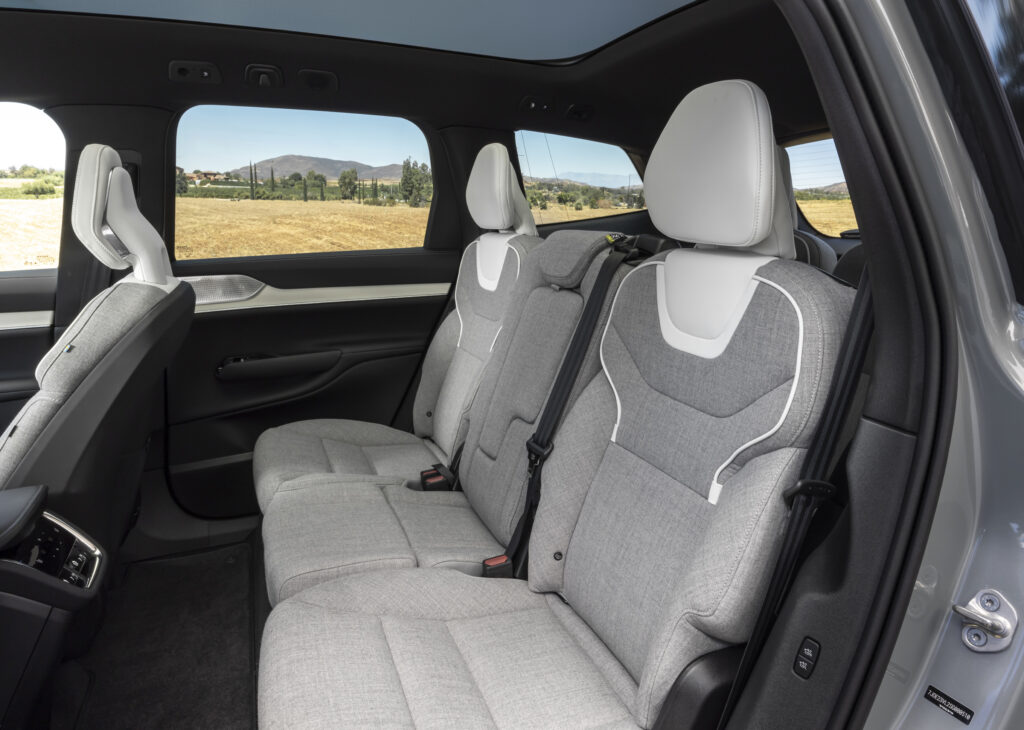
Inside, the shift feels even stronger. The EX90 welcomes us into a minimalist, lounge like space where materials, light, and calm do most of the talking. Depending on the configuration, it can feel genuinely luxurious, with solid assembly and that immediate sense of quiet that Volvo has mastered, even before moving off.
But the EX90 pushes the all screen approach very far. The large central display handles almost everything, from climate control to functions you would not expect to be buried in menus. We appreciate the clarity, the responsiveness, and the Google integration, but we also catch ourselves looking for simple physical actions that used to be instinctive. You do adapt, yet a part of us still feels that a few more physical controls would have made the whole experience more natural, especially in a car that is meant to feel effortless.
Powertrains
Volvo builds the EX90 range around three power levels, clearly covering different needs from the more sensible family SUV to the full performance flagship. There is a single motor entry version, then two dual motor all wheel drive variants, including a top specification model that becomes, in the process, the most powerful Volvo ever built.
What stands out is the balance between performance figures and overall philosophy. Even with impressive numbers, the EX90 does not behave like a showy SUV. The power is there, but the point is to offer constant reserve, a feeling of ease, and the sense that the car is never running out of breath, whether the cabin is full or the road climbs.
Driving experience
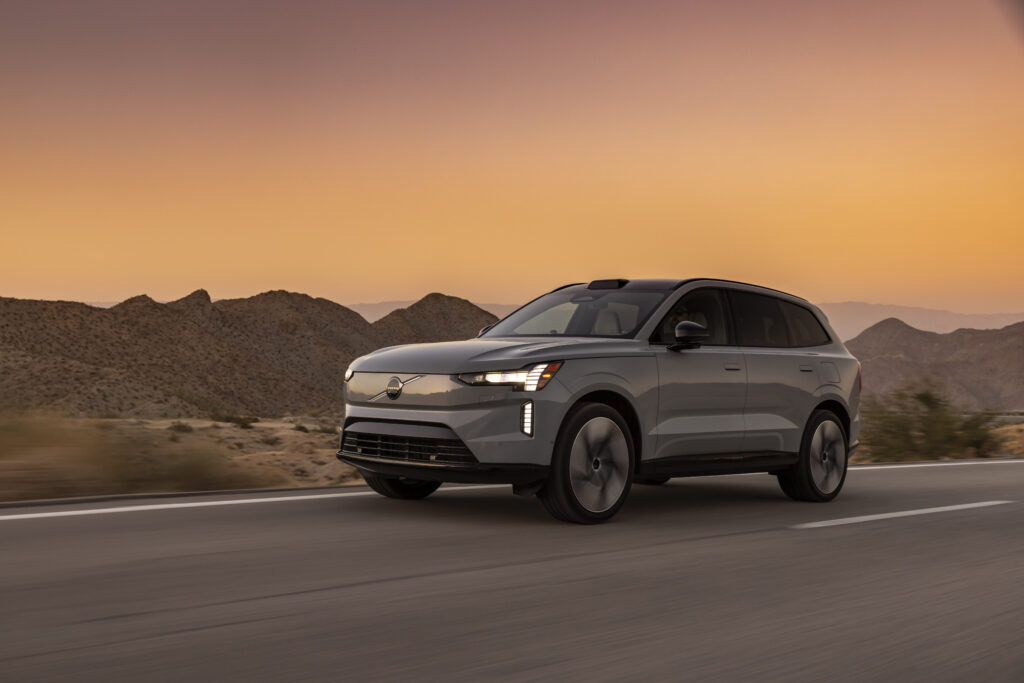
From the first metres, we feel what electrification brings to a large Volvo SUV. Where some big combustion models can feel heavy off the line, here everything is smoother. Responses are immediate, low speed manoeuvres feel lighter than expected, and the silence changes the way we perceive the size. Even loaded, even massive, the EX90 gives a strong impression of effortlessness, as if it takes some of the mental workload off our shoulders.
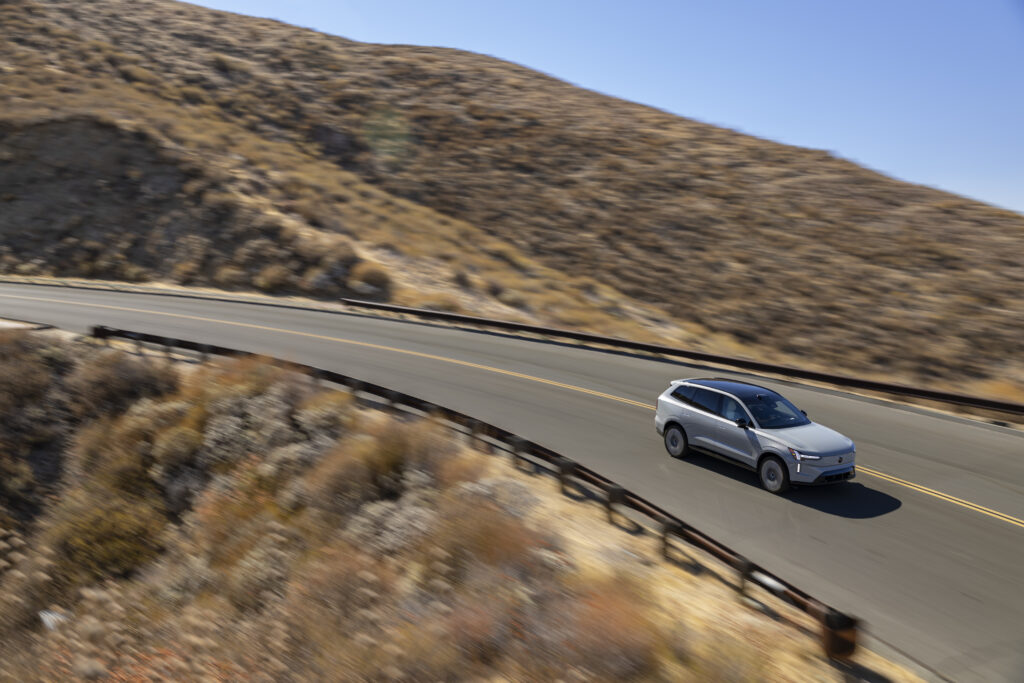
On faster roads, it is clearly in its element. The chassis feels planted and stable, and the EX90 devours kilometres with a calm that can become almost hypnotic. On twistier routes, it shows more precision than its weight suggests. Steering reacts well, the body settles neatly, and its traction management systems help the car feel controlled, especially when accelerating out of bends. This is not a SUV we drive for sharp cornering thrills, but it is one that stays coherent, safe, and reassuring when the road tightens.
Comfort sits at the centre of the experience. With the optional air suspension, the EX90 moves into genuinely plush territory, filtering the road with a softness that makes imperfections fade away. There is also that very Volvo sensation of being protected and isolated, as if the cabin were separate from the outside world. Still, the driver assistance philosophy can sometimes feel a little too present, with interventions that take time to get used to. We are impressed by the safety promise, but we occasionally wish the car would breathe with us rather than monitor us.
For long trips, the EX90 inspires confidence through its big battery, its claimed range, and the overall coherence of its efficiency for such a large vehicle. In realistic mixed driving, long stages feel achievable without constant stress, and that is where the EX90 makes the most sense. It is not trying to be a premium gadget. It is trying to be a high end travel tool.
Conclusion
Behind the wheel, one conclusion becomes clear: the EX90 makes the electric transition credible in the world of large premium SUVs, not by chasing spectacle, but by committing to serenity. We feel good inside it, we feel far away from daily noise, and we even find ourselves driving more gently simply because the atmosphere encourages it. There are frustrations, especially around the fully digital ergonomics and the sometimes intrusive logic of certain assistance systems, but the overall package feels coherent. It is a luxurious, silent, reassuring family cocoon with a distinctly Nordic character.
The pros
Very high level comfort and insulation, true cocoon feeling
Surprisingly easy to drive despite the size
Modern tech and an effective navigation experience
The cons
All screen ergonomics that takes time to learn and is not always intuitive
Driver assistance systems that can feel overly present in certain situations
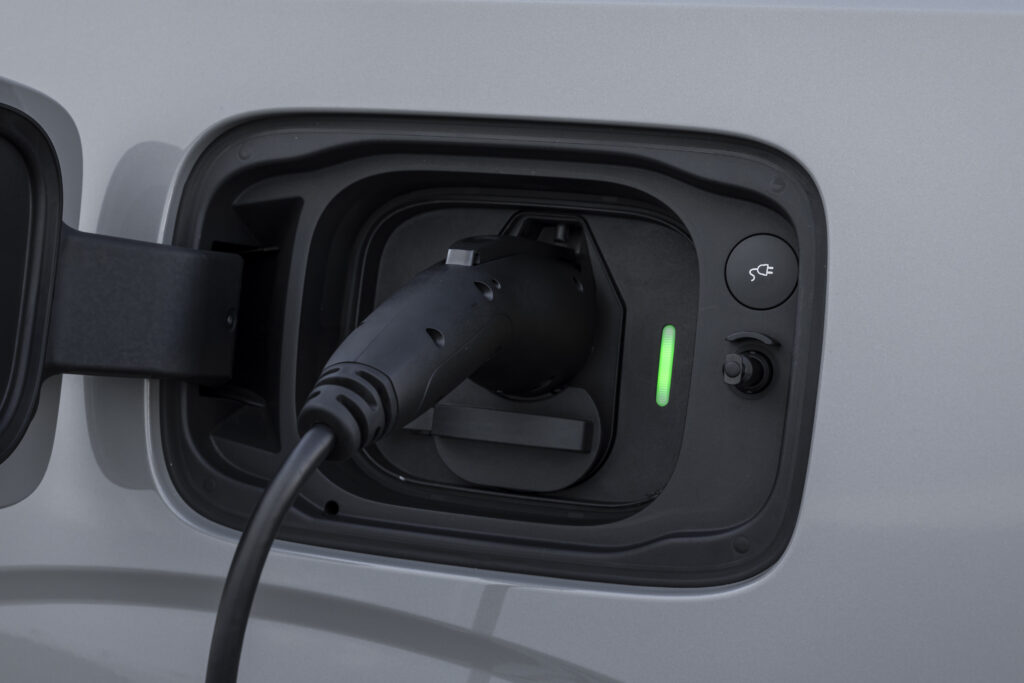
Strong charging on paper, yet the lack of an 800 V architecture may frustrate in principle