
Test drive – Skoda Elroq : A Price That Appeals
 Jean-Pierre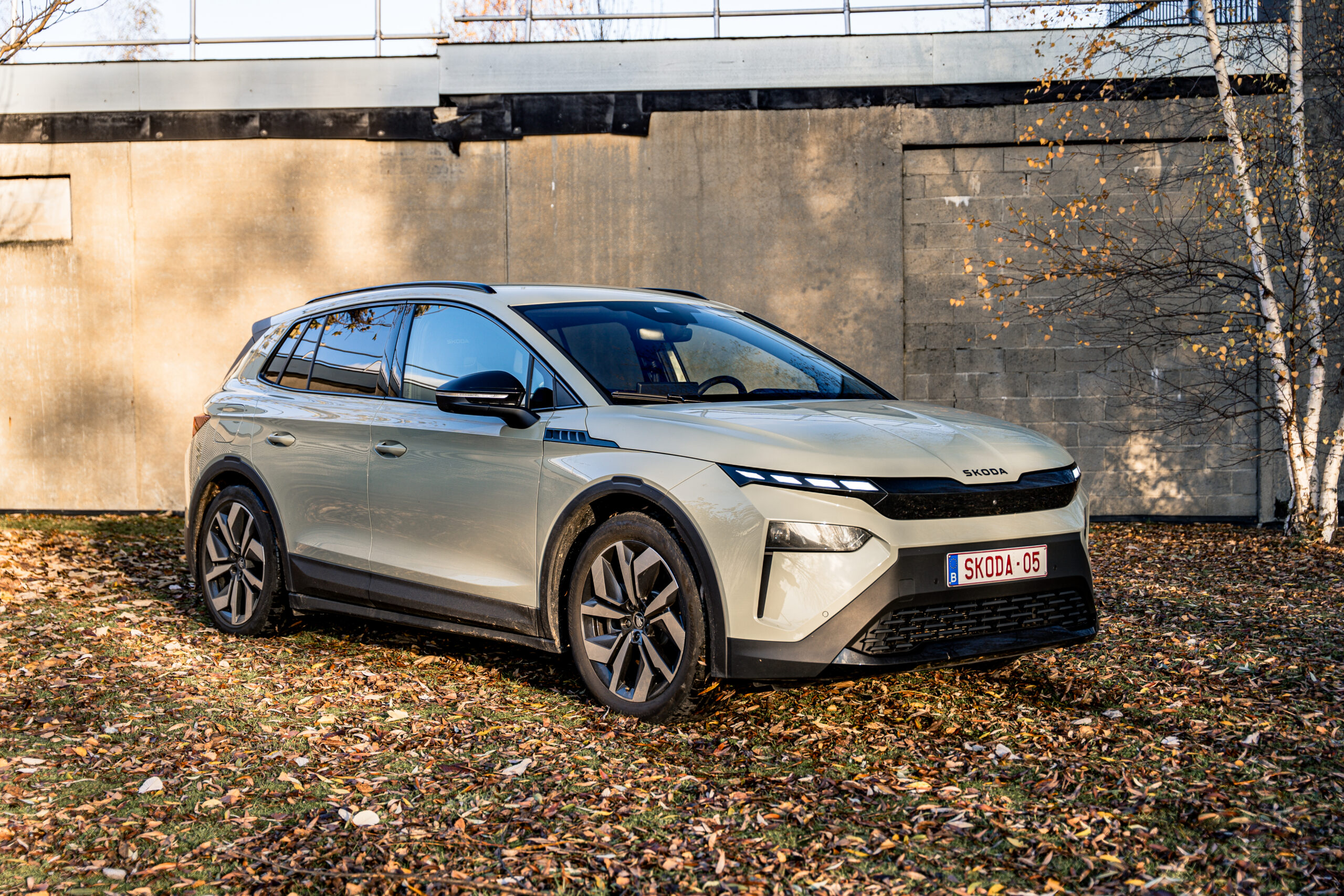
With the Elroq, Skoda is introducing a new entry point into its electric range. Positioned below the Enyaq, this compact SUV nonetheless relies on the same technical foundations, with a clear goal: making electric mobility more accessible without compromising the brand’s core strengths. Shorter, more affordable, and designed for everyday use, the Elroq aims above all to strike the right balance between price, range, and versatility.
Dimensions and Exterior Design
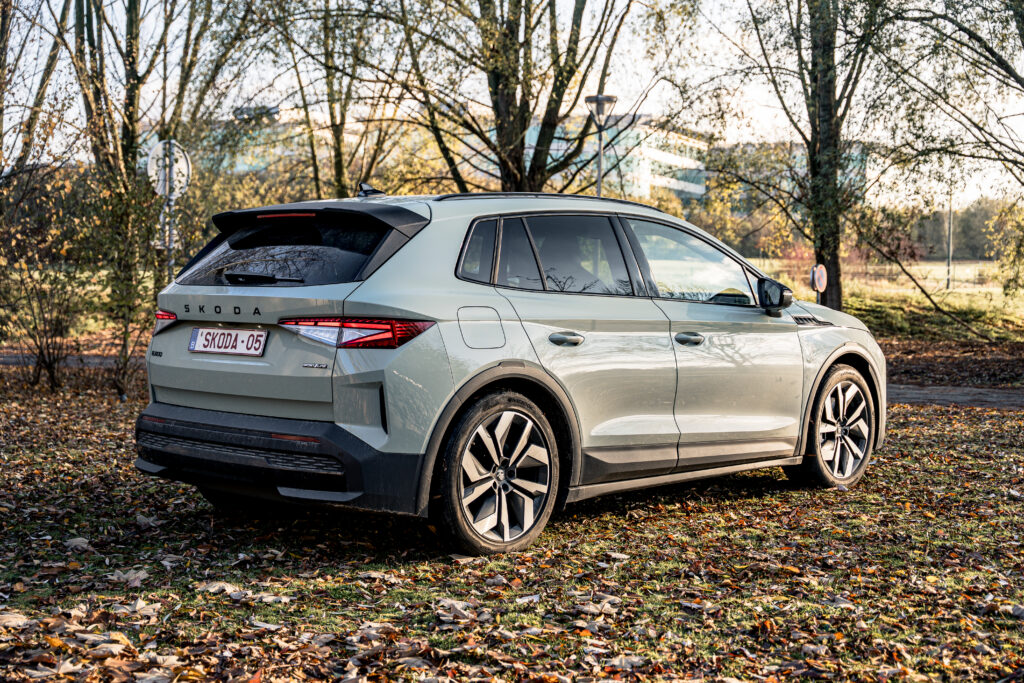
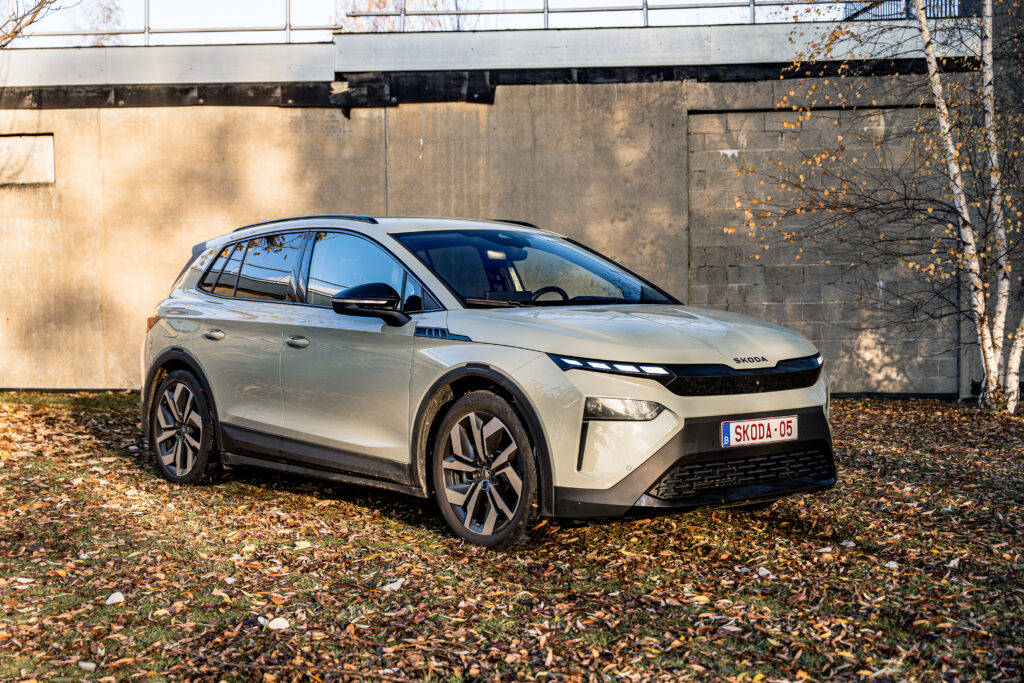
The Elroq features typical C-segment proportions, with a length close to 4.50 metres. Despite being more compact than the Enyaq, it retains the same wheelbase, which helps limit compromises inside. In practice, this makes it relatively easy to manoeuvre while still offering enough space for family duties.
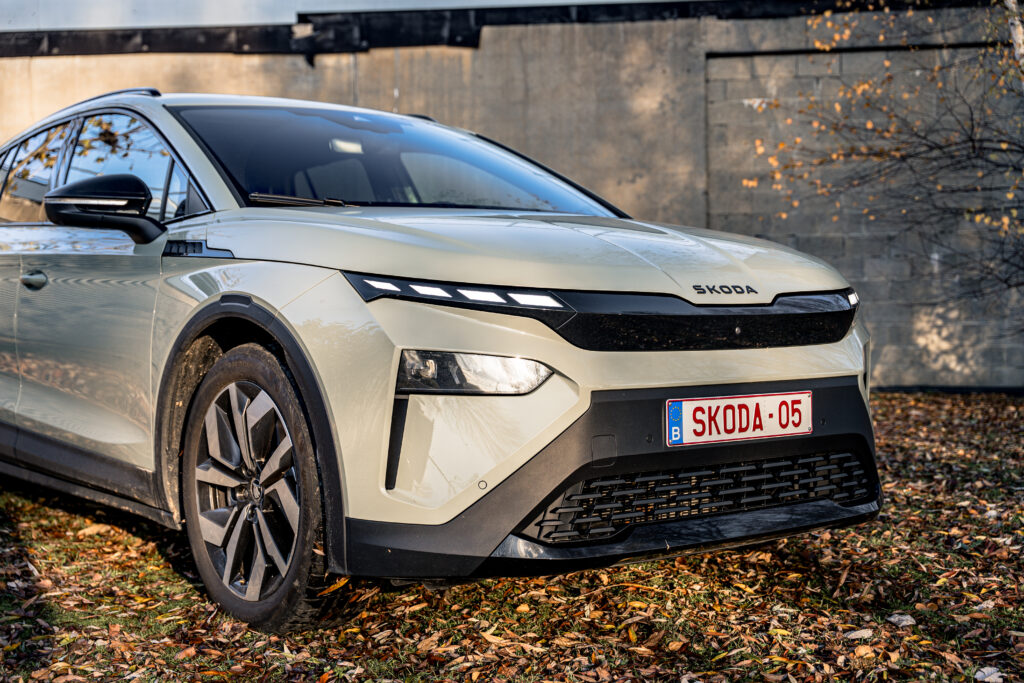
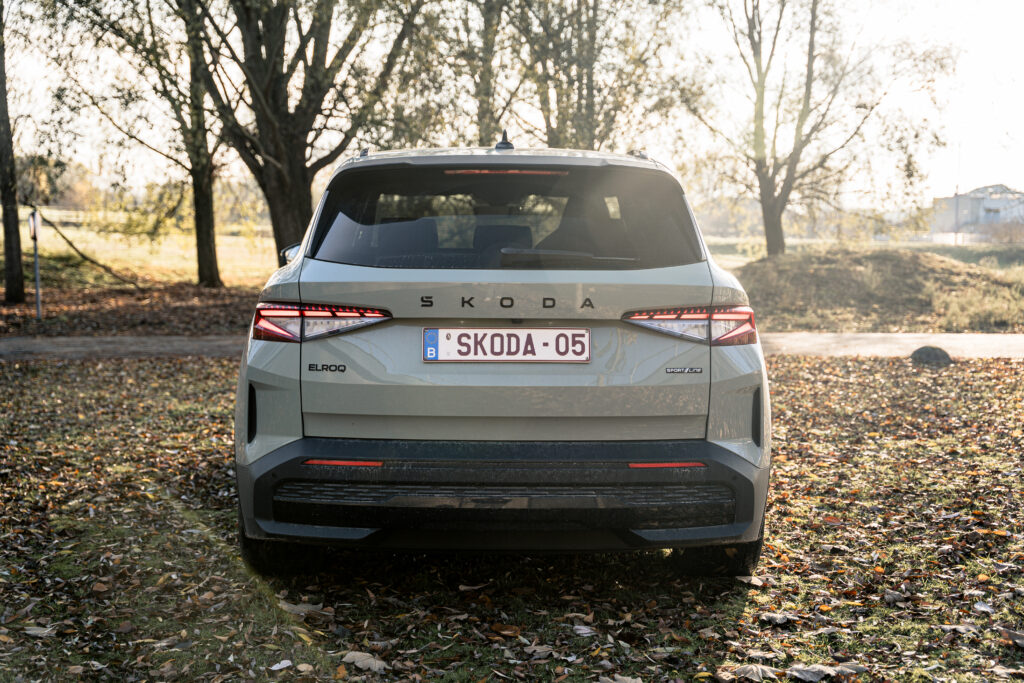
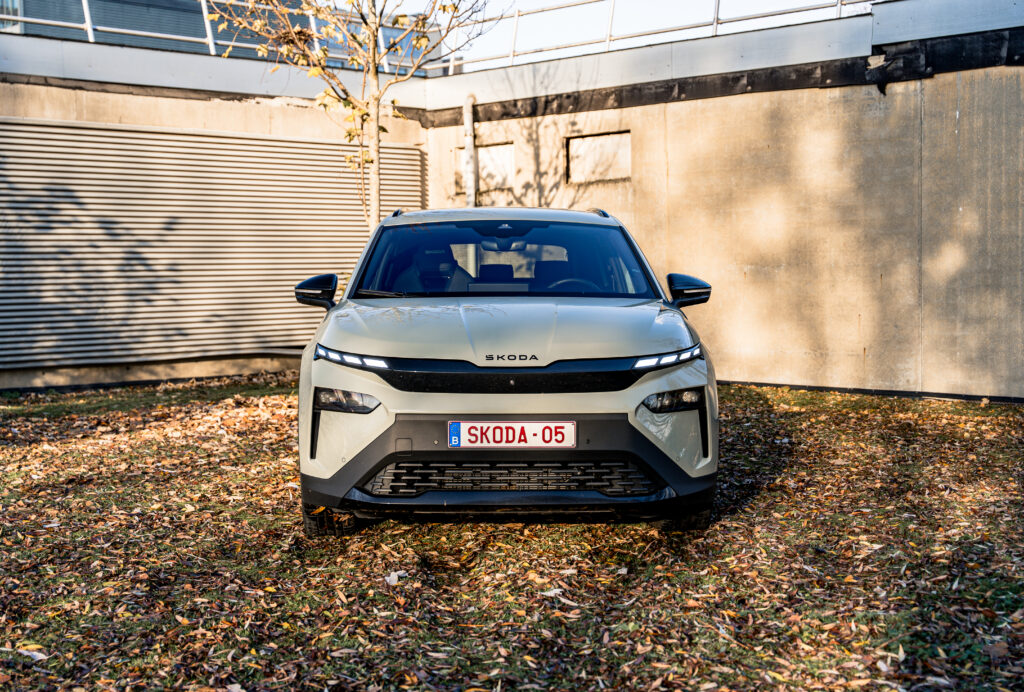
Stylistically, the Elroq introduces Skoda’s new “Modern Solid” design language. The front end stands out with a slim, stretched light signature integrated into a dark band, while the traditional grille gives way to a closed-off surface better suited to an electric vehicle. Overall, the look remains deliberately understated and consensual, in line with what Skoda has been offering for several generations.
Interior Design and Ergonomics
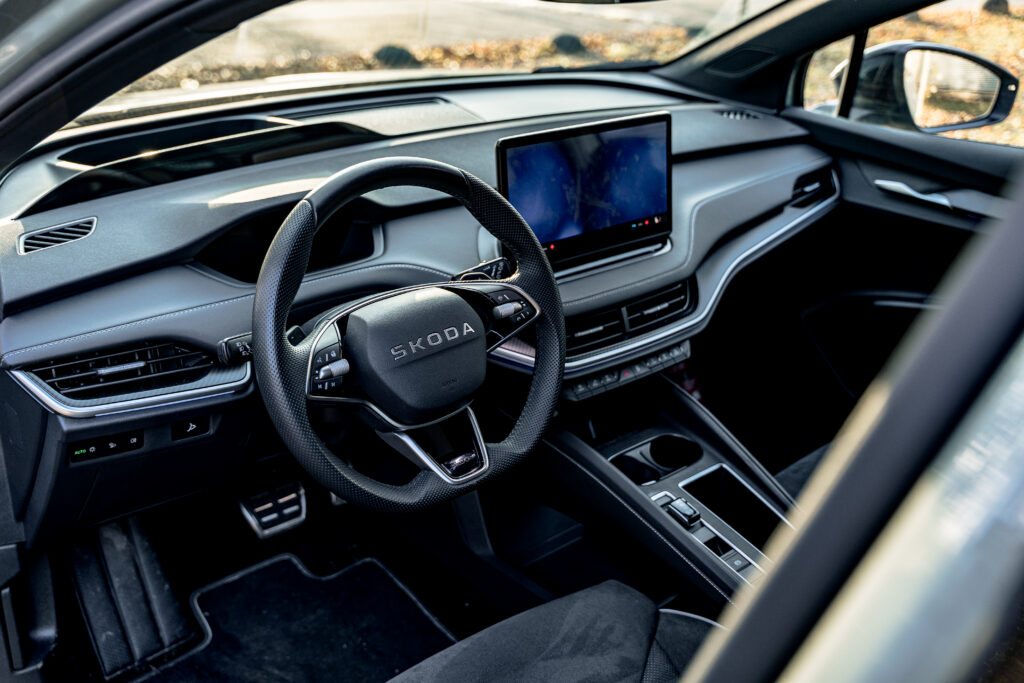
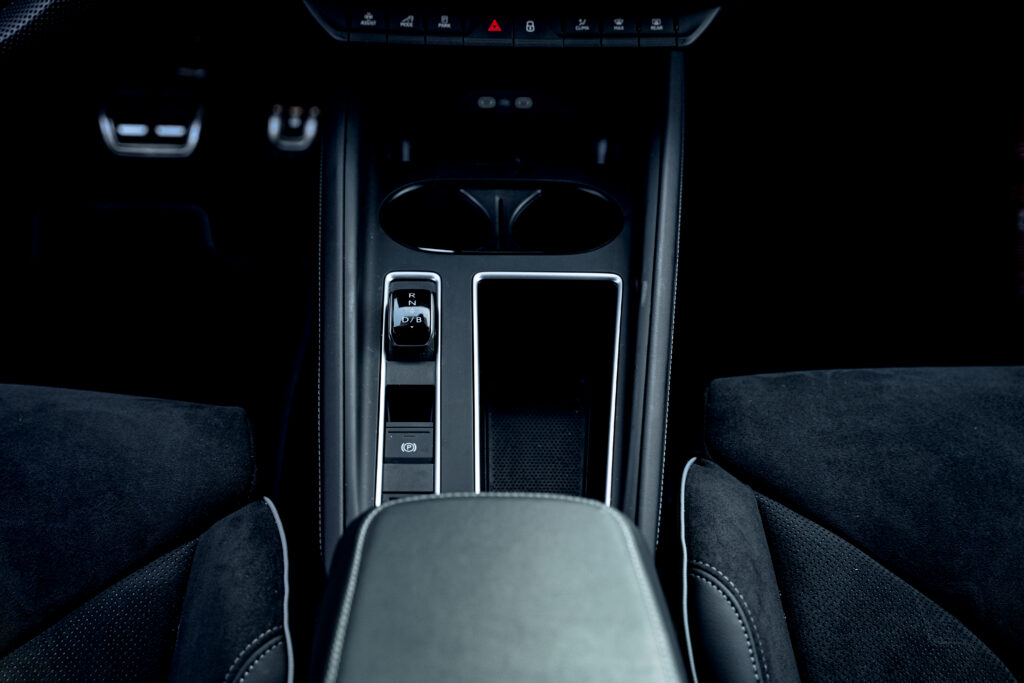
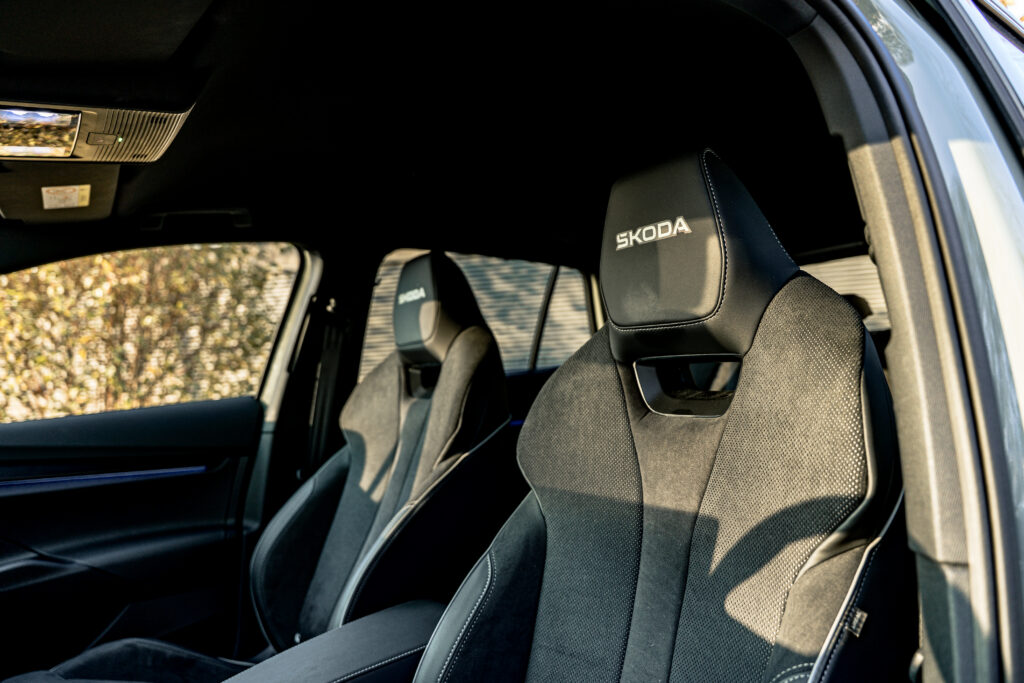
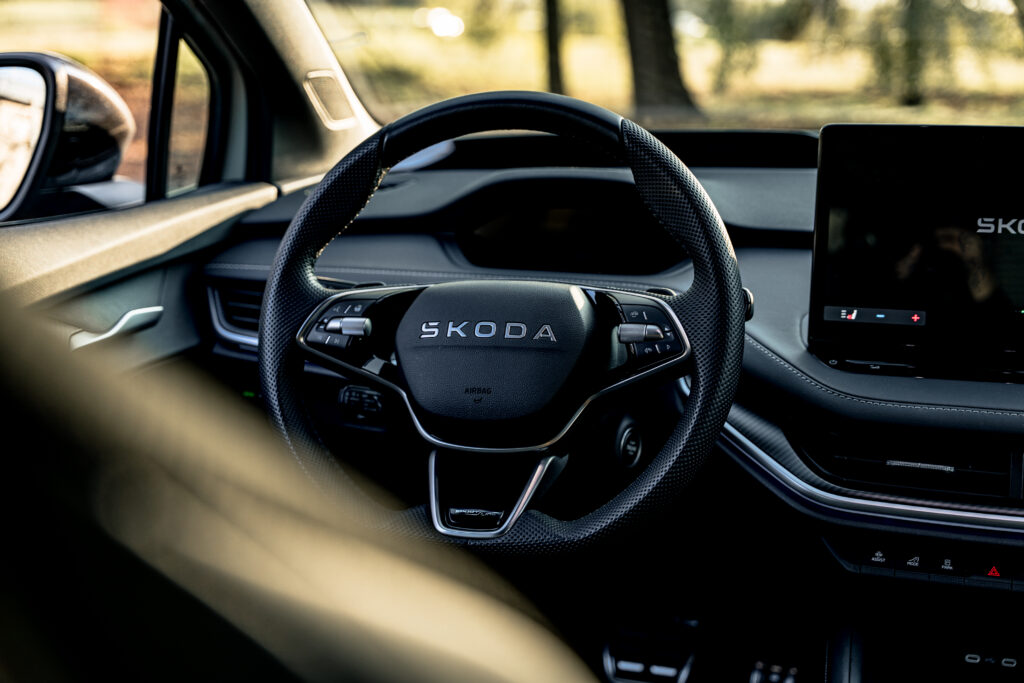
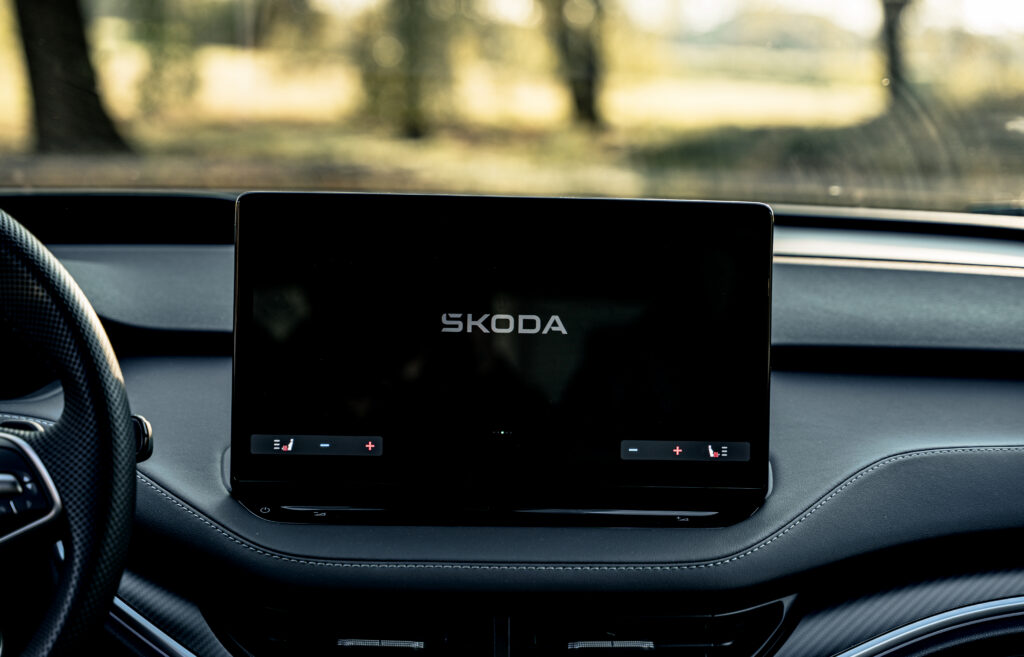
The cabin largely mirrors that of the Enyaq, both in its layout and in its equipment. The dashboard is dominated by a 13-inch central screen, complemented by a digital instrument cluster and, depending on trim, a head-up display. Ergonomics improve thanks to well-integrated shortcuts and a user interface that feels smoother in daily use.
Build quality is solid, with properly assembled materials and a presentation that feels reassuringly upmarket for the segment. Rear space benefits directly from the generous wheelbase, allowing two adults to travel comfortably. The boot, at 470 litres, sits in the good average for the category, even if the absence of a front trunk slightly limits overall practicality.
Powertrains and Range
Built on the Volkswagen Group’s MEB platform, the Elroq is offered with several powertrain configurations. The entry-level version combines a roughly 52 kWh net battery with a 170 hp electric motor, which is perfectly adequate for urban and suburban driving, but more limited once journeys get longer.
This base version of the Elroq range starts at around €33,990, positioning it as one of the more accessible electric SUVs in the brand’s lineup.
Mid-range versions improve the range slightly, while the 85 variant represents the top of the line in rear-wheel drive form. With a 77 kWh net battery and output close to 285 hp, it claims a WLTP range of around 580 km. Charging capability varies by version, up to 175 kW DC, allowing relatively controlled charging times on fast chargers.
Driving Experience
On the road, the Elroq behaves as expected from an MEB-based model. Overall comfort is well judged, sound insulation is effective, and the steering is light enough to make city driving easy. The tight turning circle is a genuine advantage during manoeuvres.
The 85 version offers an appealing compromise between performance and efficiency. Acceleration is brisk, without a particularly sporty character, but well suited to versatile use. Less powerful versions feel more restrained, especially in overtaking situations. In real-world conditions, energy consumption generally ranges between 16 and 19 kWh/100 km depending on the powertrain and route type, which translates into a realistic range of about 400 to 450 km for the longest-range versions.
Conclusion: Pros and Cons
With the Elroq, Skoda logically expands its electric offering by introducing a compact SUV that is well positioned in terms of price, without any major technical or styling upheaval. The model focuses above all on overall coherence, rather than chasing originality or outright performance.
Pros:
- More accessible pricing than the Enyaq
- Cabin space largely preserved despite the compact format
- Well-executed comfort and sound insulation
Things to consider:
- More limited range on the entry-level version
- Heat pump optional depending on trim
- No front trunk
Photography : Stefan Caliman / GUS