
Test drive – Honda HR-V: A week living with a discreet hybrid SUV
 Jean-Pierre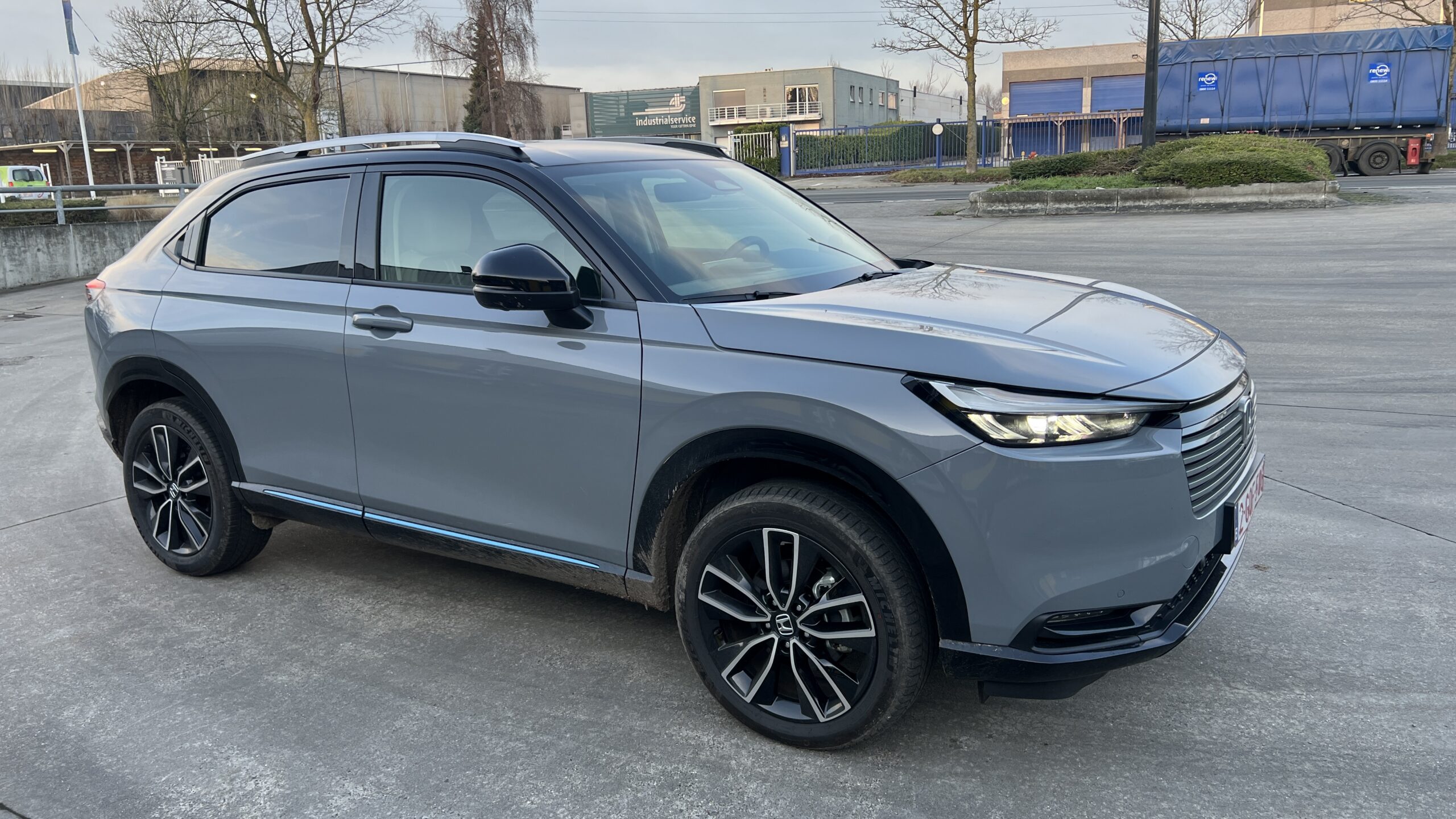
Spending a full week behind the wheel of an SUV is often enough to go beyond the spec sheet and truly understand what a model has to offer in everyday life. With the HR-V, there is no attempt to impress through spectacle or bold statements. Instead, it settles into daily life quietly and naturally.
Dimensions and exterior design: Sobriety as a signature
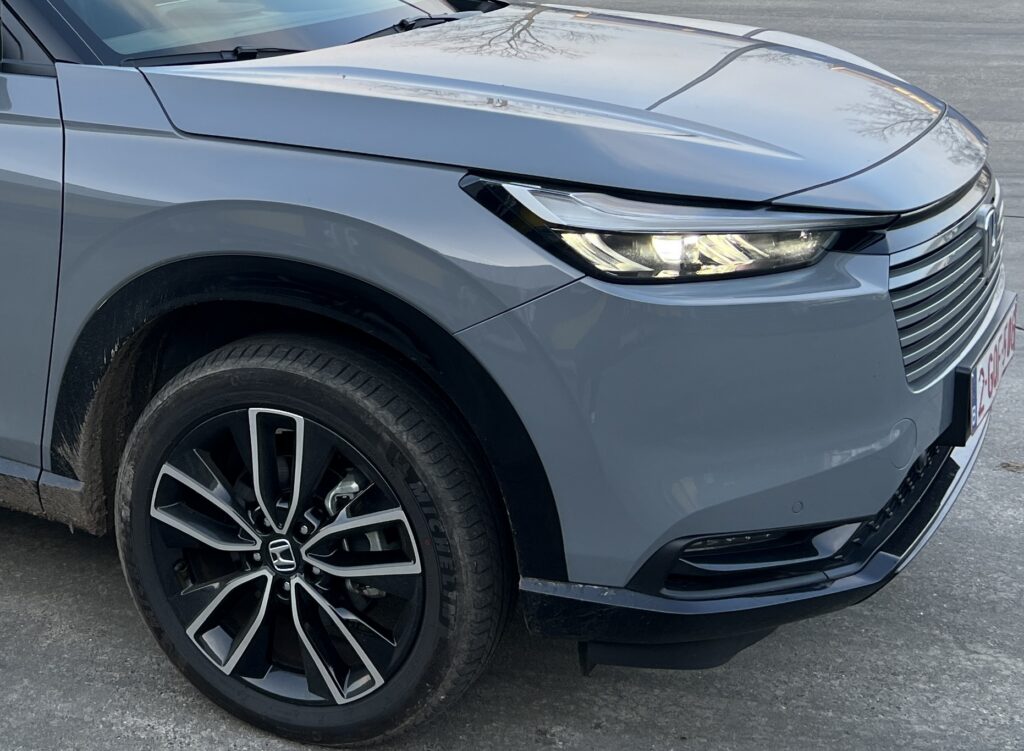
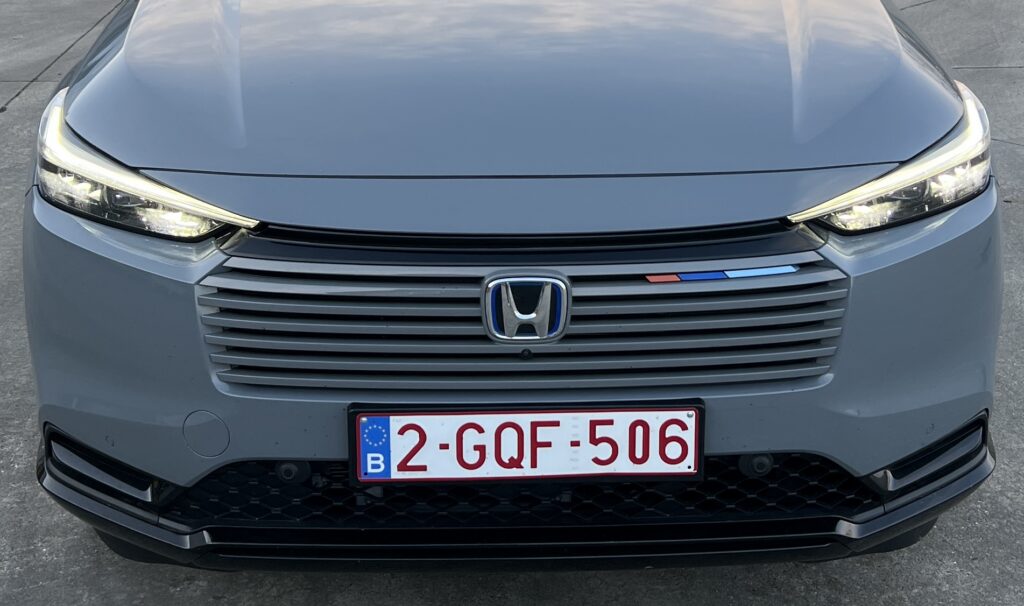
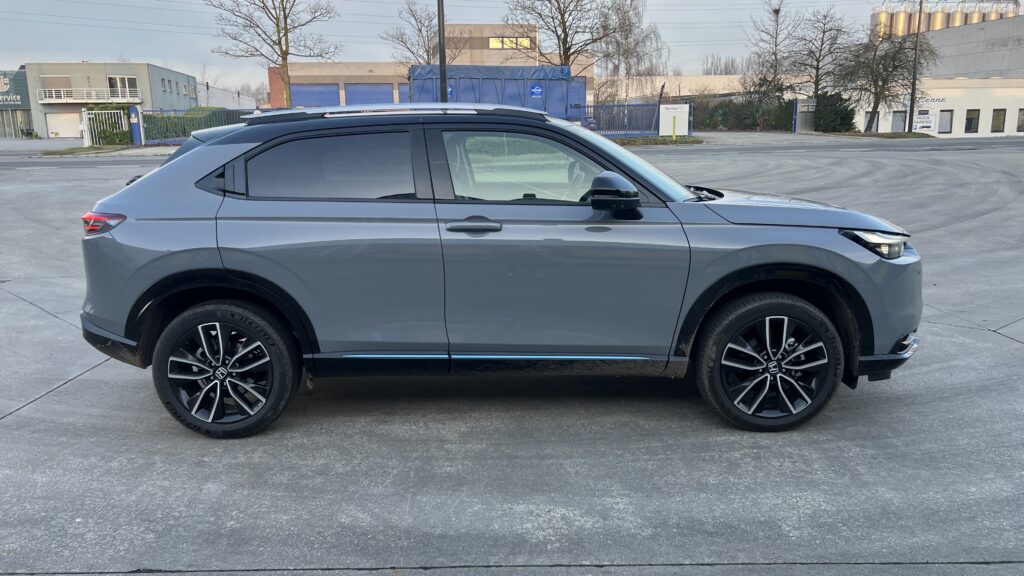
At first glance, the HR-V does not try to stand out. Its proportions are well balanced, with a size that sits perfectly between an urban SUV and a compact model, present enough to feel reassuring, yet never cumbersome in the city. The lines are clean and taut, almost minimalist, and the light facelift brings a few modern touches without altering the overall identity. The front end feels more refined, the lighting signature more assertive, while the rear remains deliberately understated. We appreciate this clear choice: the HR-V does not exaggerate its adventurous image, instead embracing a calm, almost Japanese sense of elegance that should age gracefully.
Interior design and ergonomics: Well-thought-out simplicity
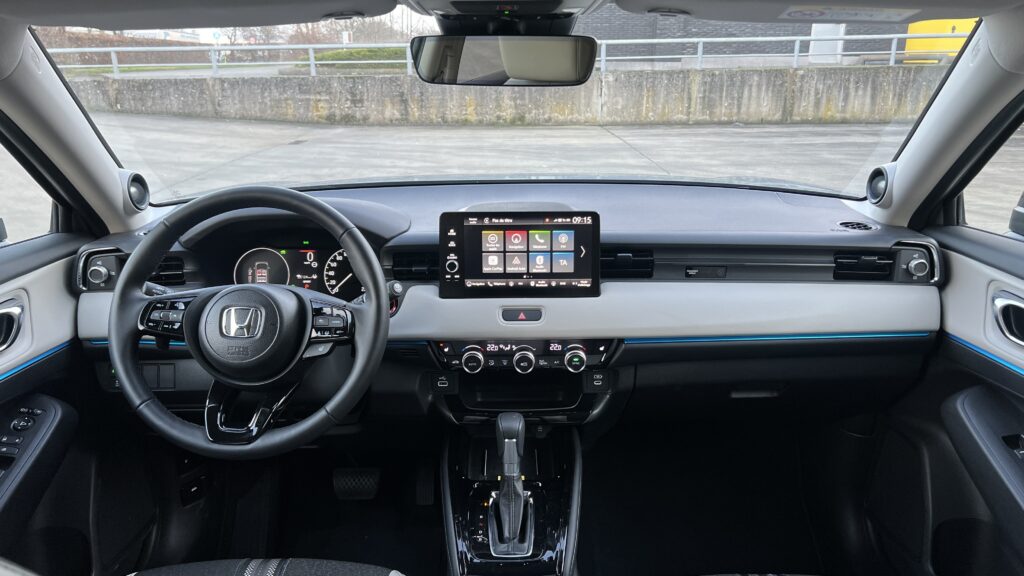
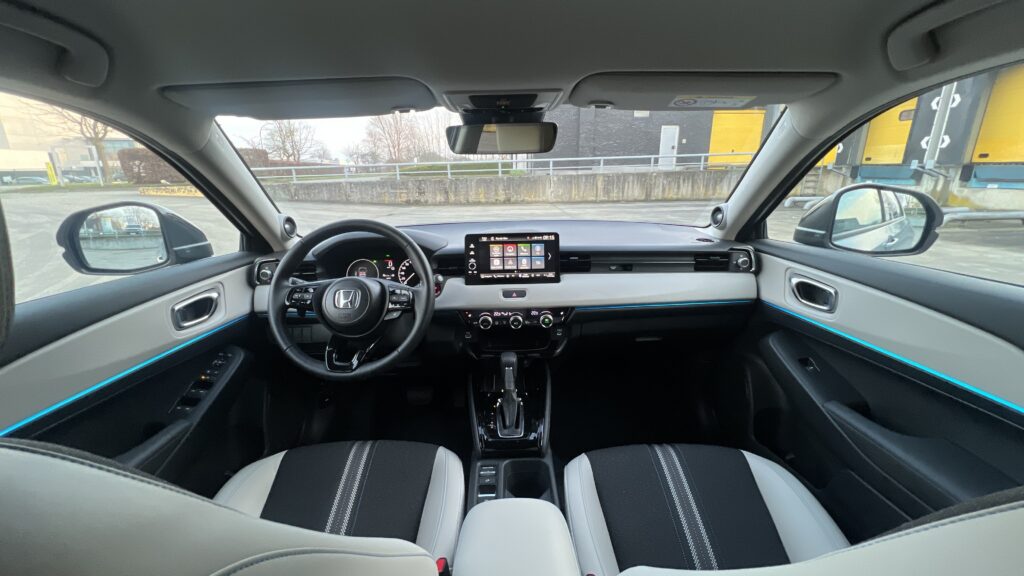
Inside, the same philosophy applies. There is nothing showy here, but an immediate feeling of coherence. Materials are well assembled, the overall impression is one of seriousness and durability, and above all, everything falls naturally to hand. Honda has clearly prioritised ergonomics over visual drama, with physical controls that are easy to find and an interface that is simple to understand. The driving position is quick to set up, the seats remain comfortable over time, and space on board is pleasantly surprising, especially in the rear. The interior layout feels designed for real life, with clever modularity and an ability to adapt to a wide range of uses, from daily commuting to more loaded weekend trips.
Powertrains : A deliberate choice
In Europe, the HR-V makes a clear and straightforward decision: a single hybrid powertrain. This approach may seem restrictive on paper, but it makes perfect sense in real-world use. The system favours electric driving at low speeds, with the petrol engine stepping in intelligently when needed or acting as a generator. On the road, this results in smooth operation and a driving experience that fits naturally into everyday life. Honda is not chasing outright performance here, but rather a form of calm efficiency, designed for drivers who want simplicity and consistency.
Driving experience : Calm above all else
This is where the HR-V truly reveals its character. In the city and on secondary roads, it simply glides along. Starts are quiet, the light steering makes manoeuvres easy, and the suspension does a good job of smoothing out imperfections. Driving becomes almost effortless, and that is precisely what makes it enjoyable. On faster roads, the pace remains relaxed, although the petrol engine becomes more noticeable when the system is pushed harder. It is not a major drawback, but it does remind us that the HR-V prefers smooth, flowing driving to sustained high-speed cruising. Overall, what stands out is a reassuring, soothing driving experience that encourages a more relaxed approach behind the wheel.
Conclusion : An SUV focused on the essentials
After a week at the wheel, the Honda HR-V leaves a very clear impression.
The positives: smooth and relaxing driving manners, genuine efficiency in everyday use, a spacious and cleverly designed interior, and a strong sense of overall coherence.
The negatives: a somewhat understated personality for those seeking strong emotions, and less convincing comfort when covering long motorway distances.
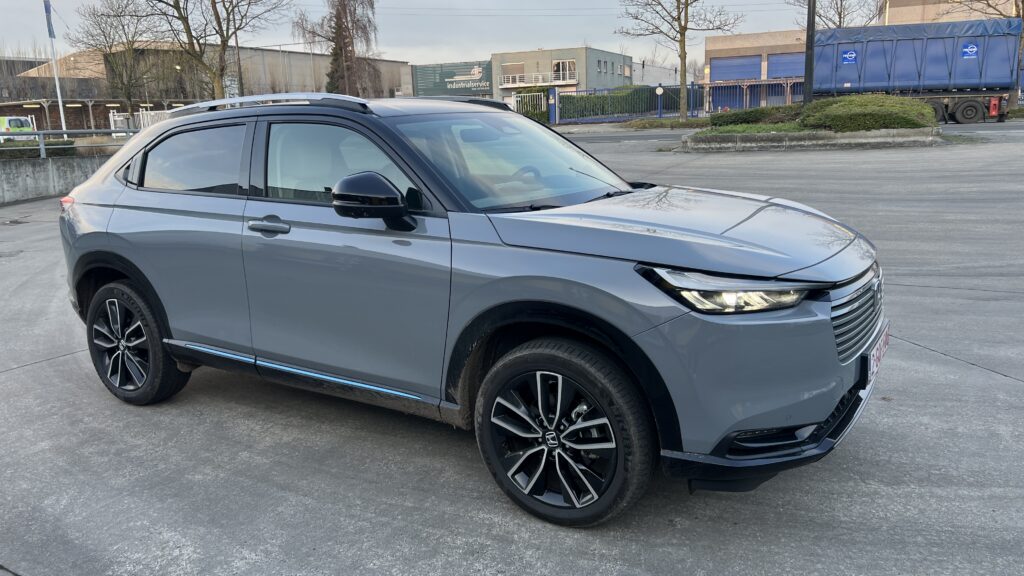
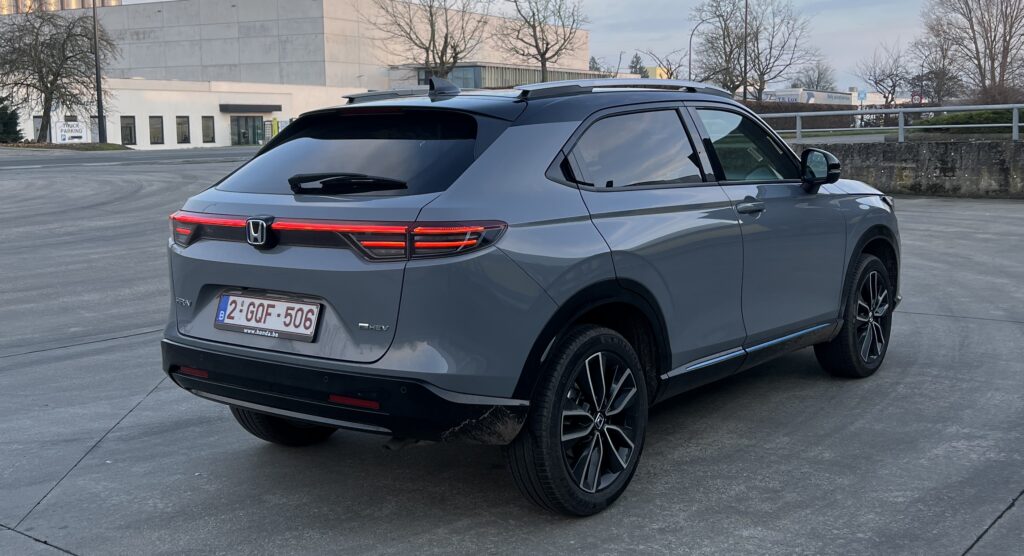
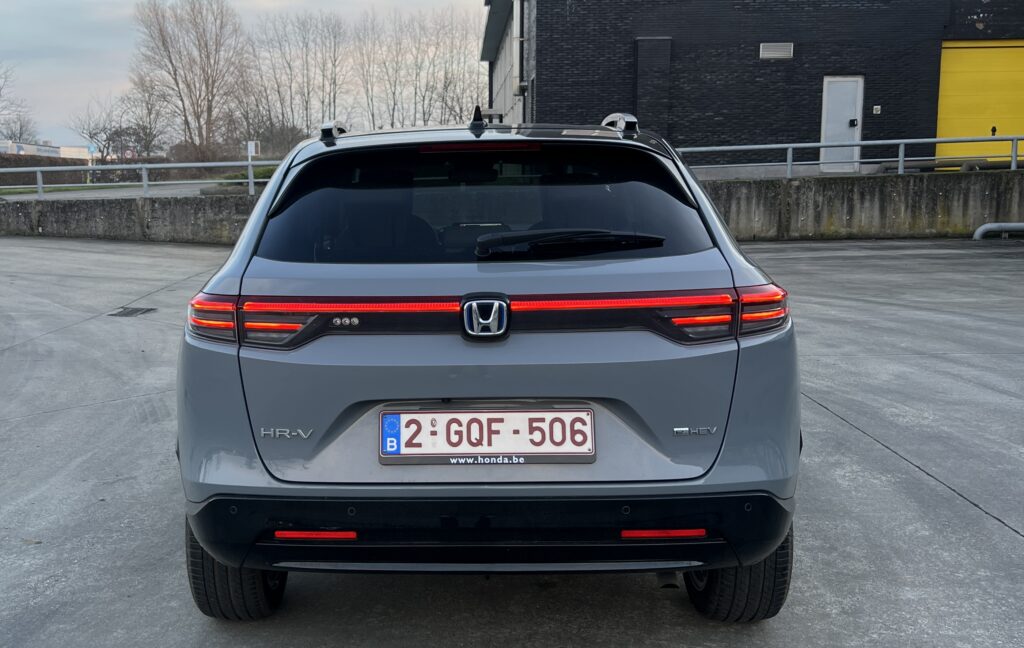
Photo : Jean-Pierre Ndu / GUS