Fragments of Desire: Mosaic as the New Language of Luxury
 Alessandro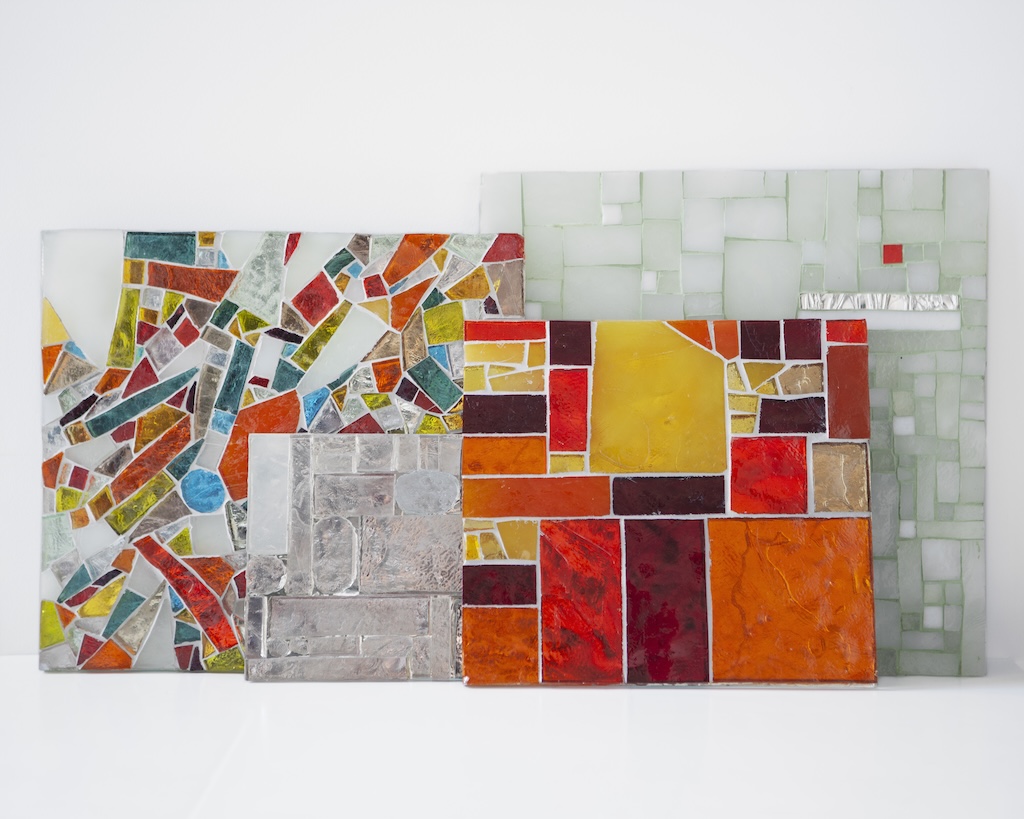
There are moments when design trends stop feeling like trends and start feeling like movements. Mosaic is having that moment. What once belonged to the domes of Byzantium or the fantasy parks of Gaudí has reemerged as a material language of contemporary living—sensual, textured, and unapologetically bold.
From Parisian concept stores to boutique hotels in Mexico City, the fragmented elegance of mosaic is reappearing on walls, floors, and objets d’art. But this isn’t nostalgia. It’s reinvention. In an age of hyper-speed digital pixels, the original pixel—the tessera—has become a symbol of slowness, craftsmanship, and permanence.

The renaissance is driven by artists like Gala Greenwood, a Brussels-based Franco-British mosaicist whose work fuses tradition with modern sensibility. Greenwood doesn’t treat mosaic as decoration; she treats it as atmosphere.
Mosaic brings materials to life and animates what is fixed, she says.

Her pieces are both raw and refined, rooted in an ancient craft yet pulsing with contemporary energy. Glass, marble, ceramic, porcelain—materials that could feel rigid in lesser hands—become fluid, luminous, even sensual under her touch.
We’re witnessing the rise of what could be called slow luxury. In a culture dominated by instant delivery and infinite scrolling, true desirability lies in what takes time—time to make, time to appreciate. Just as men are rediscovering bespoke tailoring or artisanal spirits, design is reclaiming patience as a form of exclusivity.

For Greenwood, this patience is not only a process but a philosophy.
“Mosaic is the art of long patience,” she reflects. “It is built over time. A living image emerges, with its curves, its breaks, its colors, its impulses, and its structure.”
Every work is assembled fragment by fragment, a meditation in material form. The result isn’t just an object; it’s a ritual, a statement, an experience.

For the modern man, mosaic resonates on another level. Masculinity itself is being reframed—not as a monolithic ideal but as a composition of contrasts: strength and softness, tradition and reinvention, clarity and complexity. Much like a mosaic, identity today is about fragments that, when pieced together, reveal something stronger and more compelling than uniformity ever could.

The growing presence of mosaic in galleries, hotels, and private homes signals more than an aesthetic shift—it’s cultural. It’s about bringing back a human scale to design, where materials have history and weight. It’s about aligning luxury with meaning, giving form to values of sustainability, authenticity, and individuality.
Greenwood embraces this holistic approach:
“Each of my creations tells a different story and evokes a particular emotion,” she explains. “I love to create unique atmospheres—where interior architecture, art, and craftsmanship come together.”
And perhaps that’s why mosaic feels so right, right now. In a world that often feels fragmented, this is an art form that takes what is broken and makes it whole again—stronger, more beautiful, and infinitely more modern.
Discover more: @gala.greenwood | galagreenwood.com