The Heat of Now: Inside Ceramic Brussels
 Iker
Iker
There’s a particular energy you feel the moment you step into Ceramic Brussels. It’s the heat that is not literal, but emotional, cultural, sensory. A kind of slow-burning electricity that rises from clay, fire, and the hands of artists who understand that in an age of speed, the most radical luxury is to shape something with intention.
As the fair returns for its third edition from 21 to 25 January 2026 at Tour & Taxis, it confirms its status as the international stage for contemporary ceramics, a niche that has quietly become a global obsession. With more than 70 exhibitors and nearly 200 artists, the fair has grown into a pilgrimage for the culturally attuned: collectors, gallerists, curators, and the aesthetically restless who come seeking something tactile in a world that feels increasingly virtual.
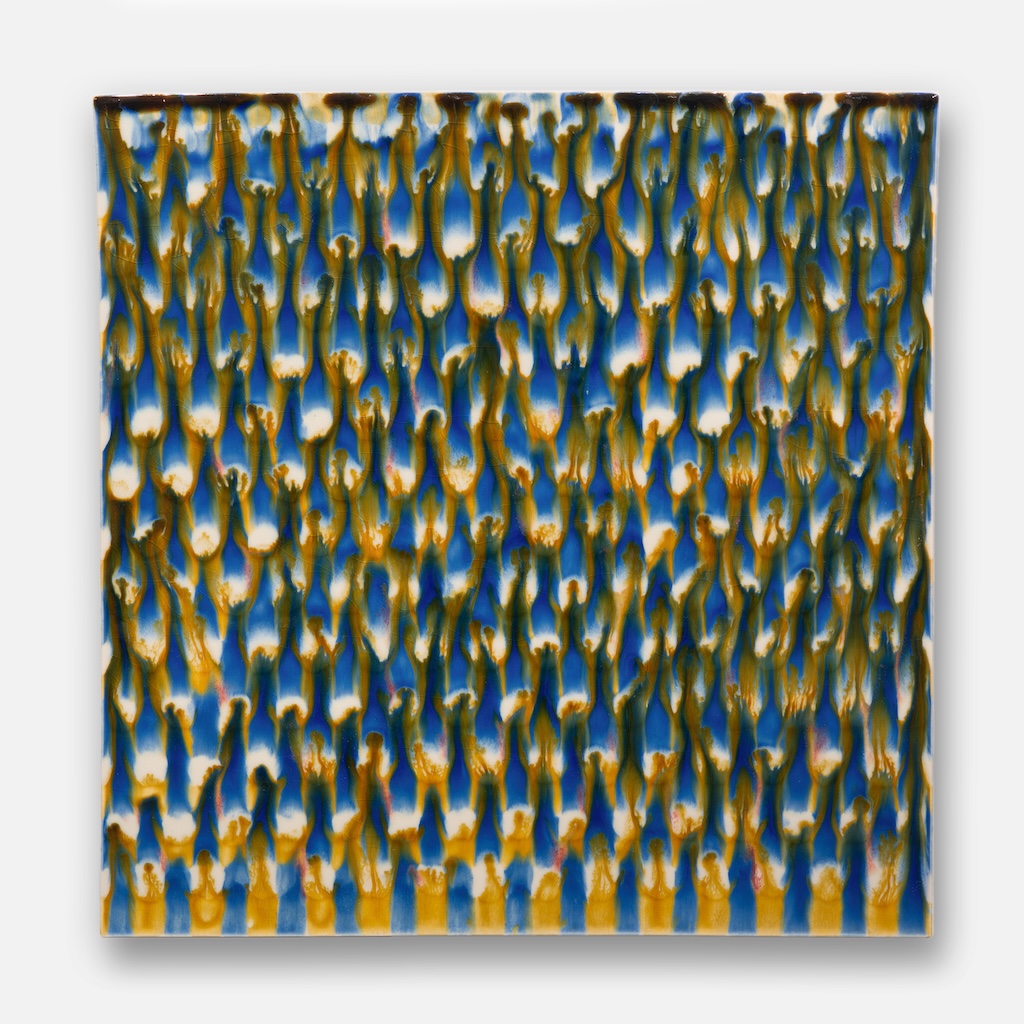
This year’s spotlight swings toward Spain, a country whose creative pulse seems particularly aligned with ceramics’ sensuality and modernity. Seven Spanish galleries anchor the focus España section, offering a cross-section of contemporary Iberian audacity: from Seville’s poetic abstractions to Santiago de Compostela’s earthy modernism and Barcelona’s border-blurring gestures. The dialogue continues across Brussels all week, woven into EUROPALIA’s spotlight on Spain, the Brussels Jazz Festival, and BRAFA. The city becomes a cultural constellation—and ceramics its gravitational center.

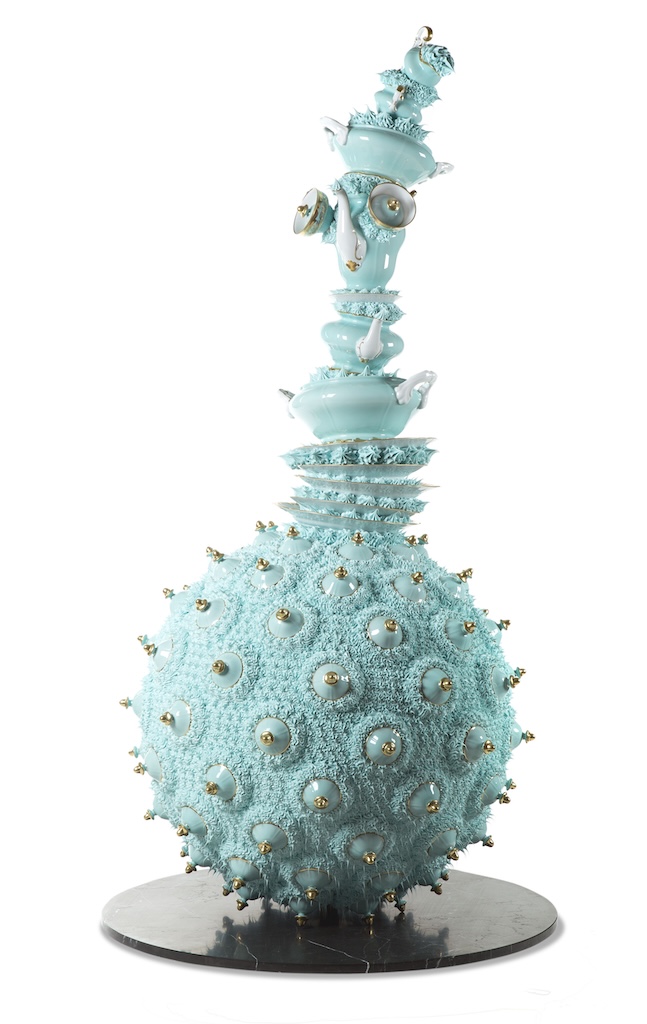
Presiding over the fair is guest of honour Elmar Trenkwalder, whose monumental sculptures recall baroque palaces dreaming in technicolour. His work stands at the entrance like a threshold into another dimension, one where ornament isn’t excess, but emotion.

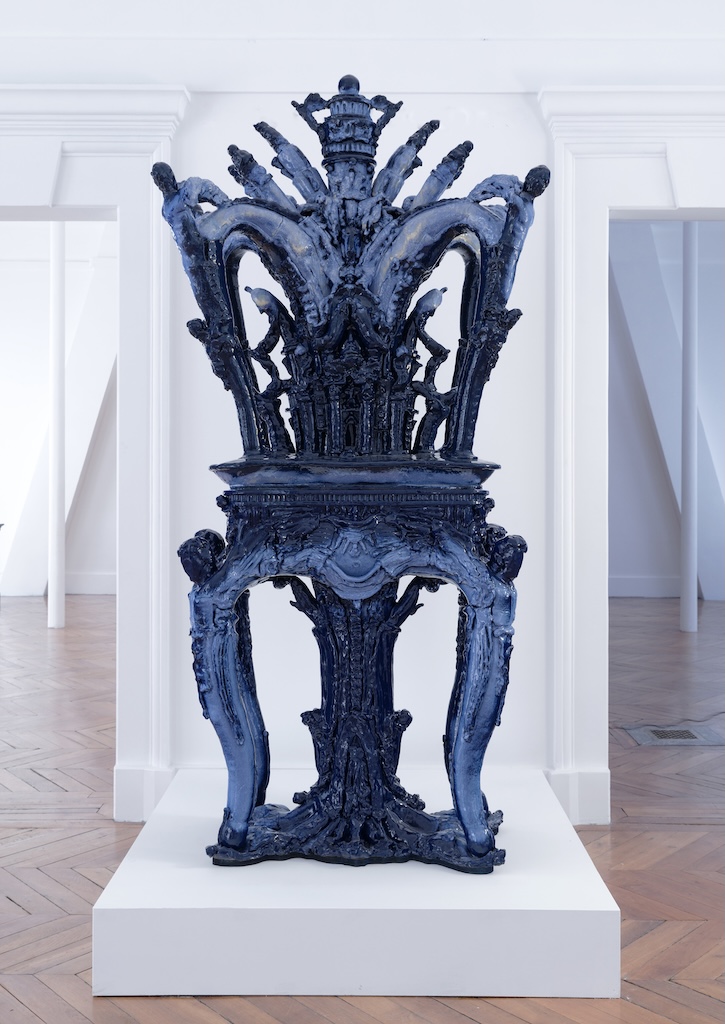
But what’s most seductive is the diversity: Turkey to Norway, Japan to the Netherlands, long-established galleries beside bold young spaces. Twenty solo shows invite deep, intimate encounters with artists who stretch the medium beyond its clichés – into the uncanny, the architectural, the almost erotic. And at the heart of it all, the collective show of the ten laureates of the ceramic brussels art prize 2026, a reminder that clay remains one of art’s most forward-looking tools.
Hall C becomes the fair’s cerebral lounge: talks, a pop-up bookstore, design-forward publishers, and guided discovery tours from Puilaetco that transform a wander into a curated journey. It’s the kind of space where you overhear conversations that rewrite your perspective where a collector from Tokyo debates a curator from Antwerp about the new visual language of glaze.

Why does all this matter now?
Because ceramics sit at the intersection of so many obsessions shaping modern life: slowness, materiality, global craftsmanship, sensual minimalism, the beauty of imperfection. It’s art you want to touch, live with, and feel close to. For a generation fluent in both digital futures and ancient rituals, it’s the perfect medium – earthy yet elevated, timeless yet utterly contemporary.
In a world that scrolls fast, ceramic brussels invites us to look slowly. To feel the pulse of something real. To reconnect with the pleasure of surfaces, shapes, and stories fired at over a thousand degrees.
And maybe that’s the true luxury today: not just owning an object, but engaging with a world where culture is made by hand, with heat, risk, and desire. A world where clay becomes attitude.
This January, Brussels becomes the capital of that world. Let yourself be shaped.