Light as Language at The Atomium
 Iker
Iker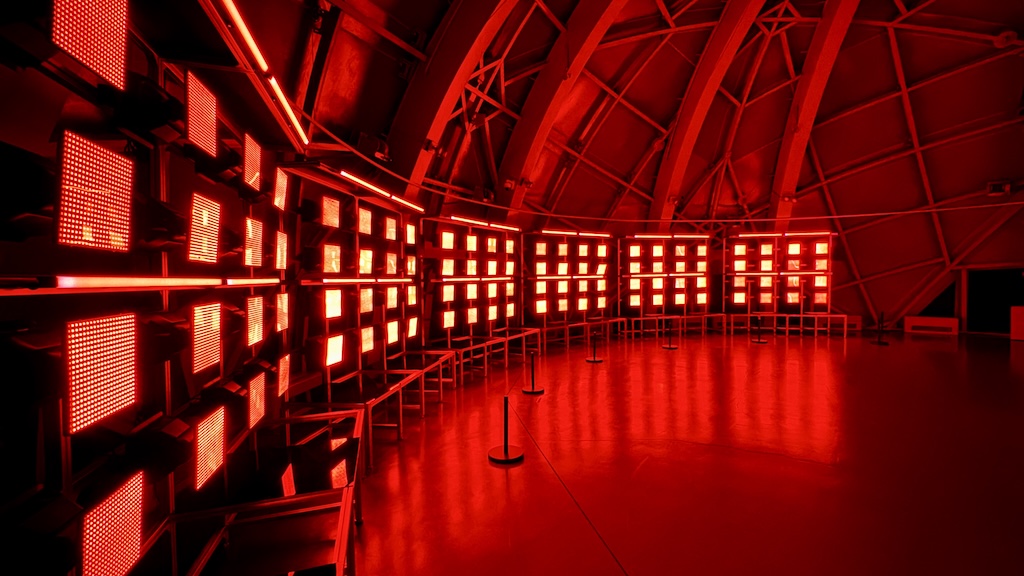
There is a particular clarity to the Atomium this year. Not nostalgia. Not spectacle. A sharpened presence.
Twenty years after its reopening in 2006, the building marks its renovation not with a retrospective, but with activation. The anniversary programming makes something precise visible. Preservation and projection are no longer opposites. The monument is not being remembered. It is being used.
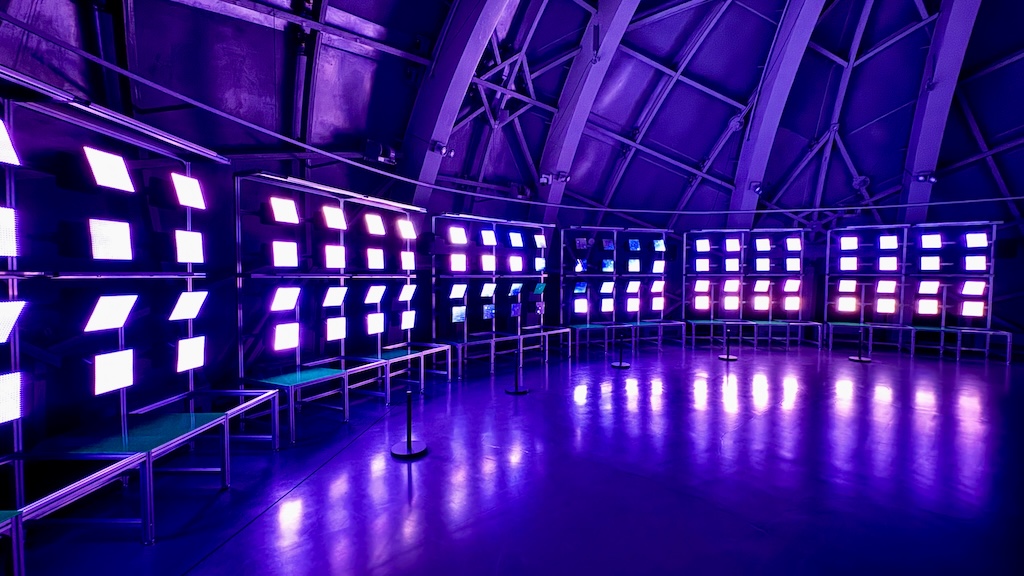
What shifts most is light. Since 2013, the Atomium has woven digital art into its structure. In 2026, that commitment becomes structural. Three new installations inhabit the spheres and circulate through the building’s vertical logic. They do not sit inside the architecture. They reorganize how we move through it.
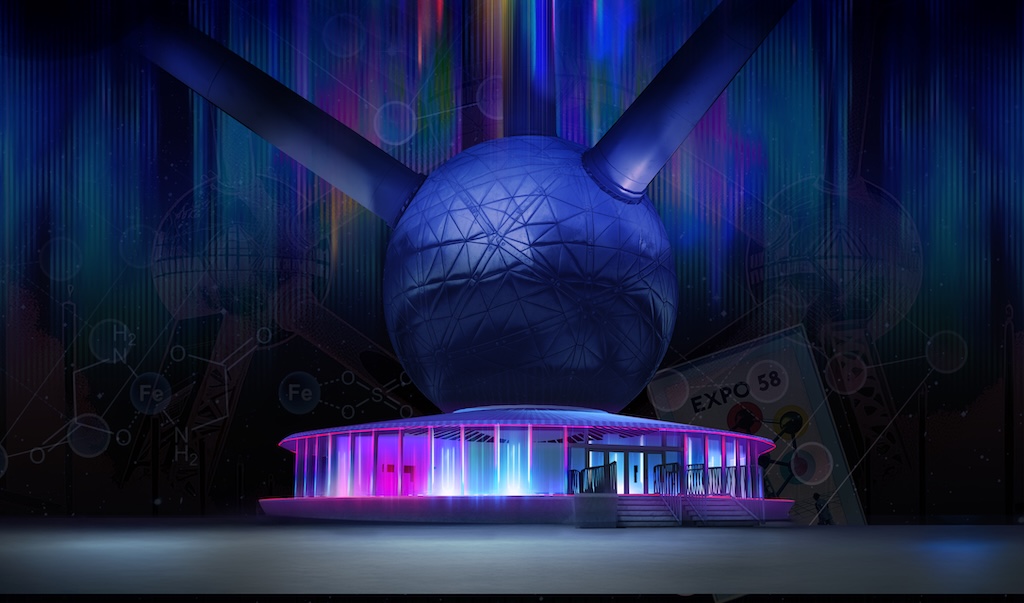
Nimbus by Visual System reshapes the original tubes into luminous columns. Mirrors fracture the geometry visitors think they know. Sound travels through the metal shell. The work is open during the day. Sunlight filters across LEDs and reflective surfaces, creating a softer field of perception. The experience is not dependent on darkness. It is about modulation. You navigate a space that feels suspended yet anchored in steel. Light becomes material rather than effect.
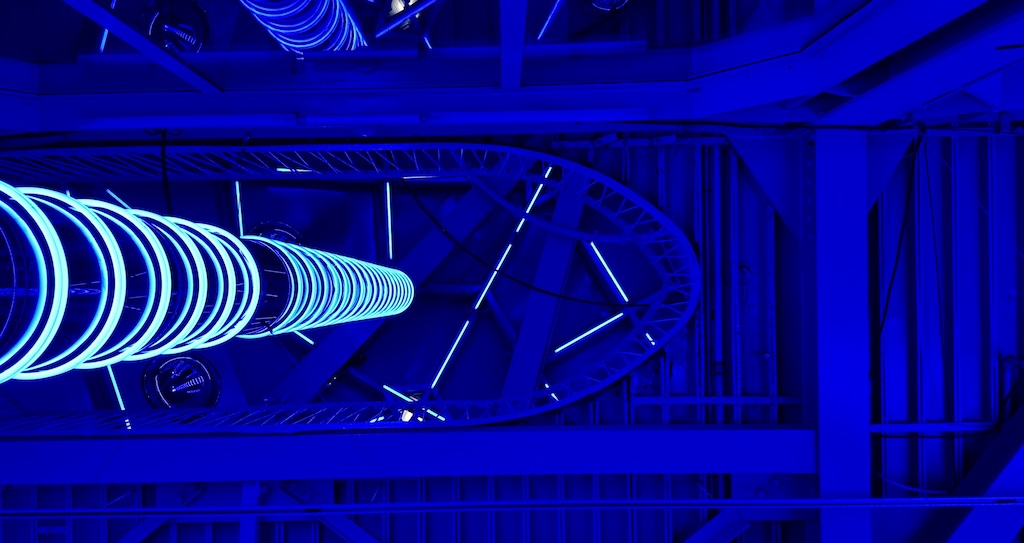
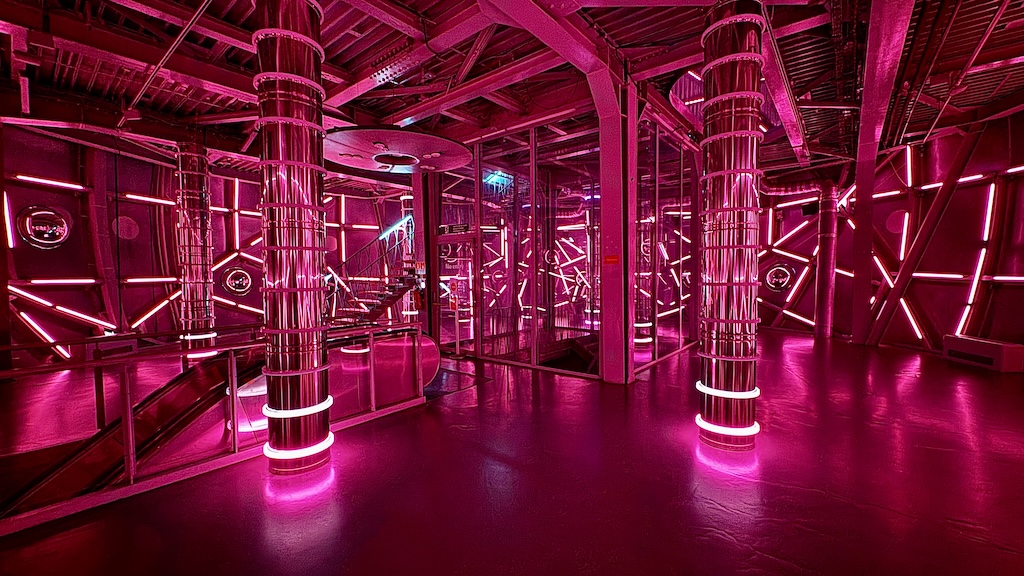
Supply Chain stages another dimension of contemporary life. Mirrors, mobile LED modules, industrial assembly structures. It renders visible the infrastructures that make our daily technologies possible. In daylight, reflections multiply bodies alongside circuitry. You are implicated in the choreography of production and flow. The installation insists on physical presence. The screen is not a boundary. The body completes the circuit.
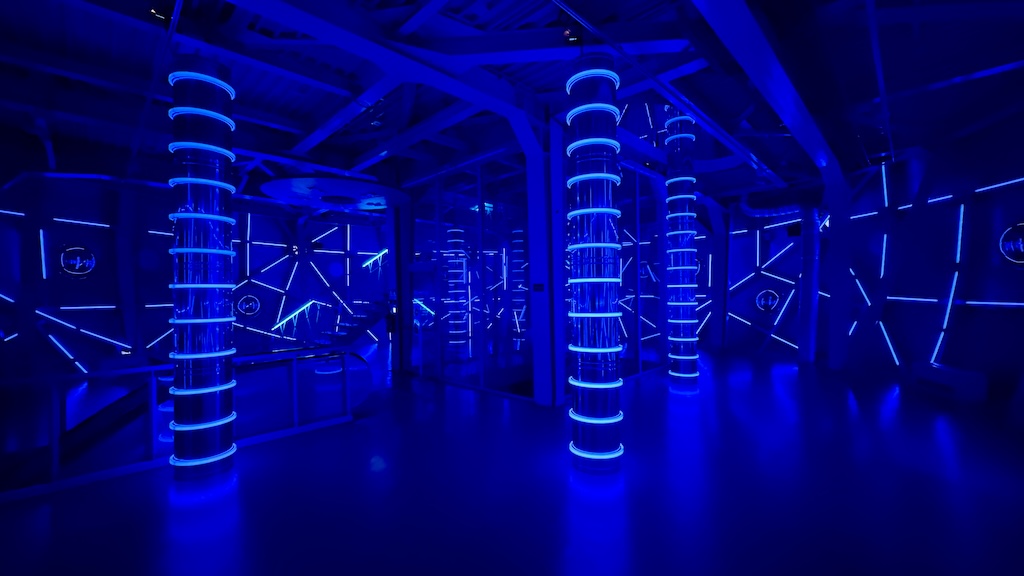
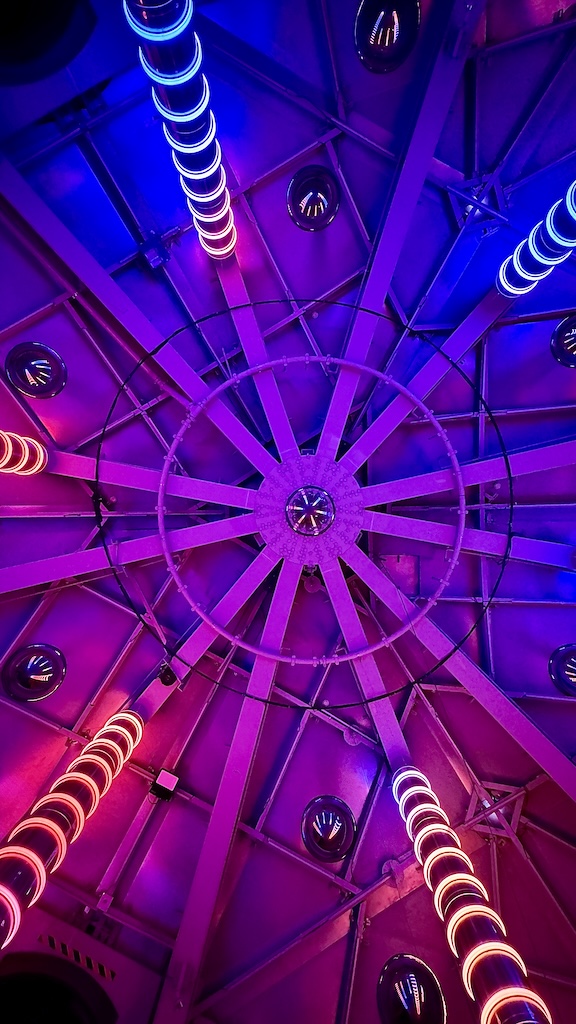
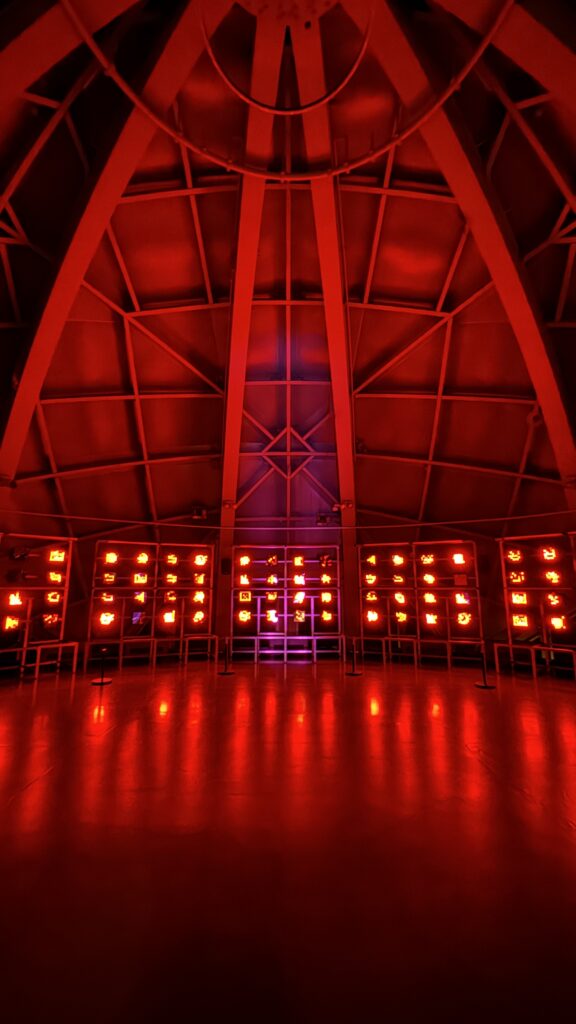
Rotonde extends the building into evening hours, giving the lower cupola a measured rhythm after dusk. Yet even this nocturnal identity belongs to a continuous program. The Atomium now holds two temporalities at once. Exhibition by day. Pulse by night.
The anniversary moves beyond installation. A podcast revisits the renovation through engineers, workers, and neighbors who resisted demolition and replaced aluminum with stainless steel. Their voices reposition the icon. The building becomes less abstract symbol and more collective effort. Care appears as innovation.
Collaborations fold the monument back into daily life. A Brussels jeweler translates its silhouette into limited pieces worn against the skin. A partnership with the Smurfs, fellow creations of 1958, turns shared heritage into play. Science days with local universities transform the spheres into sites of inquiry for young visitors.
What emerges is a portrait of how we inhabit culture now. We no longer approach monuments as static symbols. We expect them to host experience, to converse with technology and memory at once. We move through culture as participants. We listen to buildings. We wear them. We stream their histories.
The renovation once saved a structure. Twenty years later, programming sustains its relevance. Architecture alone is not enough. It requires light, sound, voice, and collaboration.
The future here is not promised. It is practiced daily, sphere by sphere.