Test drive – Audi A5 Avant e-Hybrid 299 hp : The Estate That Wants to Do It All
 Jean-Pierre Ndu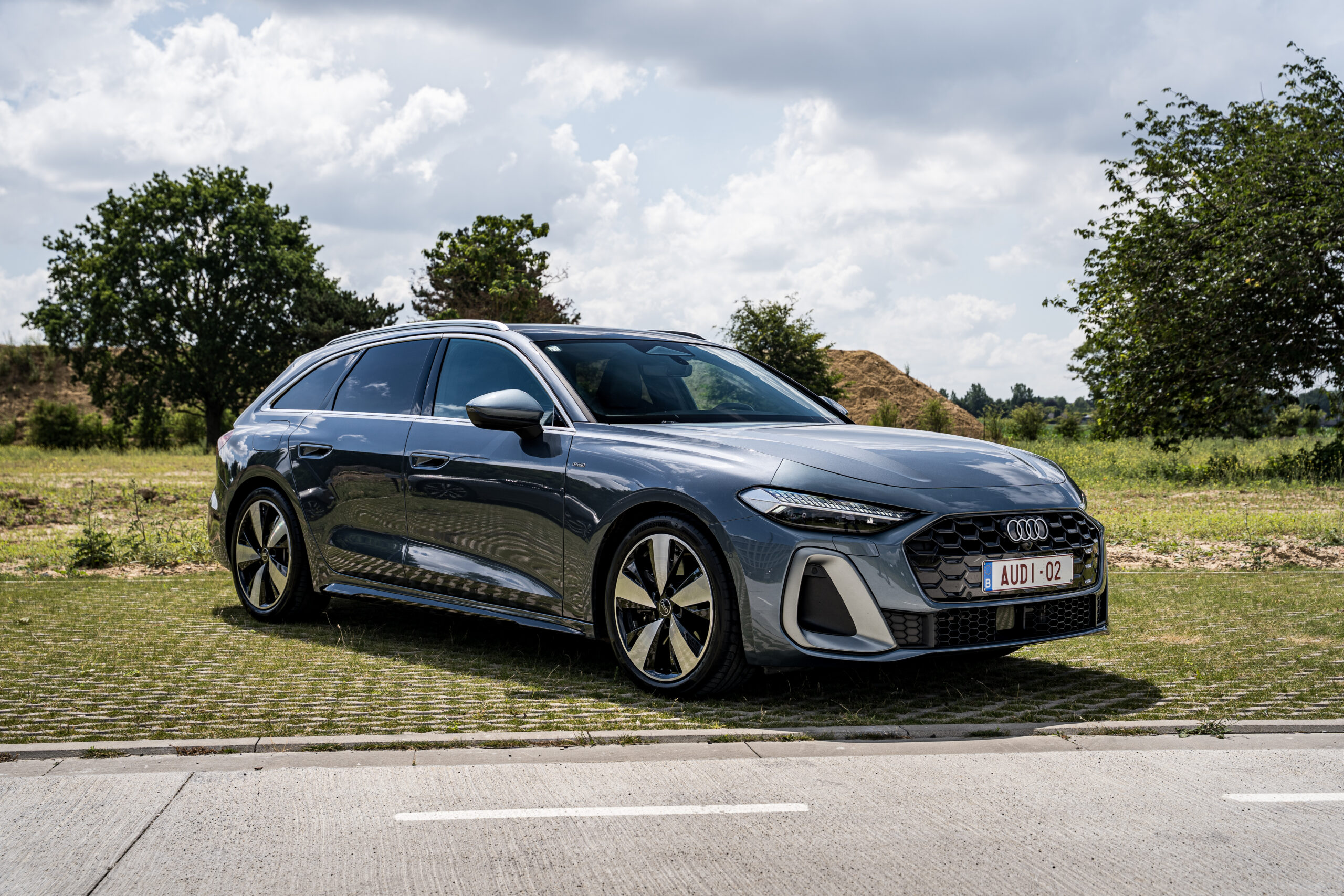
For years, the A4 Avant was one of the cornerstones of Audi’s range. Today, its successor wears a different badge. The new A5 Avant takes over the role of the brand’s premium family estate, with a more modern design, more technology and a heavily electrified engine line-up. Audi’s naming strategy has evolved in the meantime, meaning that the A5 name is no longer reserved for the former coupé and Sportback models.
The family has also grown further, because in 2026 the new RS 5 is now a reality rather than something still waiting in the wings.
For our test, however, we focused on a much more understated version and probably one that makes more sense for many Belgian drivers: the Audi A5 Avant e-Hybrid quattro with 299 hp. A plug-in hybrid estate designed to handle electric commuting during the week, longer journeys at the weekend and still offer enough performance to avoid feeling like the overly sensible choice.
Bigger, but still unmistakably Audi
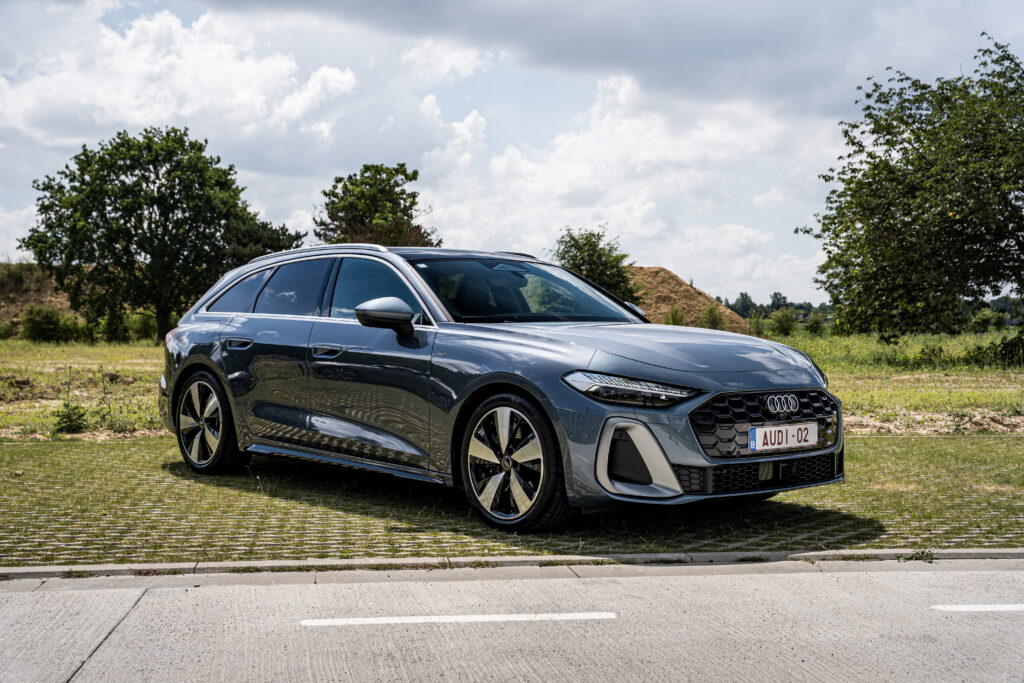
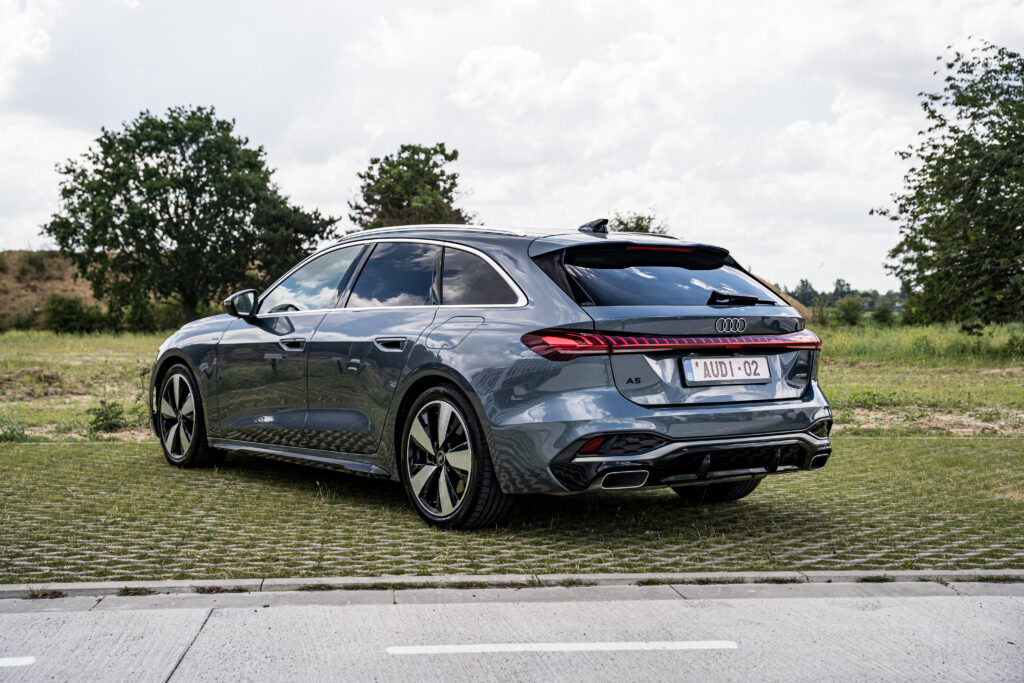
The A5 Avant does not try to reinvent Audi design. It is immediately recognisable, but its proportions have evolved significantly. At around 4.83 metres long and 1.86 metres wide, it is roughly ten centimetres longer than the previous A4 Avant, while its wheelbase now stretches to almost 2.90 metres.
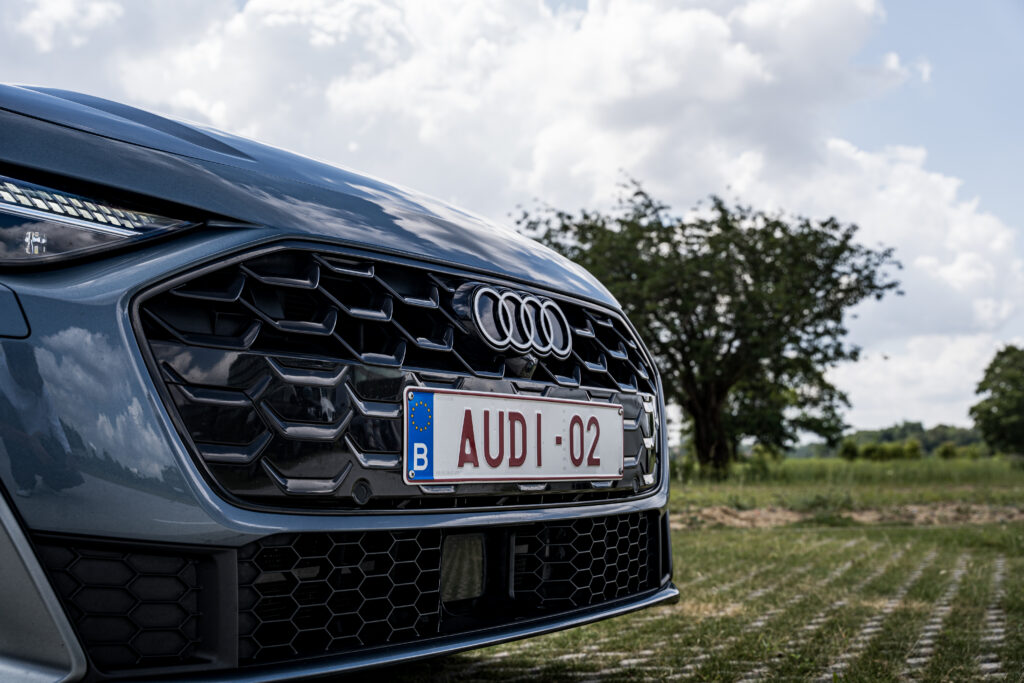
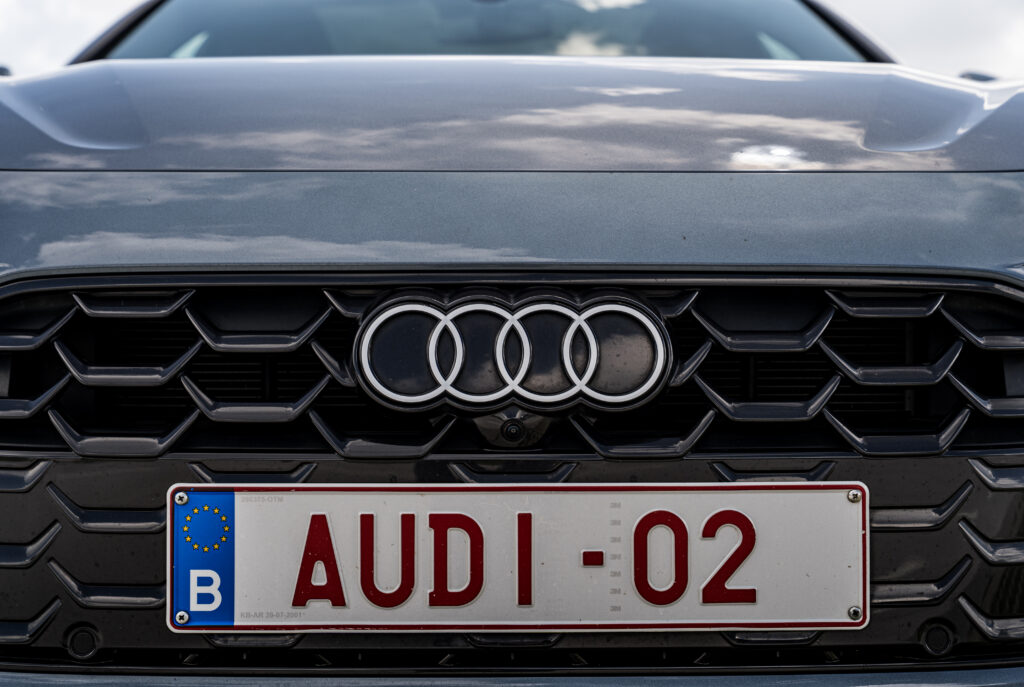
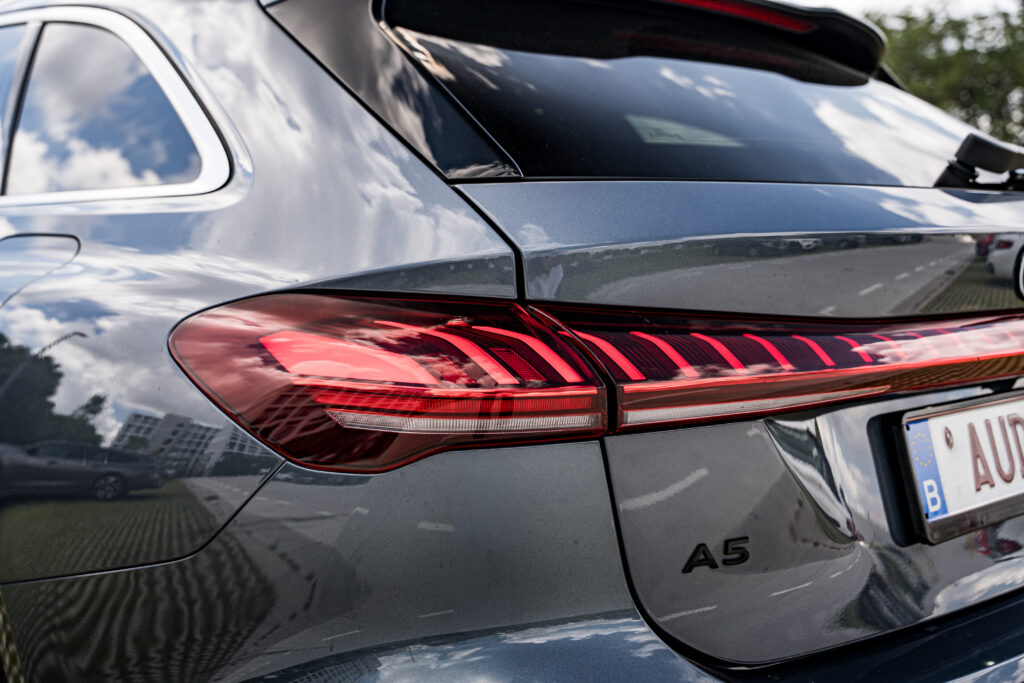
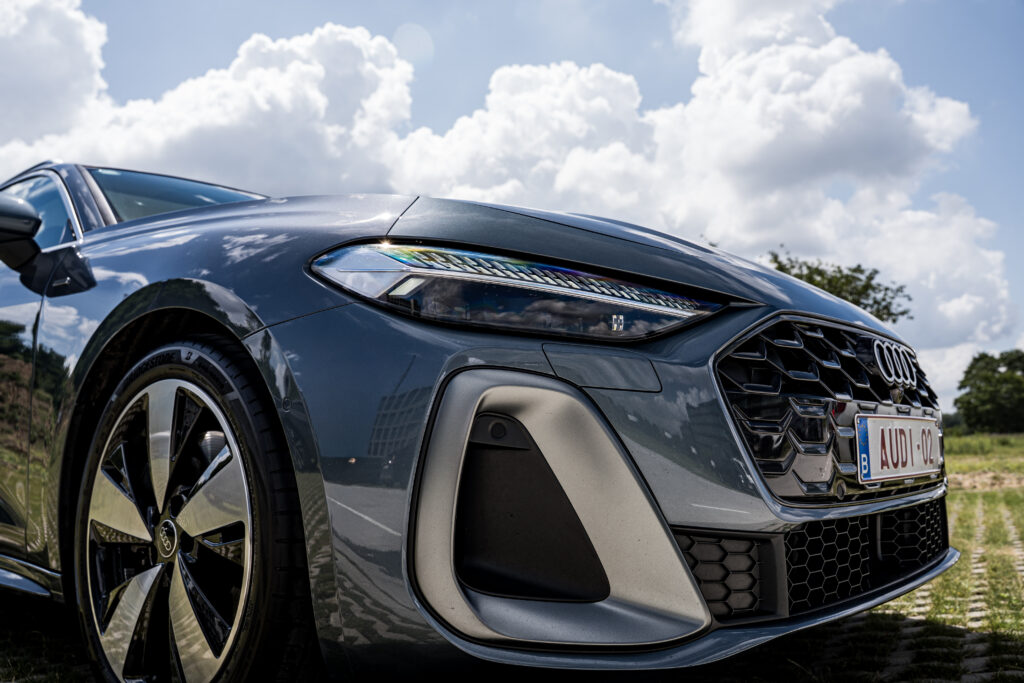
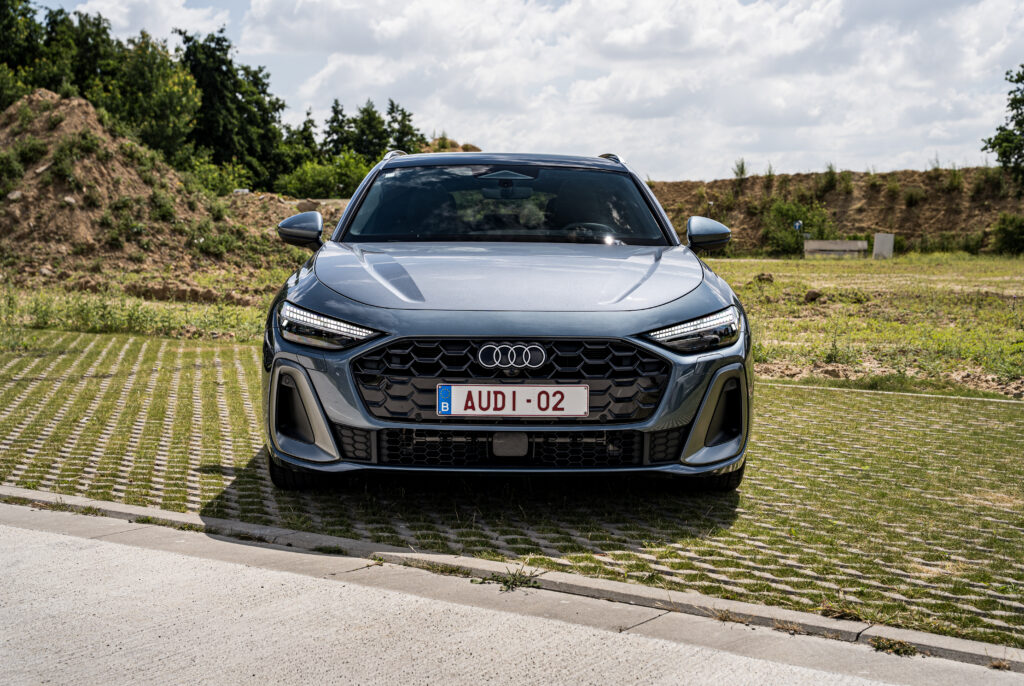
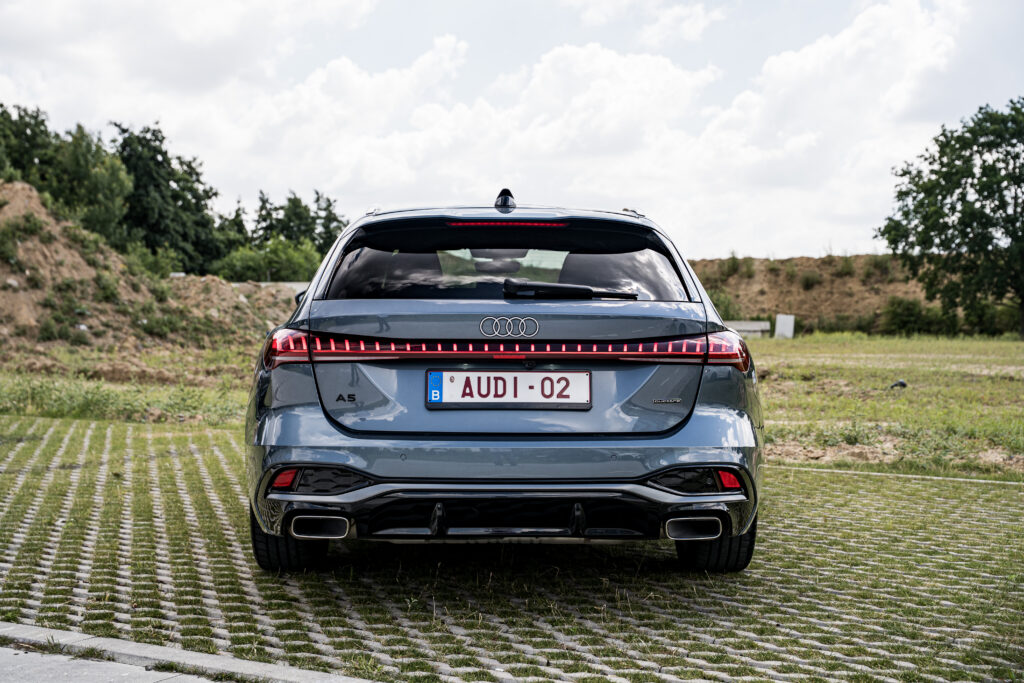
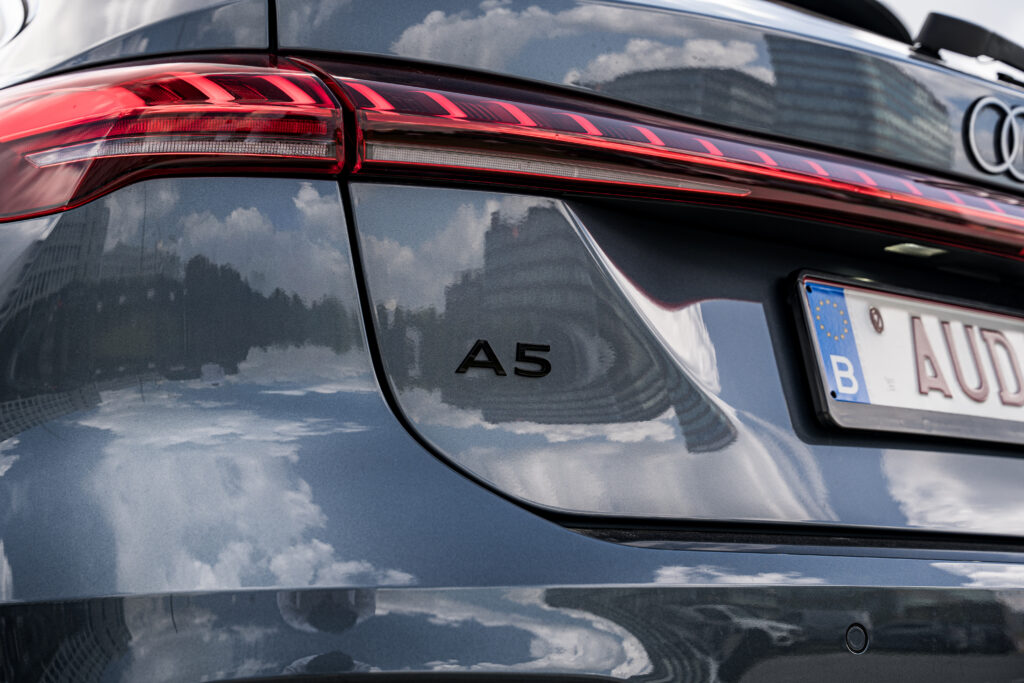
Visually, that extra size suits it. The bonnet appears longer, the roofline more stretched and the profile almost approaches shooting-brake territory. The Singleframe grille is lower and wider, the headlights are slimmer and the rear is now crossed by a continuous light signature. The body has gained more muscle without becoming overly aggressive.
On Belgian roads, this format still makes sense. The A5 feels sufficiently prestigious for long-distance driving and professional use, yet remains far less imposing than a large SUV. That said, at nearly 4.85 metres long, it is no longer quite the compact family estate the A4 once was.
The biggest compromise comes from the hybrid system. The battery beneath the floor reduces luggage capacity to 361 litres, rising to 1,306 litres with the rear seats folded. For a car wearing the Avant name, that is arguably its most obvious weakness.
Inside, Audi goes back to what it does best
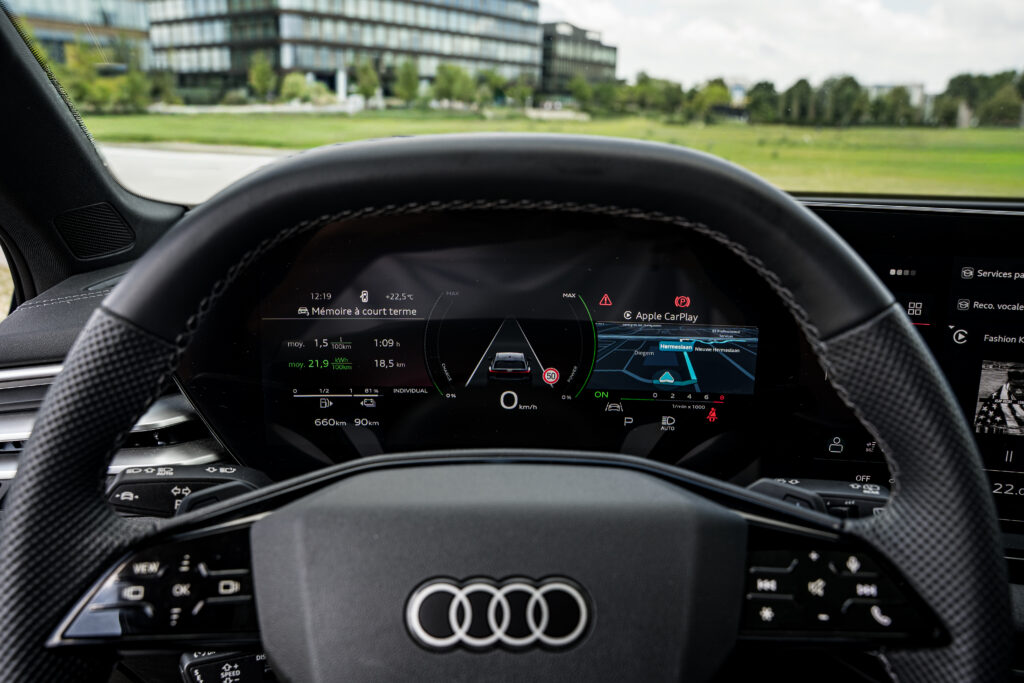
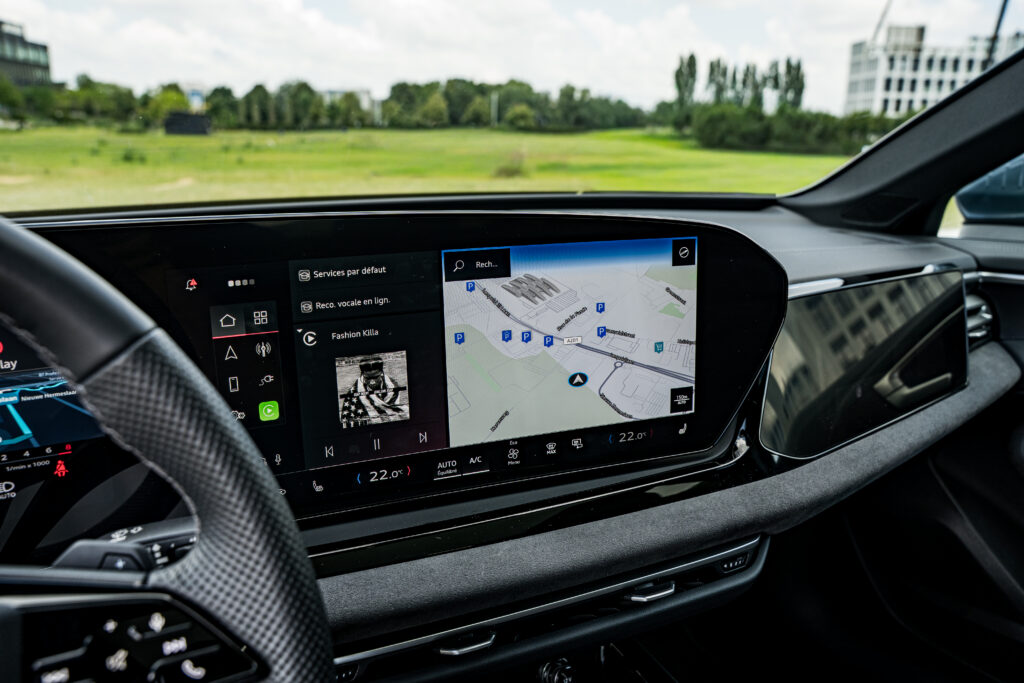
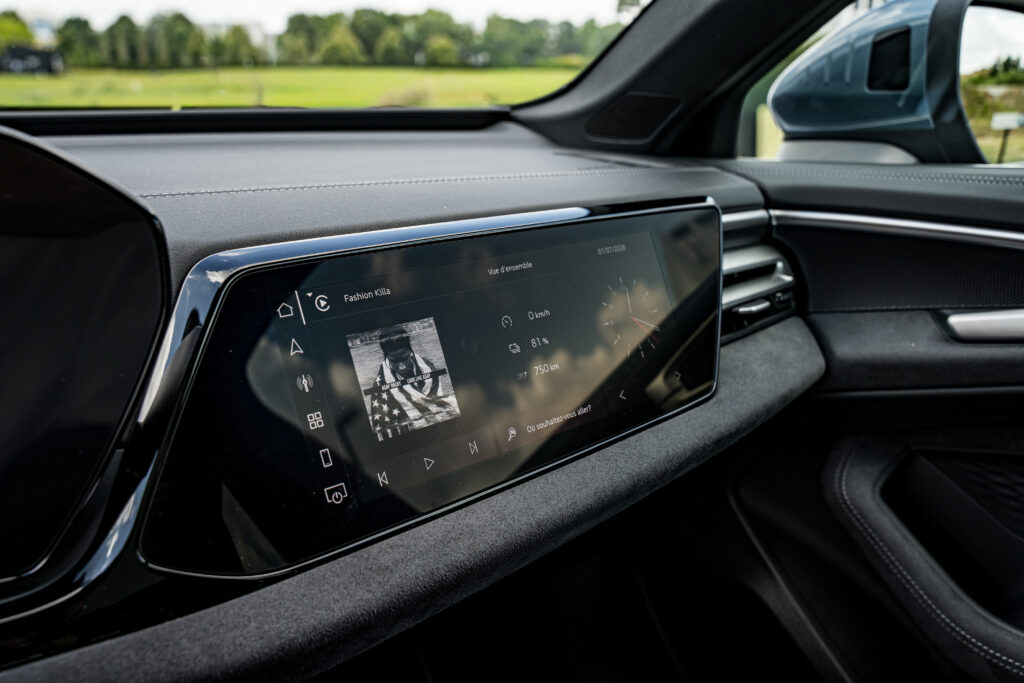
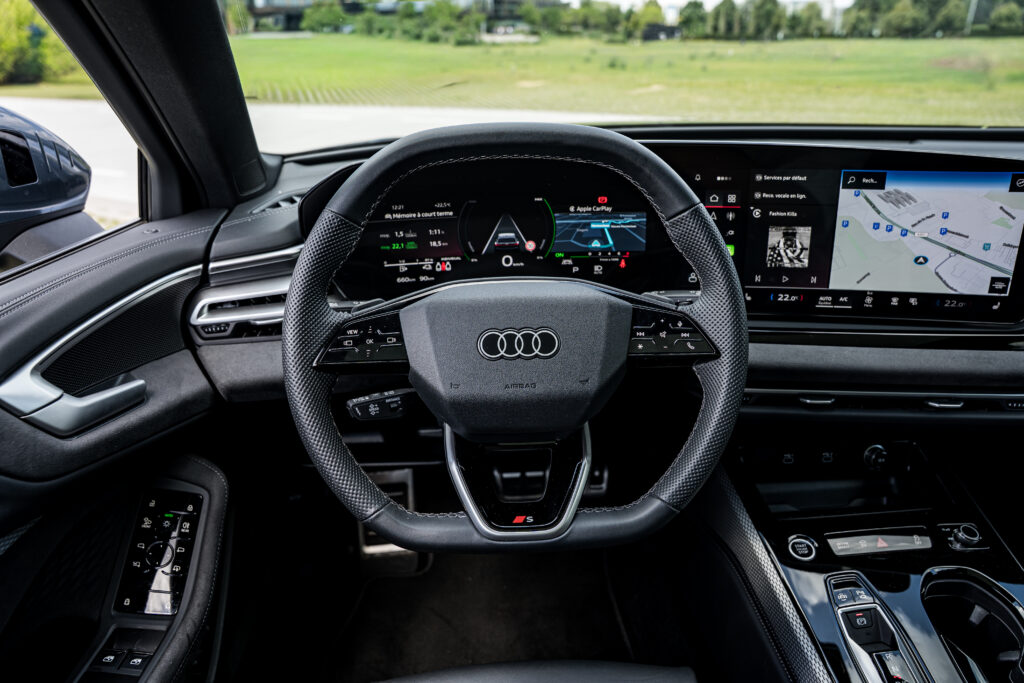
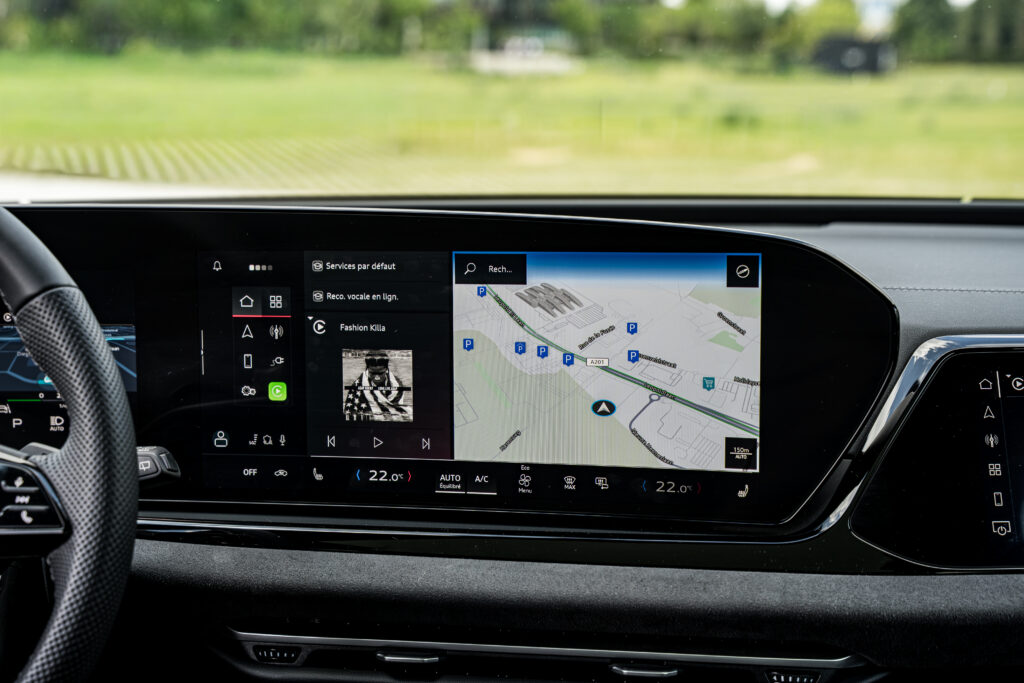
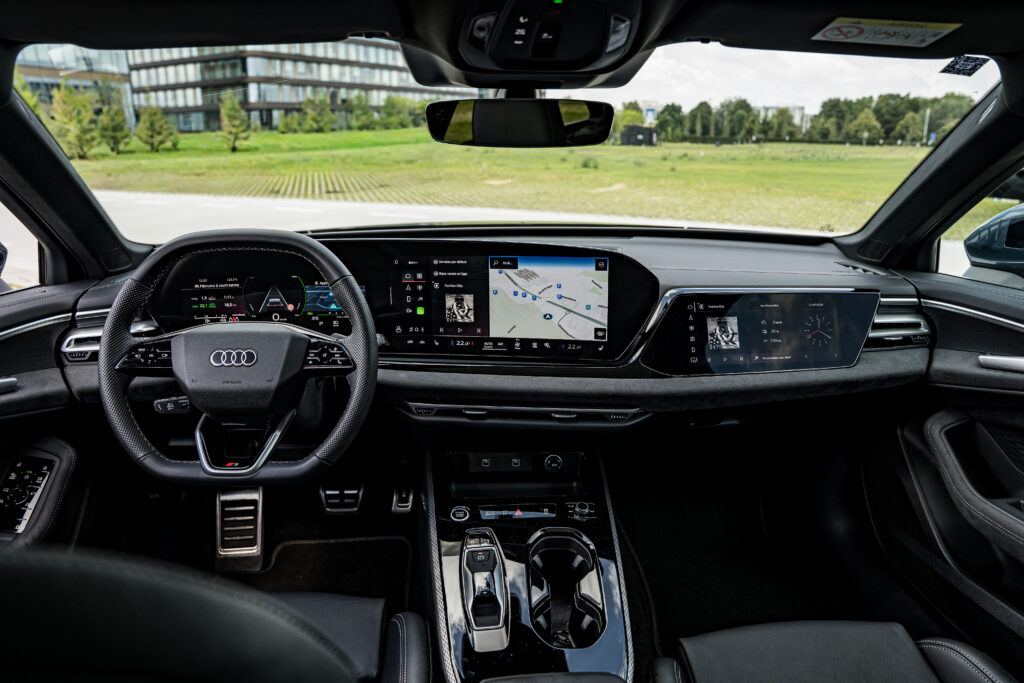
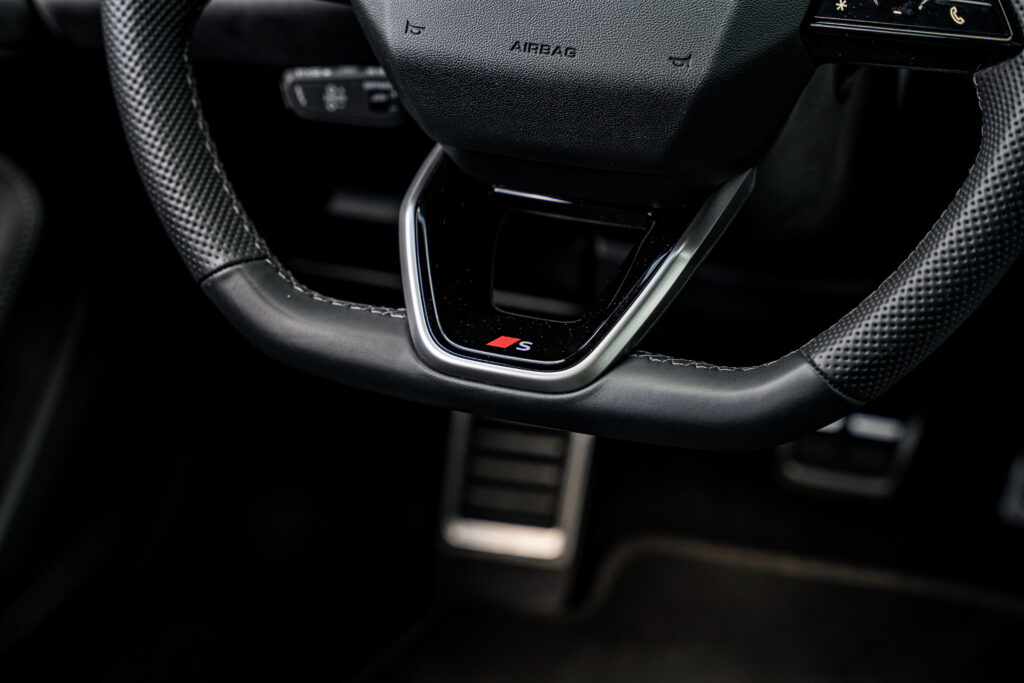
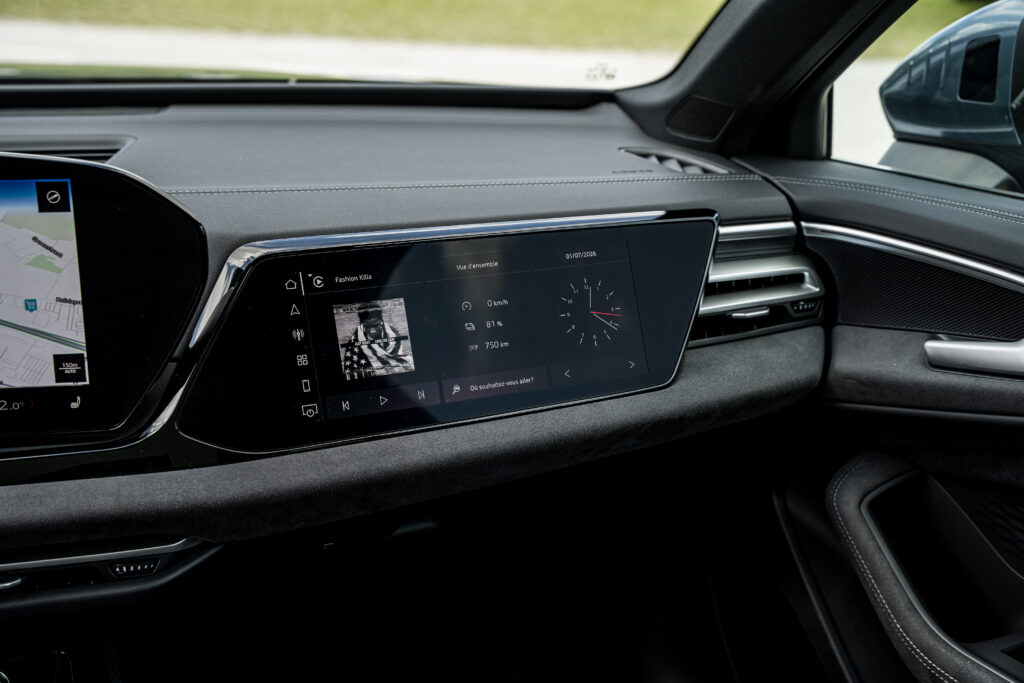
Behind the wheel, the generational leap is far more noticeable. The relatively restrained atmosphere of the old A4 gives way to a cabin dominated by digital displays. In front of the driver, the Audi Digital Stage combines the instrument cluster and central infotainment screen within a curved panoramic layout. Depending on specification, a third display can also be fitted in front of the passenger.
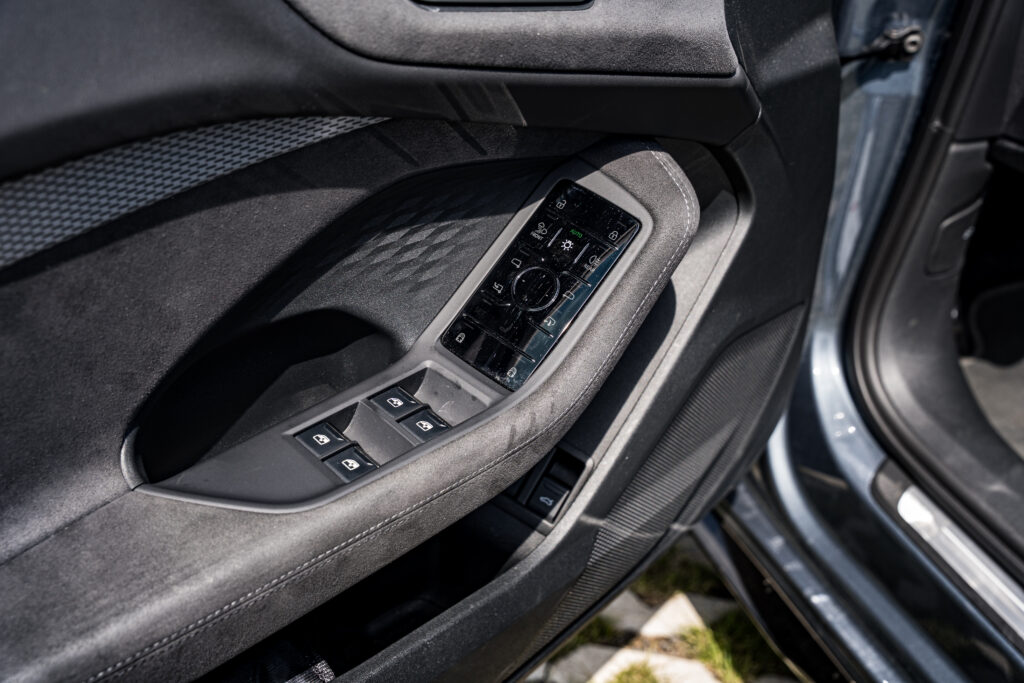
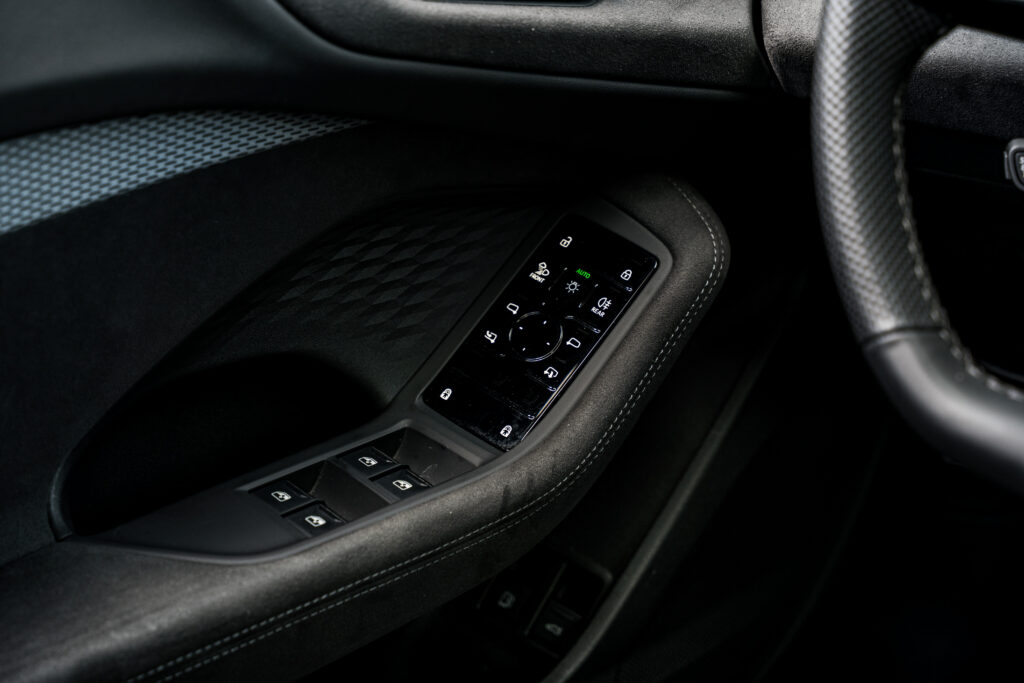
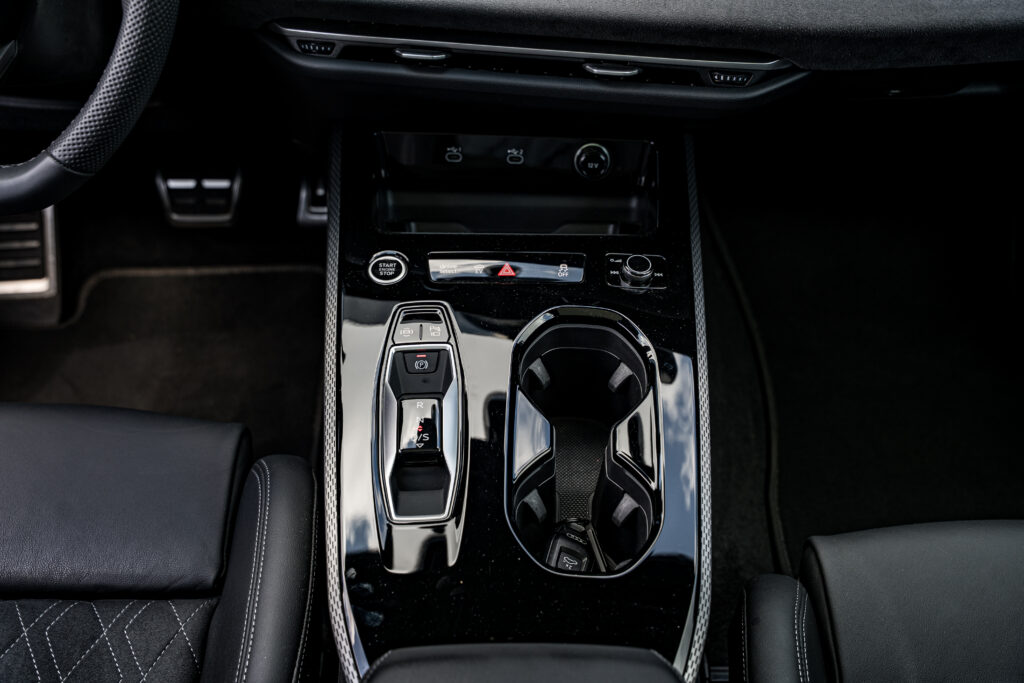
The presentation feels impressive without becoming unnecessarily futuristic. Graphics are sharp, visibility is excellent and the interface quickly becomes familiar. Permanent shortcuts on the central screen are useful, although Audi has also followed the industry trend of moving more and more functions into touch-sensitive controls.
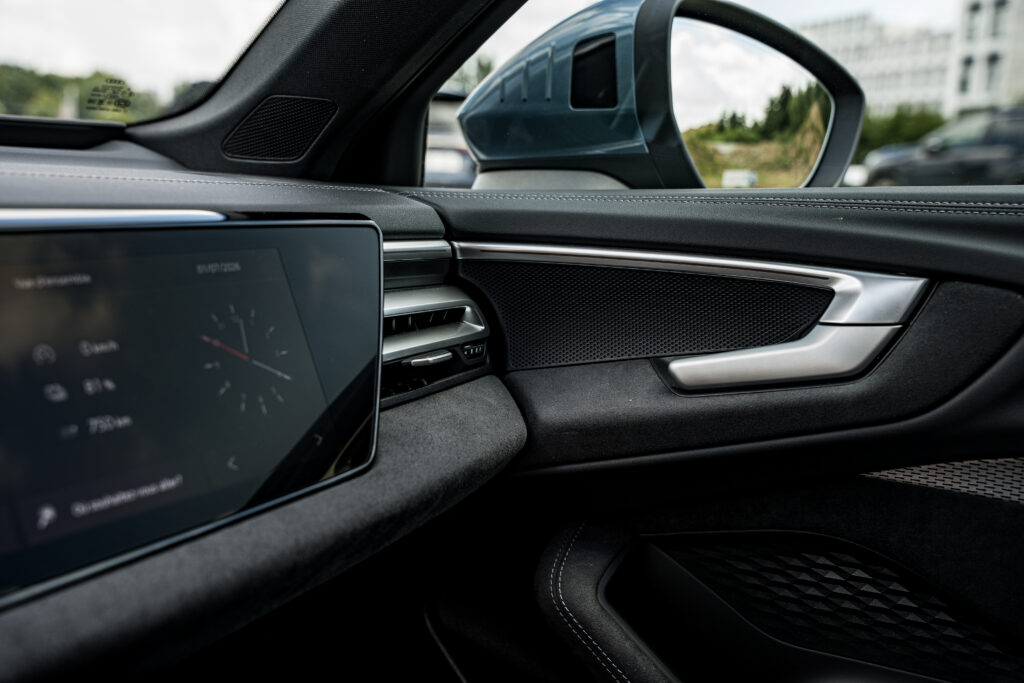
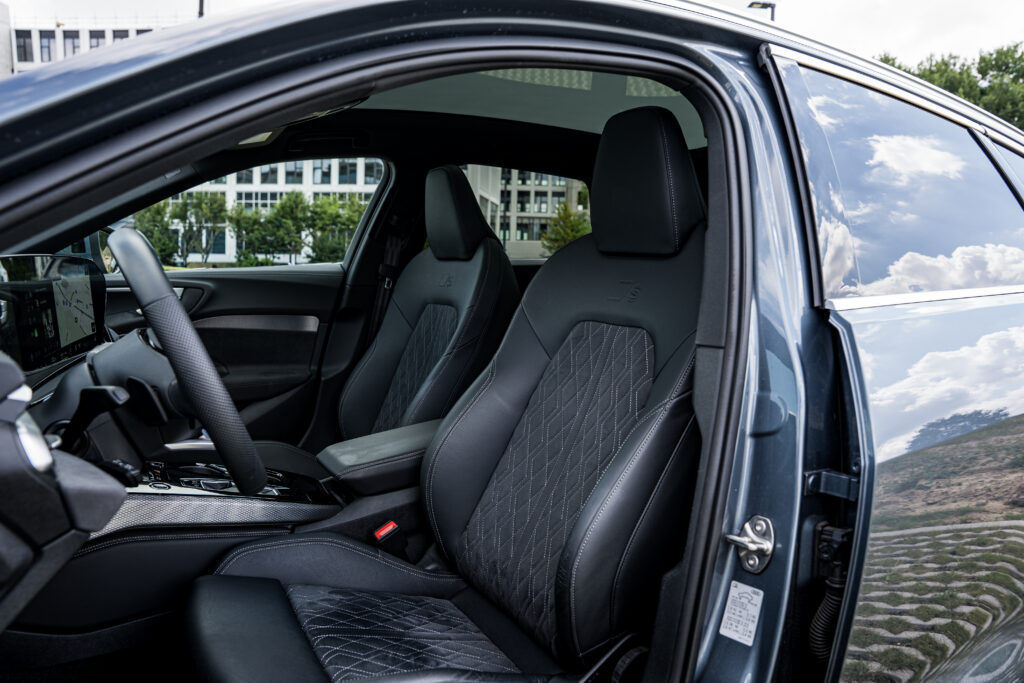
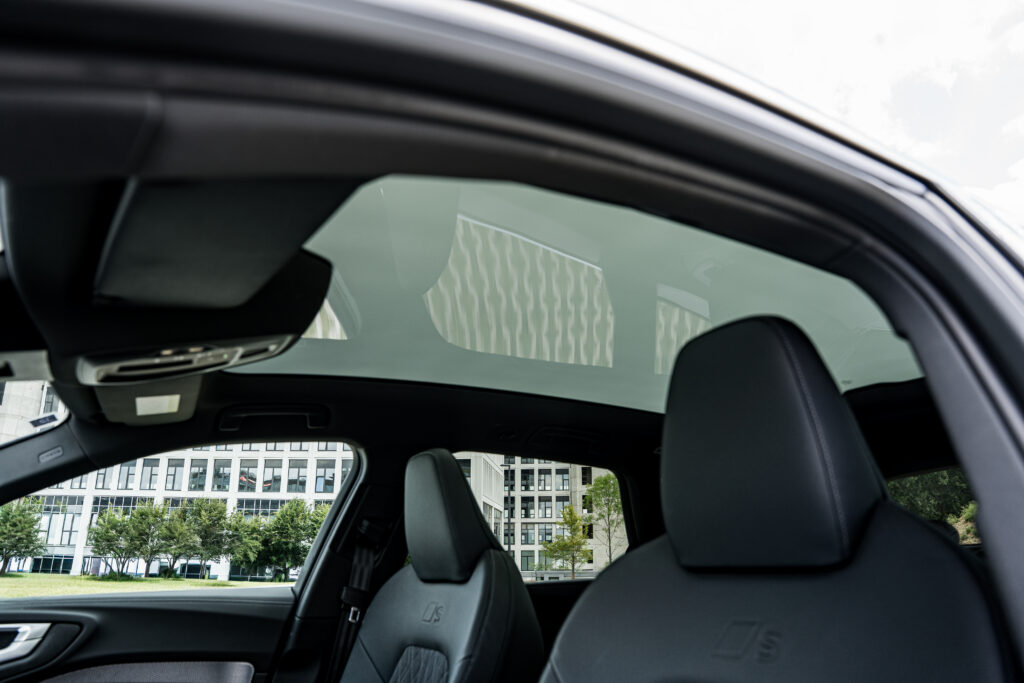
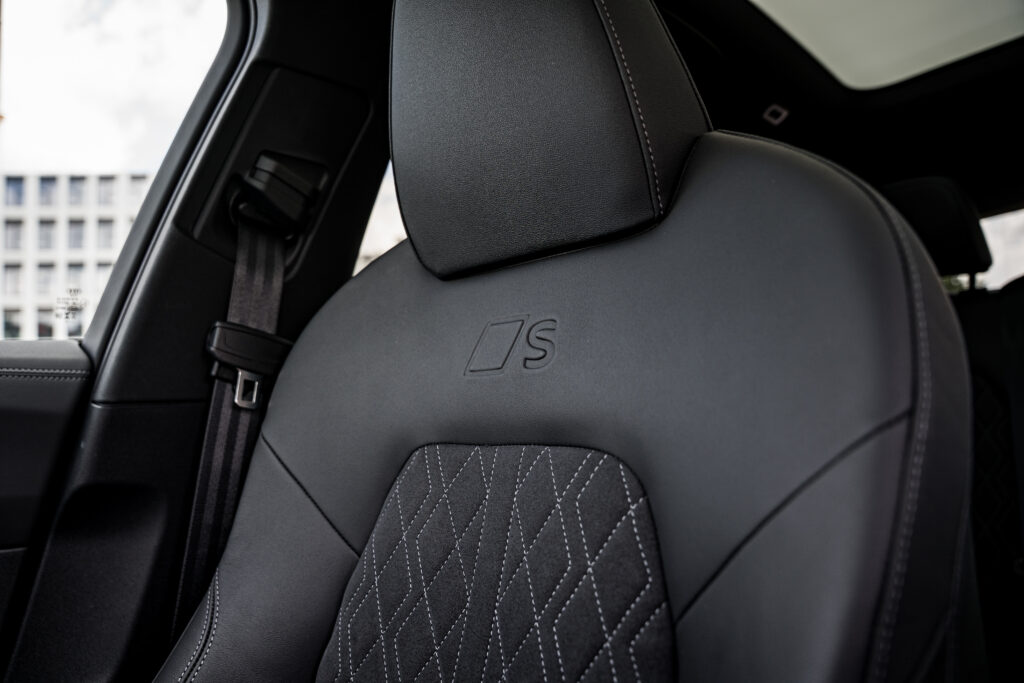
Material quality and assembly are once again close to what one expects from the brand. The seats strike a good balance between support and long-distance comfort, while sound insulation contributes strongly to the premium atmosphere.
Rear passengers have enough room for two adults to travel comfortably, helped by the longer wheelbase. It is simply a shame that the increased exterior dimensions do not translate into a larger luggage compartment in this e-Hybrid version.
Two e-Hybrids, with the RS 5 now sitting at the top
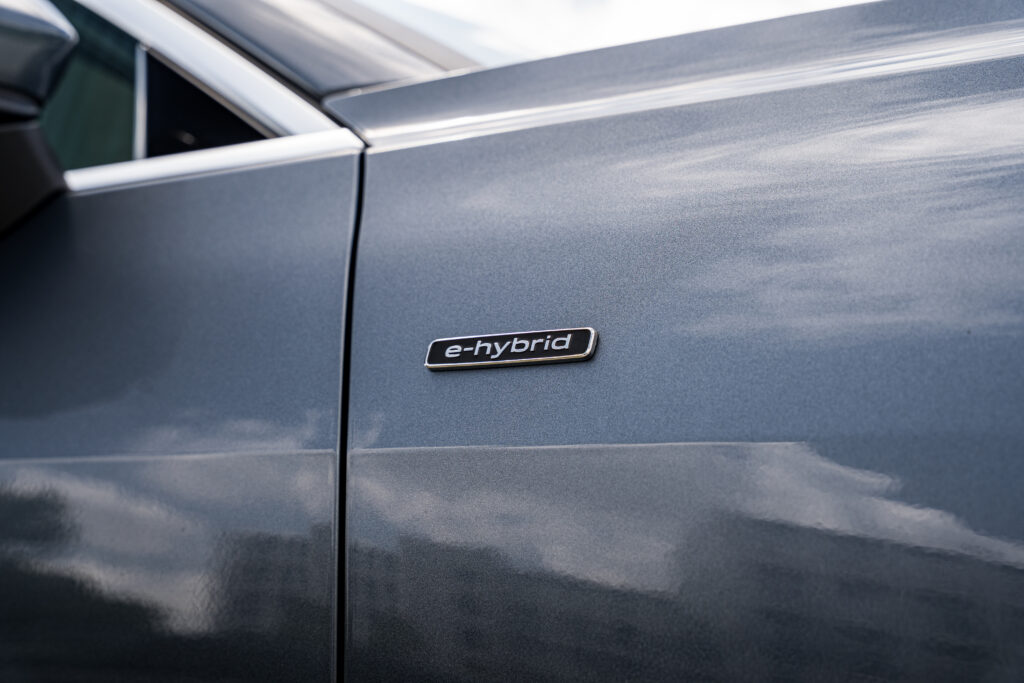
The A5 range is now much broader than it was at launch. Alongside petrol and diesel versions, Audi offers two plug-in hybrid variants producing 220 kW (299 hp) and 270 kW (367 hp).
And unlike what could still be written only a few months ago, the RS 5 is no longer “coming soon”. It has joined the A5 family and now represents the performance flagship.
Our 299 hp version combines a 2.0 TFSI four-cylinder engine producing 252 hp with an electric motor rated at 105 kW. Together, they deliver 299 hp and 450 Nm of torque, sent through a seven-speed S tronic transmission and quattro all-wheel drive.
The battery offers 25.9 kWh gross and 20.7 kWh usable capacity, a significant increase over the previous generation. Depending on specification, Audi quotes around 95 to 108 km of WLTP electric range.
Charging is AC-only at up to 11 kW, with a full charge taking roughly 2 hours and 30 minutes. There is no DC fast charging, which clearly shows that the A5 e-Hybrid is primarily designed to be plugged in at home or at work.
Performance remains more than sufficient: 0 to 100 km/h in 5.9 seconds and a top speed of 250 km/h, while full-electric driving is possible at speeds of up to 140 km/h.
Electric driving suits it particularly well
It is probably in silence that the A5 makes its best first impression. At start-up, the car prioritises EV mode, and the smoothness of electric driving perfectly matches its premium positioning. In town or in Belgian traffic jams, the absence of vibration and mechanical noise gives the A5 a noticeably more refined character.
When the 2.0 TFSI joins in, the transition is impressively discreet. Audi has clearly worked on integrating both power sources, and after a while we stopped thinking about which engine was doing the work.
Hybrid mode can also manage battery usage according to the route and navigation data, preserving electric energy for sections where it makes the most sense.
The steering-wheel paddles allow different levels of regenerative braking to be selected. On gently undulating roads or when approaching towns, it quickly becomes natural to use regeneration rather than relying on the brake pedal. Energy recovery can reach up to 88 kW.
With 299 hp and quattro all-wheel drive, performance never feels lacking. The 367 hp model is obviously quicker, but this version already has more than enough power for motorway joining, overtaking and faster cross-country driving.
What impressed us more was the balance of the chassis. The steering is precise, the car feels reassuring and the quattro system gives real confidence when Belgian roads become wet or slippery. It is not a sports car, and its weight of more than two tonnes becomes noticeable when pushing harder, but it never feels clumsy.
A plug-in hybrid that simply needs to be used like one
This Audi makes the most sense when it can be charged regularly. With official electric range approaching 100 km, many everyday journeys can theoretically be completed without starting the petrol engine at all.
Once the battery is empty, however, the equation changes. You are still moving more than two tonnes, now relying much more heavily on the four-cylinder petrol engine, and fuel consumption naturally rises.
That is ultimately the logic of this car. If you have access to charging at home or at work and plug it in frequently, the A5 Avant e-Hybrid becomes a remarkably coherent daily companion: silent in town, comfortable on the motorway and still capable of travelling long distances without having to plan charging stops.
If you rarely plug it in, however, you are essentially carrying a large battery while benefiting from only part of what the drivetrain was designed to deliver.
The Audi estate has changed, but its philosophy remains familiar
The Audi A5 Avant e-Hybrid 299 hp is not the kind of car that tries to win you over within the first five minutes. It becomes more convincing with time.
We appreciated its quietness in the morning, its comfort on the motorway, the smoothness of the hybrid system and that typically Audi feeling of doing everything seriously without making unnecessary noise about it.
It is not without contradictions. It is larger than the A4 it replaces, yet its plug-in hybrid luggage compartment is smaller. Its electric range is genuinely useful, but only if you accept the discipline of regular charging. And its 299 hp already feels more than sufficient even though the 367 hp model and the new RS 5 sit further up the range.
It may not be the A5 that enthusiasts dream about first, but in real life, between Brussels traffic, professional journeys, motorway kilometres and weekend escapes, it might be one of the easiest versions to understand.
The positives
- Very smooth hybrid system
- Up to around 108 km of WLTP electric range
- 299 hp is more than enough for daily use
- Reassuring quattro all-wheel drive
- Excellent overall comfort
The negatives
- Boot limited to 361 litres
- Weight exceeds two tonnes
- No DC fast charging
- Much less relevant without regular charging
Photo credits: © Stefan Caliman / GUS Magazine. All rights reserved.