Asphalt Pâté, Knotweed Cocktails & Floating Futures: When Design Dares to Repair
 Frederick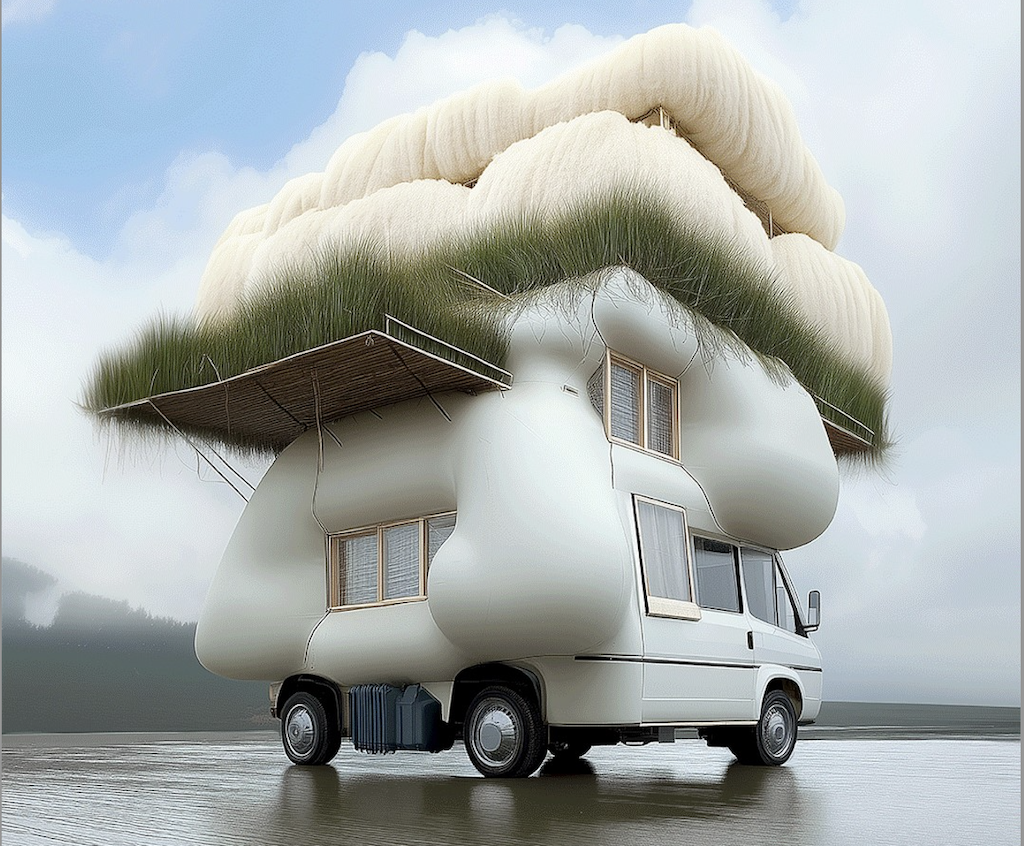
What does it mean to live well in an age where cities suffocate under asphalt, seas rise, and borders blur? At the Grand-Hornu in Belgium, two exhibitions are offering answers that are as poetic as they are radical. Repairing the World and Woven Whispers are not just about design objects — they’re about reimagining the very fabric of our lives.

Take asphalt. For most of us, it’s the stuff beneath our sneakers or our Maserati wheels. Disposable, invisible. Yet in Plumage, a collective of Belgian creatives proposes asphalt pâté — edible, provocative, a reminder that even the most banal material can be precious, sensual, even nourishing. It’s a dare: to taste the city, to consume what we once thought inert.


Or consider the villain of urban gardening: Japanese knotweed. Long despised as invasive, it becomes the hero in The Last Plant on Earth. Here, knotweed is transformed into bricks, medicine, and even a restorative drink. What was once an intruder becomes a symbol of resilience — an elegant inversion that feels strangely aligned with the modern man’s search for reinvention.

Then there’s Wandering Utopias: a floating home crafted from recycled beer kegs and discarded plastics. It’s part architecture, part manifesto — a vision for nomadic living in a future where rising seas demand mobility, creativity, and yes, a sense of play. Imagine a home that sails not away from disaster but toward possibility.


And woven between these radical architectures, the Woven Whispers textile exhibition hums with quieter, tactile seductions: rugs of recycled sheathing, lamps spun from natural gut, fabrics dyed with carotene. Belgian design, long understated, here reveals its talent for making sustainability feel sensual, almost decadent.

What unites these projects is not just ecological urgency but a shift in desire. Luxury, today, is no longer about abundance — it’s about intention. A rug can be a manifesto. A plant, a philosophy. A home, a hypothesis.
For the curious, worldly spirit, this is not simply design but a way of living — a compass toward futures where resilience feels like luxury, reinvention becomes desire, and repair is the ultimate seduction. Asphalt transforms into a delicacy. Knotweed into an ally. Waste into architecture.

And maybe that’s the point. To live beautifully today is not to escape the cracks in the world — but to stitch them, taste them, and sometimes even float upon them.
If You Go:
Repairing the World : 28.09.25 – 16.11.25
Woven Whispers : 28.09.25 – 14.12.25
CID – Centre d’Innovation et de Design
Site du Grand-Hornu
Rue Sainte-Louise 82, B-7301 Hornu, Belgium
Open daily 10:00–18:00 (closed Mondays).
Combined ticket for Grand-Hornu site / CID / MACS: €10 (discounts available). Free entry on the first Sunday of each month.
Make it a day: book a table at Rizom, the on-site restaurant by Olivier Devriendt (former second-in-command to Michelin-starred chef Sang Hoon Degeimbre). Expect global influences, Belgian terroir, and a menu that, like the exhibitions, thrives on reinvention.
More info: www.cid-grand-hornu.be