
Test drive – Nissan Micra (2025) : The Renault 5’s Japanese cousin steps into the spotlight
 Jean-Pierre Ndu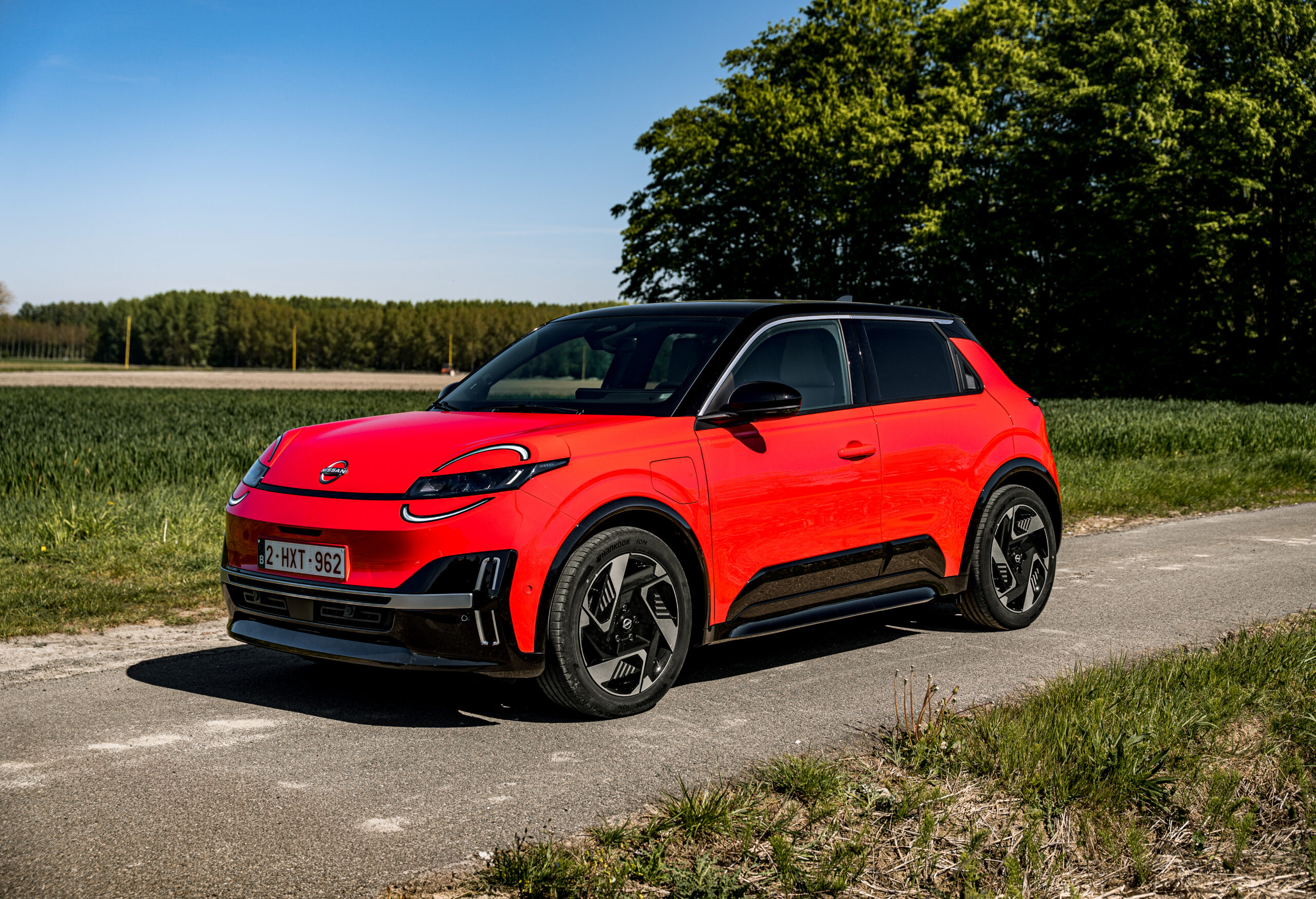
The Nissan Micra has been a staple of European roads since 1983. Over six generations and more than 7.2 million units sold, it has always managed to stay relevant. This sixth chapter, however, marks the biggest leap of its history: the Micra goes fully electric, and to do so, it borrows its foundations directly from the Renault 5 E-Tech, the 2025 Car of the Year.
Round where the R5 is sharp
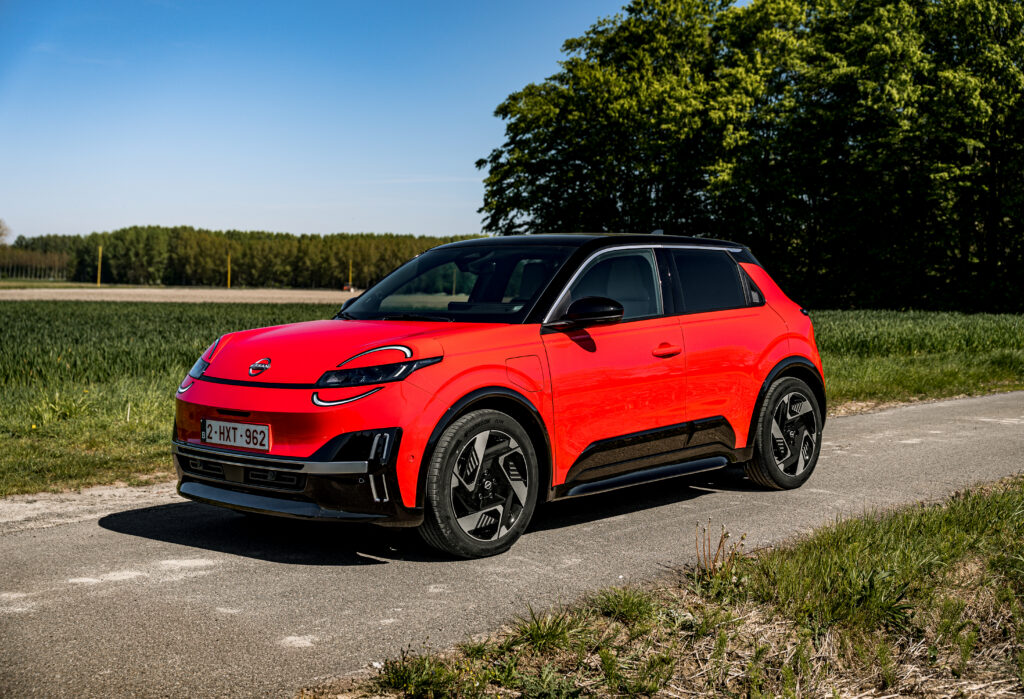
At 3.98 metres long, the Micra is 5 centimetres longer than the Renault 5. That extra length comes from extended bumpers rather than a stretched body, so the interior dimensions remain essentially the same. What Nissan’s European design studio did manage, though, is a genuinely distinct silhouette.
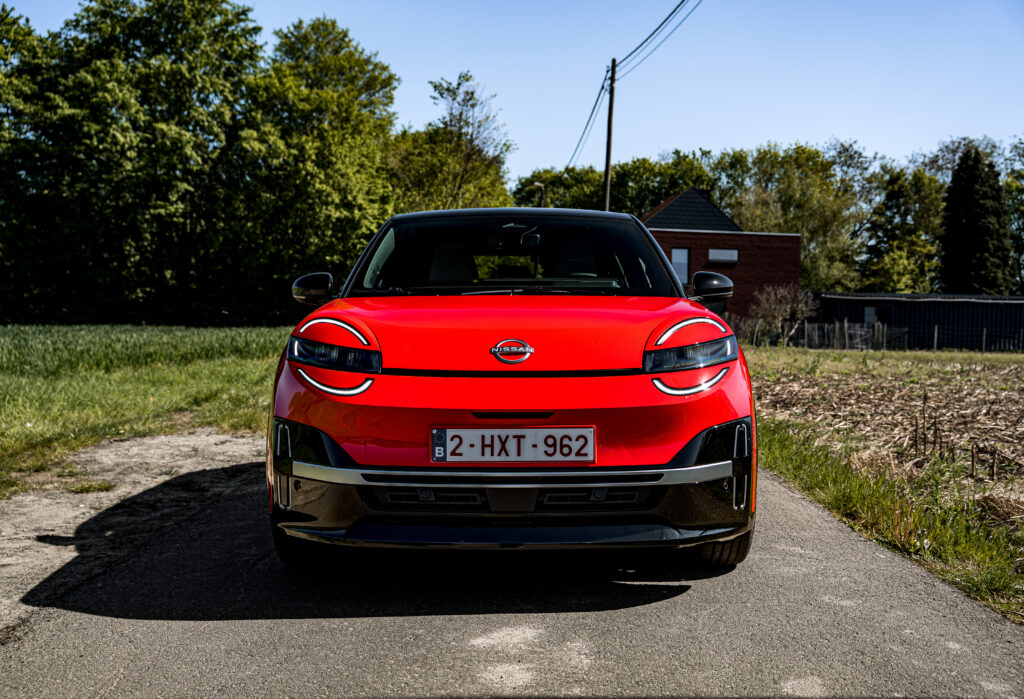
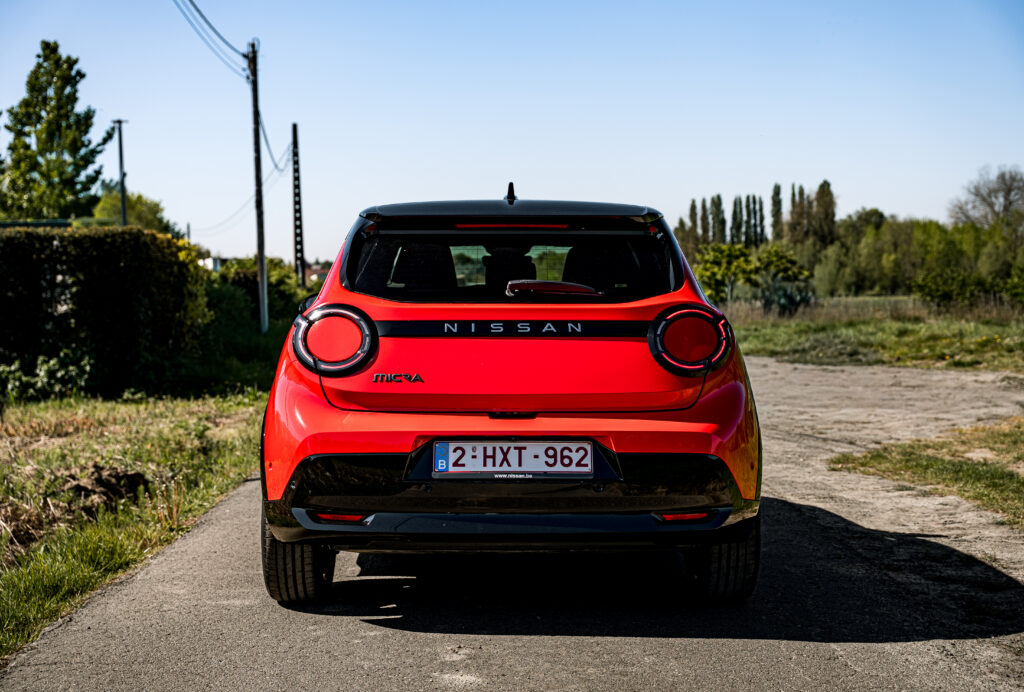
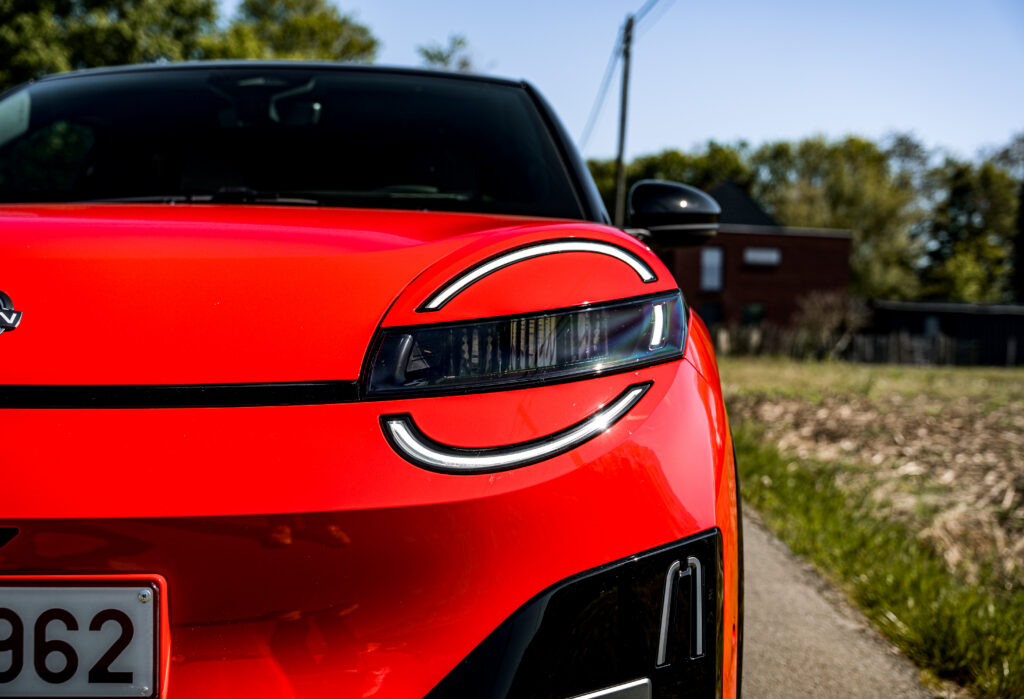
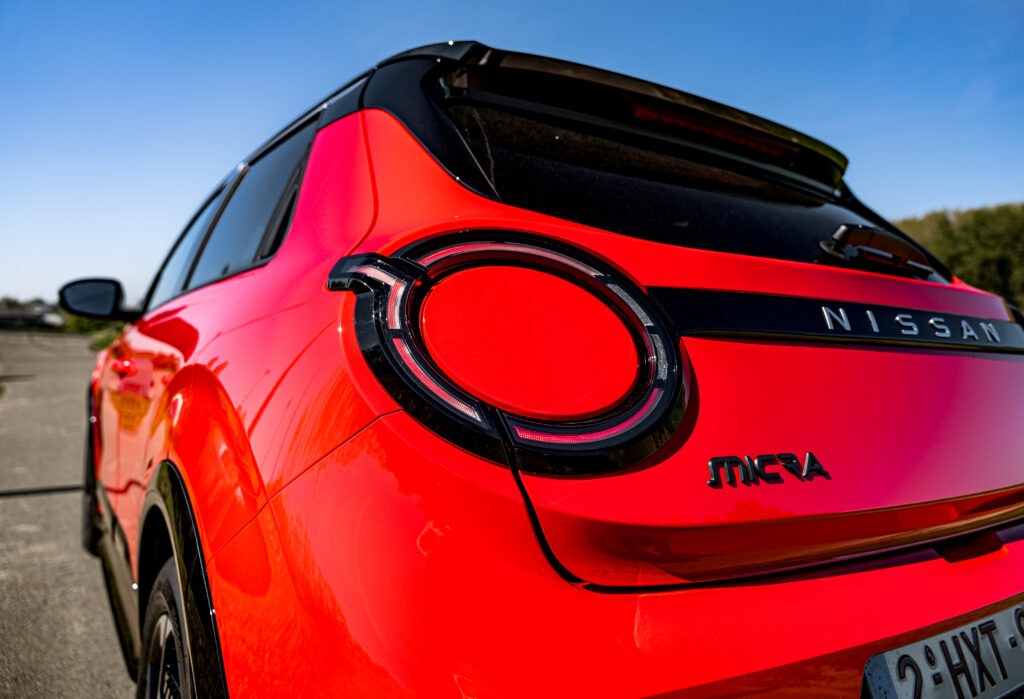
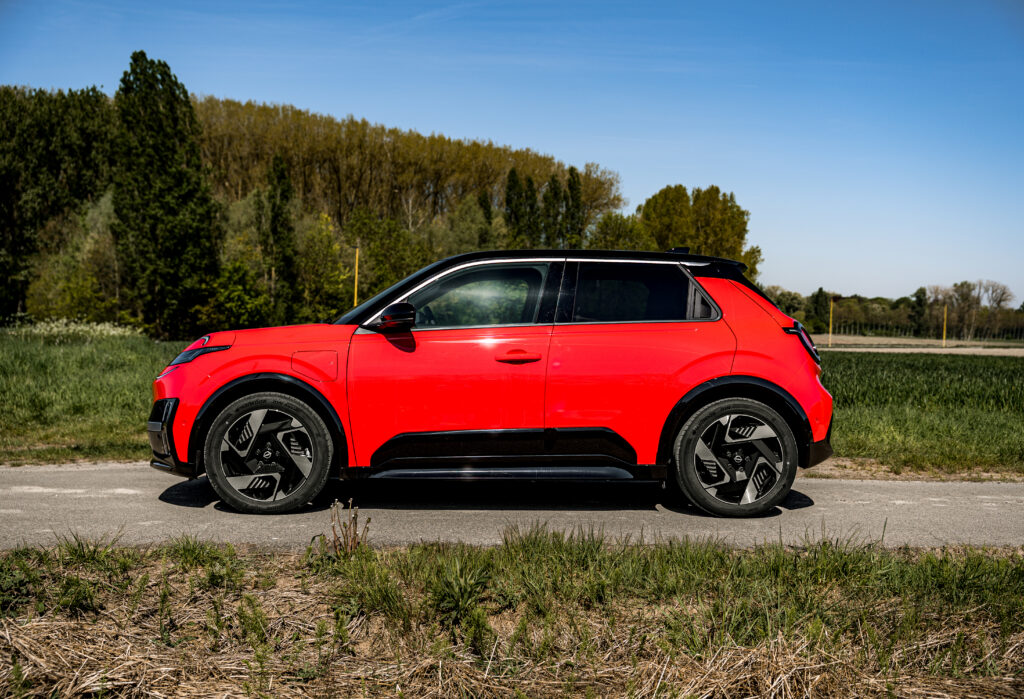
Where the R5 leans on angular, retro-inspired shapes, the Micra goes soft and round. The circular headlight signature is the centrepiece of the front end, giving it a friendly, almost playful expression. The rear mirrors the same visual language, with curved tail lights that frame the hatch elegantly.
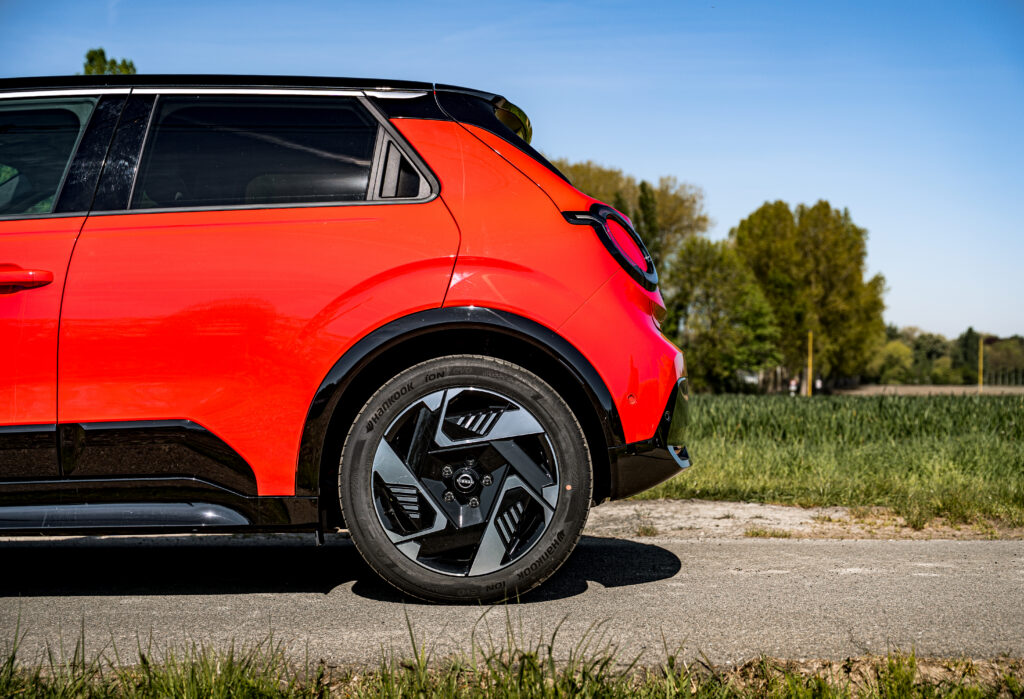
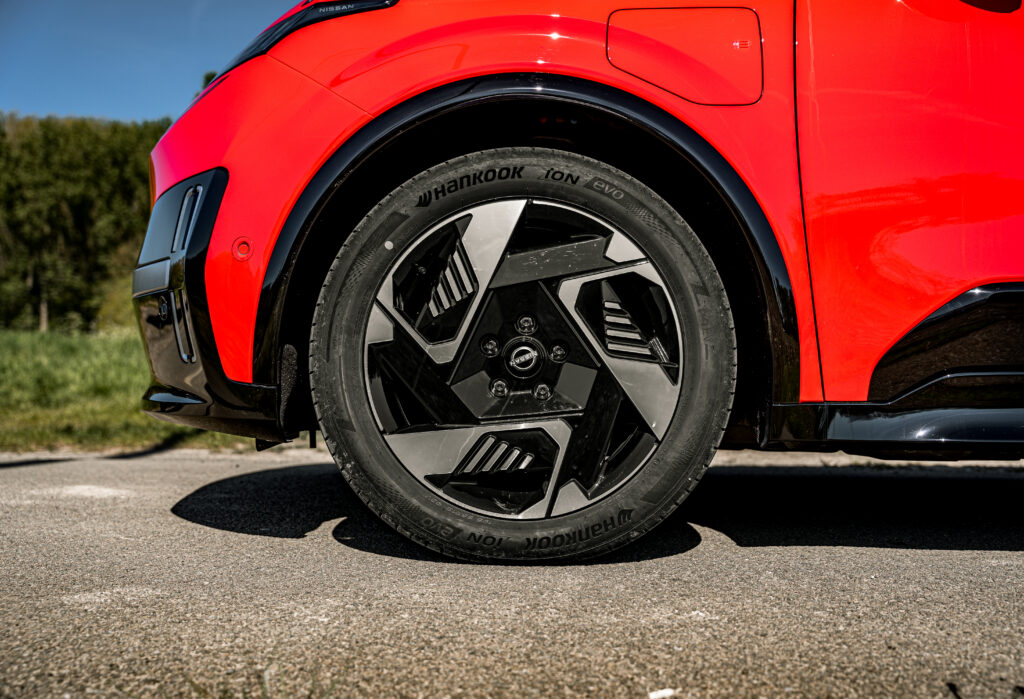
Along the sides, a concave body crease runs from the rear lights to the front doors, adding a touch of tension to what is otherwise a deliberately gentle shape. Fourteen colour combinations are available, including options with a silver or black roof. The 18-inch alloy wheels come fitted as standard across most trims, which is generous for the segment.
Inside, the R5 DNA is hard to hide
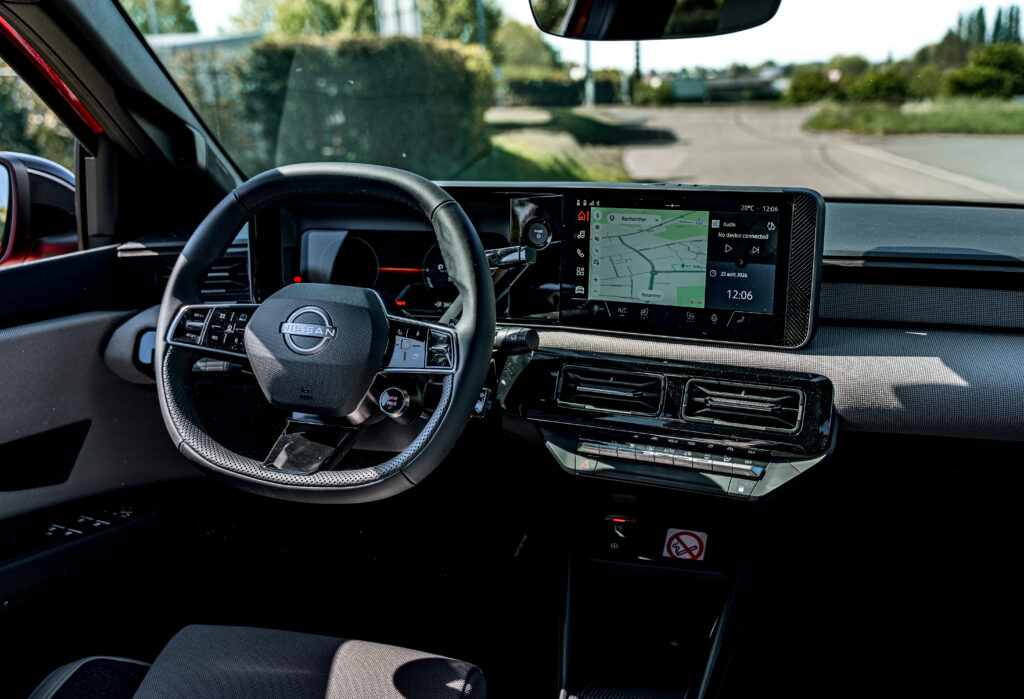
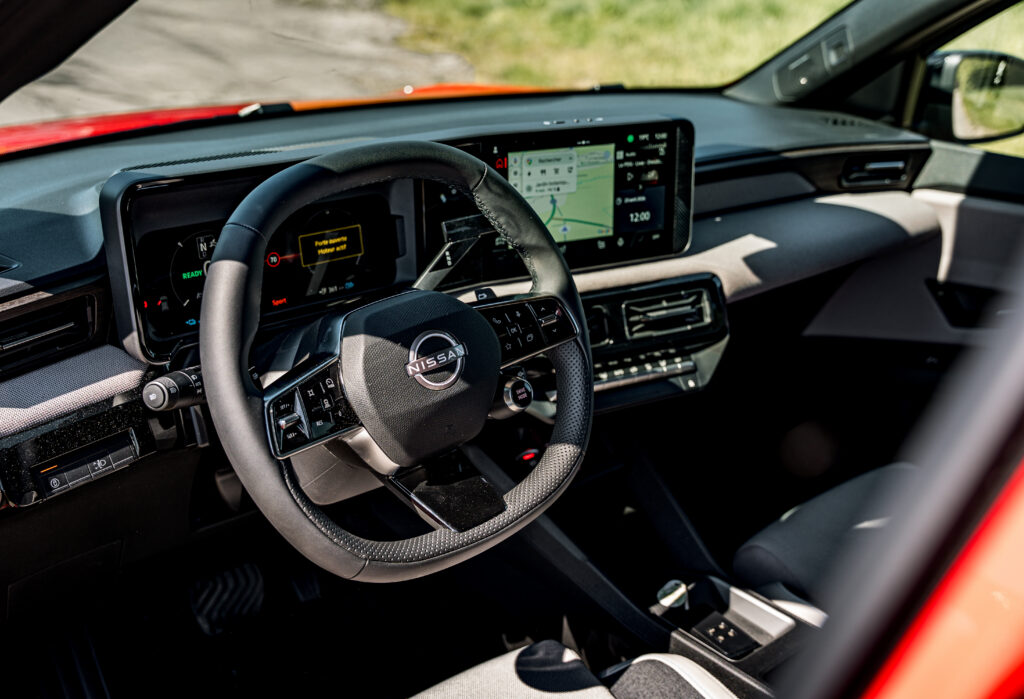
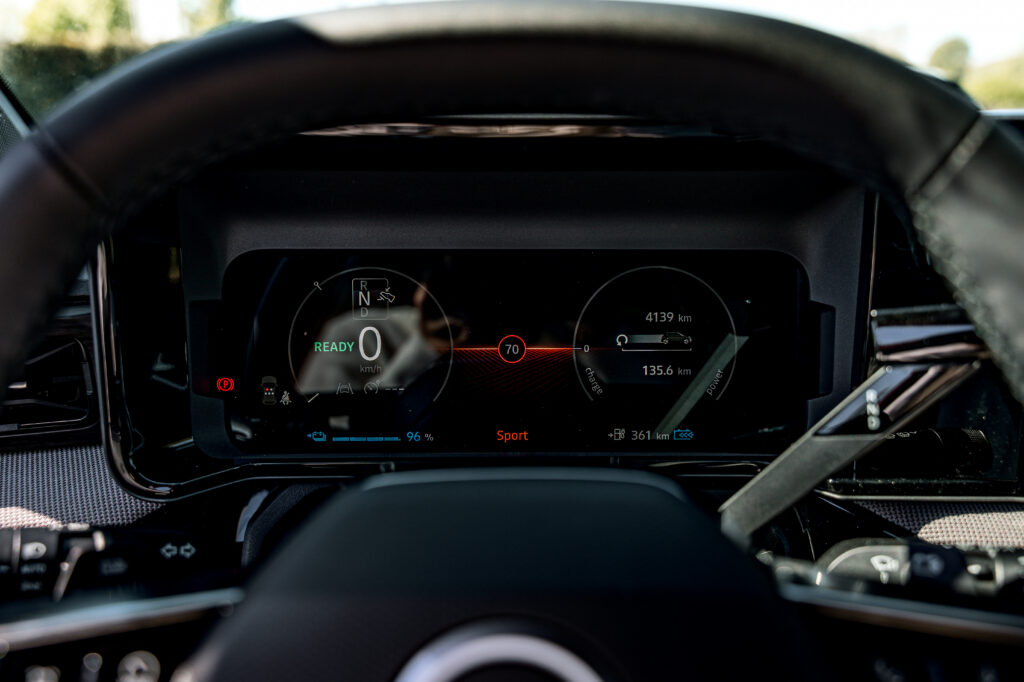
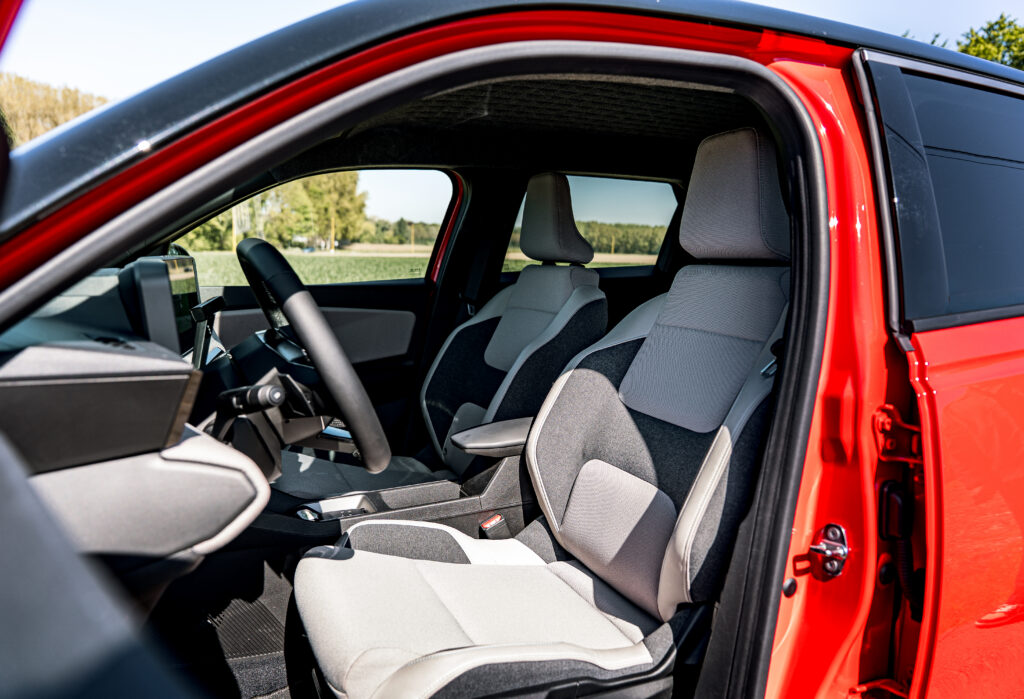
Step inside and the shared origins become immediately obvious. The dashboard layout is essentially identical to the Renault 5, with two 10.1-inch screens placed side by side: a customisable digital instrument cluster and a central touchscreen running Google’s Android Automotive system. The interface is intuitive, responsive, and well structured, with Google Maps, voice assistant, and the Play Store all built in natively.
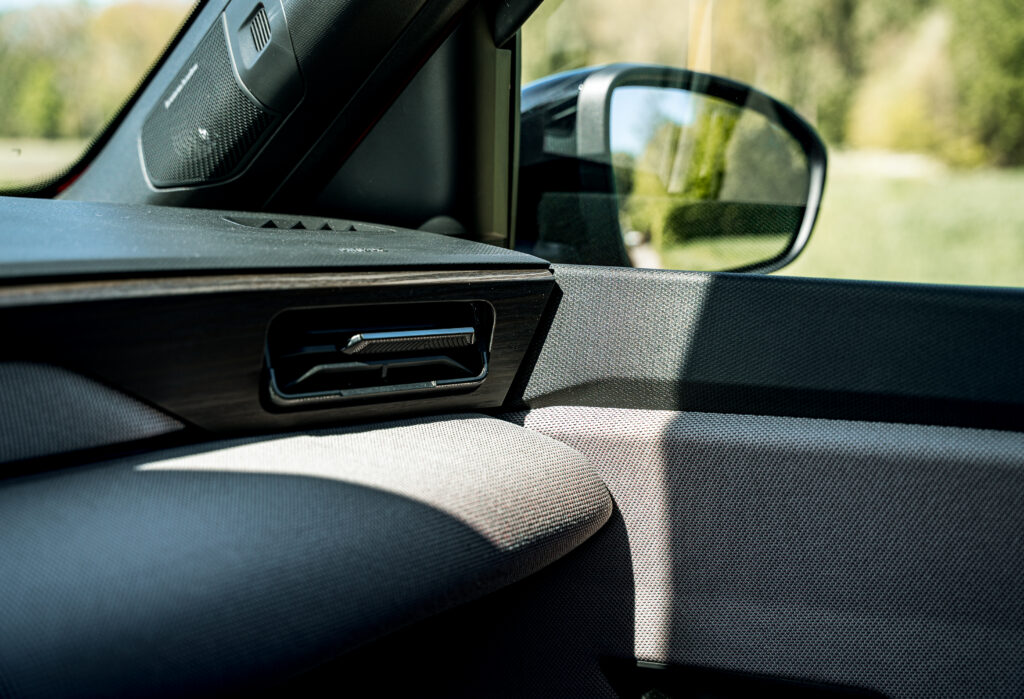
Nissan does add its own touches. The Evolve trim gets a white and blue faux-leather finish on both the seats and part of the dashboard, which gives the cabin a noticeably more premium feel. The decorative patterns on the dials and a few Fuji-inspired logos are the main visual differentiators. Soft-touch materials feature on the front doors and dashboard, though hard plastics remain more present at the rear.
Ergonomics are clean and generally well thought out. There is a proper glove box, a central armrest, an inductive charging pad (though it can be unreliable), and ambient lighting with 48 colour options. Rear space is the weak point: with no extra wheelbase versus the R5, knee room remains tight for adults on longer journeys.
The boot offers 326 litres, which is a solid figure for the class, extending to 1,100 litres with the rear seats folded. The load sill sits fairly high, and the folded floor creates a slight step rather than a flat surface.
Two batteries, one clear favourite
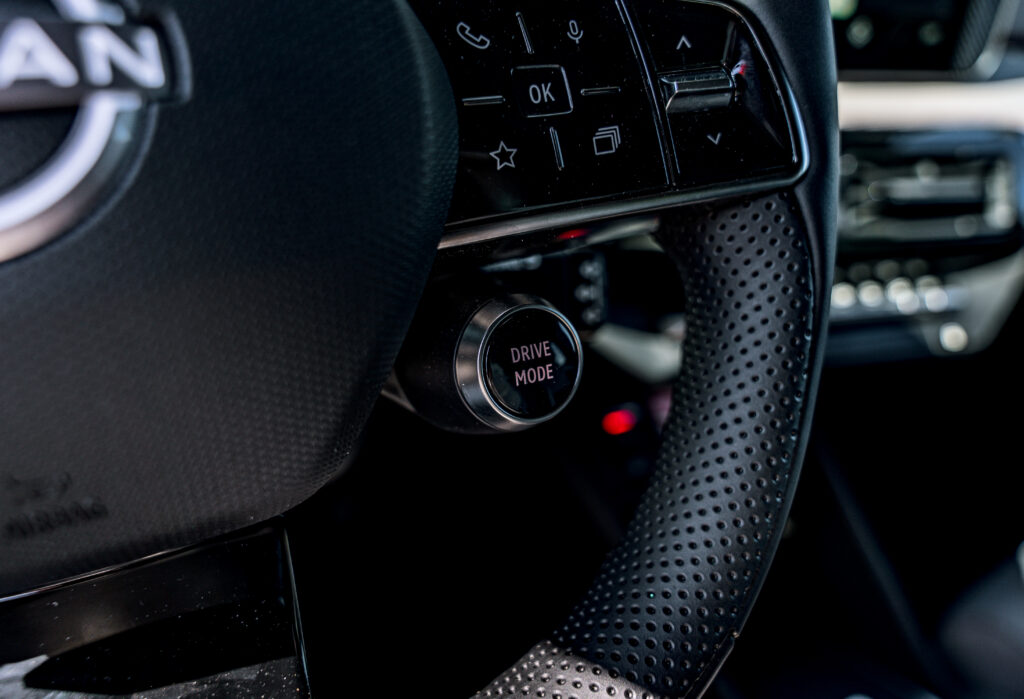
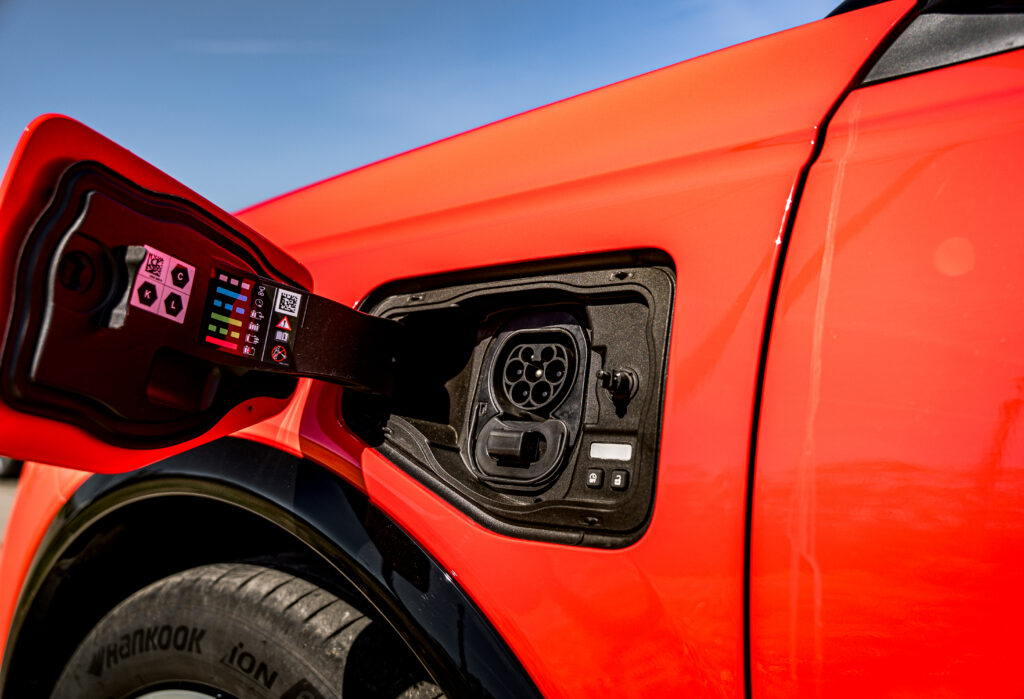
The 2025 Micra is available exclusively as a fully electric vehicle, in two configurations. Both come with a heat pump as standard, V2L and V2G capability, and paddle shifters for adjusting regenerative braking intensity, including a one-pedal driving mode.
The entry-level version pairs a 40 kWh battery with a 120 hp (90 kW) motor producing 245 Nm of torque. Its WLTP range sits at 317 km, with real-world figures closer to 260-280 km in mixed use. It accepts up to 80 kW DC fast charging, reaching 15 to 80% in around 30 minutes.
The version we tested combines a 52 kWh battery with a 150 hp (110 kW) motor, again with 245 Nm on tap. WLTP range climbs to 416 km, and in practice you can expect between 340 and 380 km depending on conditions and temperature. It charges at up to 100 kW DC, matching the same 30-minute window for 15 to 80%. AC charging runs at 11 kW via a wallbox.
On the road, the Micra flatters its driver
This is where the shared R5 platform really pays off. The Micra inherits a rear multi-link suspension setup that gives it a composed, well-balanced feel on twisty roads. The steering is direct and well-weighted, the body control is tidy, and the overall dynamic character is a step above what you might expect from a city car.
The 150 hp motor delivers its 245 Nm of torque with satisfying immediacy. Overtakes are effortless, and the car feels genuinely lively in urban traffic. The paddle shifters allow you to select three levels of regenerative braking, and the one-pedal mode is smooth enough for daily use, though it can feel abrupt at very low speeds.
Ride comfort leans slightly firmer than the R5, which some will appreciate and others may find tiring over longer distances. The rear axle can feel stiff over sharp road defects. Noise insulation is decent in town but wind noise starts to creep in above 110 km/h, and tyre roar is audible on coarser surfaces.
In terms of real-world consumption, our test unit returned around 14.2 to 14.7 kWh per 100 km in mixed conditions, translating to a realistic range of 370 to 400 km with the 52 kWh battery. On motorway at 130 km/h, that figure drops to around 200 km. Driver assistance systems are complete and well calibrated: the adaptive cruise control and lane-keeping assistance work reliably, and a dedicated button at each startup lets you quickly dismiss the more intrusive alerts.
Our verdict
The new Nissan Micra does exactly what it sets out to do : take a proven, class-leading technical base and dress it in a distinct identity. The rounded design, the personalised cabin details, and the paddle shifters all help the Micra feel like its own car rather than a rebadged Renault. And given that the R5 is one of the best city cars on sale today, borrowing its underpinnings was a genuinely sound decision.
The weak points are real, though. Rear passenger space remains limited, the practical shortcomings of the boot are frustrating, and the Micra consistently sits slightly above the R5 in price for equivalent equipment. If you already love the Renault, the Micra is unlikely to tempt you away. But if its rounder, more playful look appeals, you will find the driving experience more than lives up to the visual promise.
The pros
- Distinctive, playful exterior design
- Dynamic and composed driving experience
- Efficient real-world range (370-400 km, 52 kWh)
- Paddle shifters and one-pedal mode included
The cons
- Rear legroom is tight for adults
- Wind and road noise above 110 km/h
- Interior heavily shared with the Renault 5





%20:%20The%20Renault%205’s%20Japanese%20cousin%20steps%20into%20the%20spotlight&media=https://gus.world/wp-content/uploads/2026/05/DSC8143-scaled.jpg)