Test drive – DS N°8 : French luxury paired with impressive range
 Jean-Pierre Ndu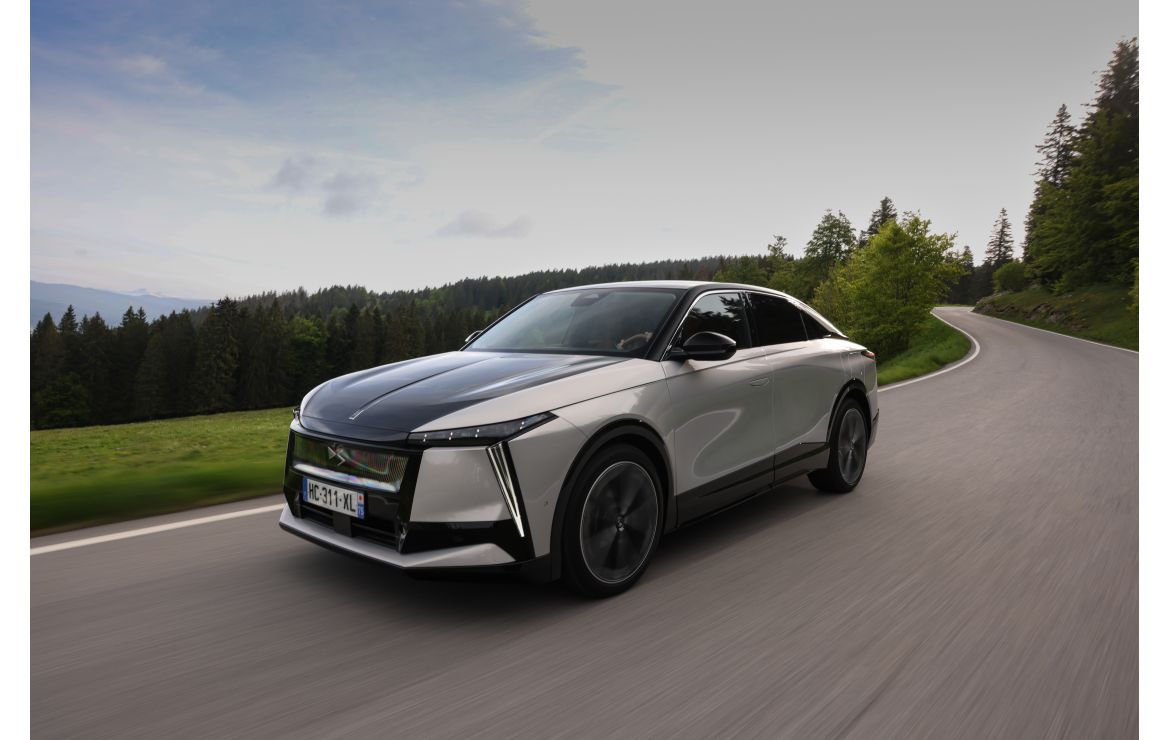
An electric DS announced with up to 750 km of range, and now serving as France’s new institutional flagship; it naturally raises curiosity. Over the course of a week, we wanted to answer one simple question: does the DS N°8 turn this promise into real everyday peace of mind, or is it just a headline figure designed to shine in a brochure?
Dimensions and exterior design
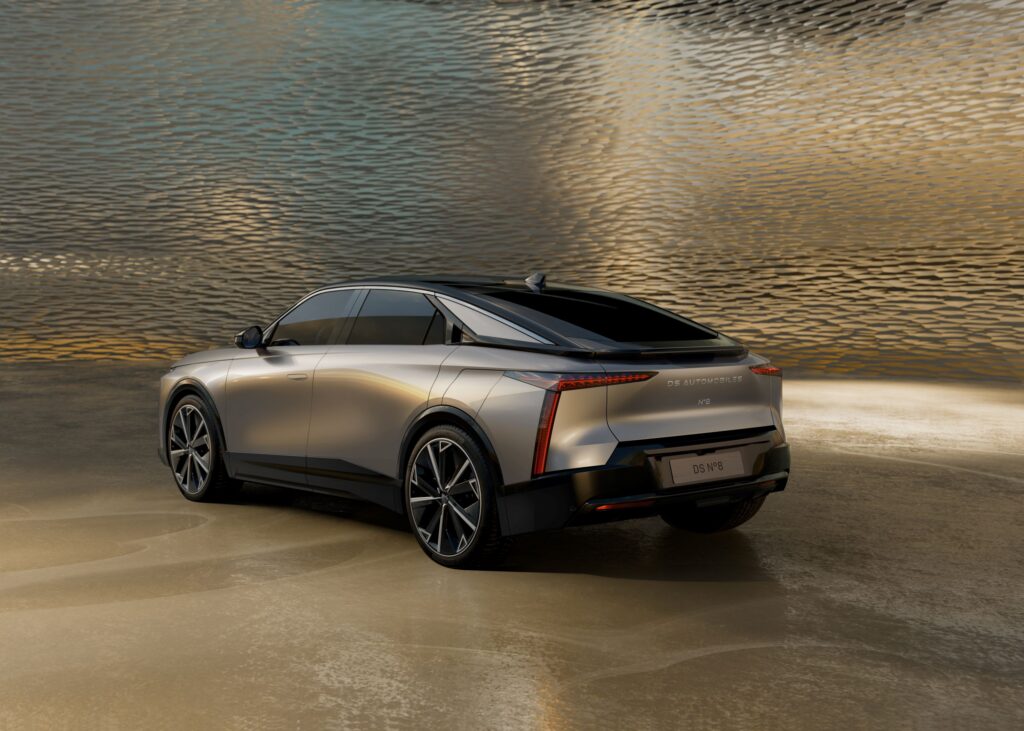
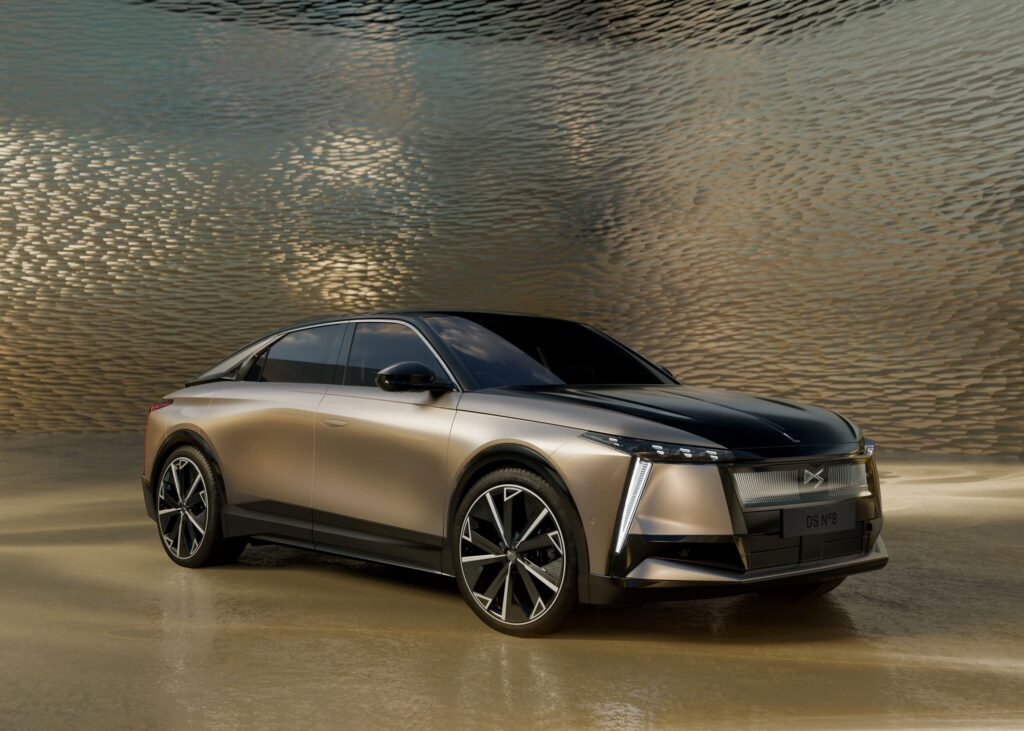
As soon as it comes into view, the N°8 does not aim for discretion. At 4.82 metres long, it has the stature of a proper long-distance cruiser, yet its design blurs the lines; somewhere between a raised saloon and a lowered SUV coupé. In traffic, it stands out as much for its size as for its sculpted profile, with relatively narrow glass surfaces and a roofline that stretches far towards the rear.
What really stands out is how strongly form seems dictated by efficiency. There is a clear obsession with airflow; smoothed body panels, details that feel technical without being overt, and highly graphic light signatures that also shape the car’s identity.
Interior design and ergonomics
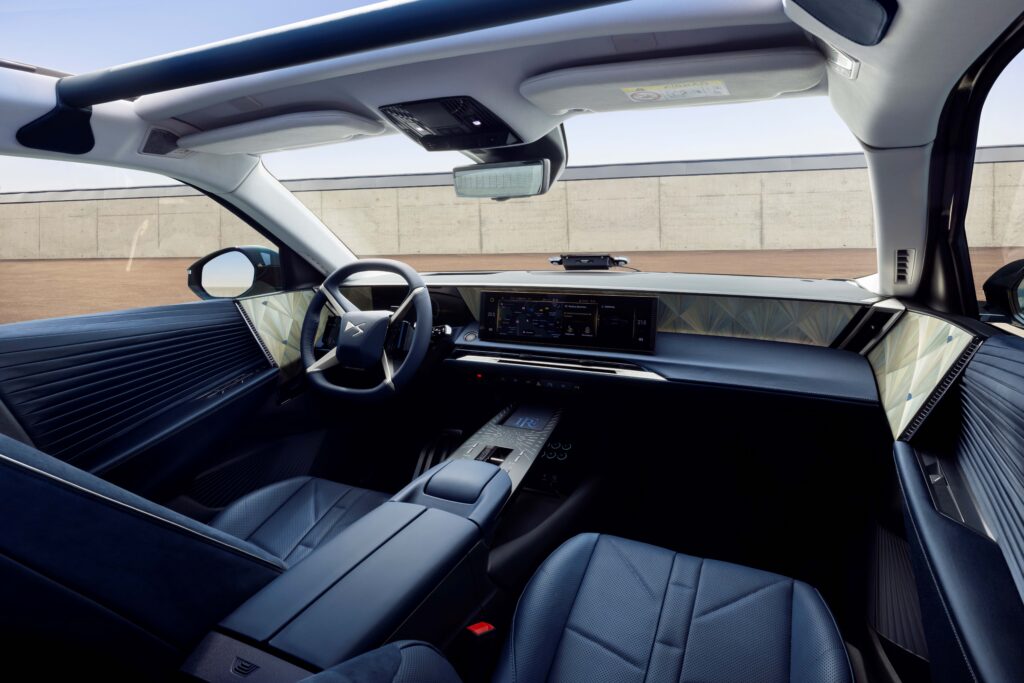
Inside, the DS DNA is immediately recognisable. The atmosphere aims to be different, almost like a mobile lounge, with careful work on materials, textures, and ambient lighting. The very horizontal dashboard and the large 16-inch central screen create a clean, almost stately feel, and we appreciate that the layout is not just visually striking but genuinely logical to live with.
There is, however, a blend of worlds. Some areas feel truly premium, while others more clearly reveal the car’s group origins, particularly in the lower sections and a few shared controls. In real life, this does not spoil the experience, but it slightly breaks the illusion when you are looking for excellence everywhere.
In terms of space, the front seats are clearly prioritised. You settle in easily, and the atmosphere invites long journeys. In the rear, the trade-offs become more apparent; the sloping roof and high floor limit comfort, and it is clear this is not a car designed to carry adults in limousine-like conditions. The boot, on the other hand, is generous; up to 620 litres in front-wheel-drive form and 580 litres with all-wheel drive, though there is no front trunk.
Powertrains, range and charging
The lineup is easy to understand; fully electric, with three clear approaches. A front-wheel-drive “Standard Range” version with around 73 kWh usable, for a WLTP range of roughly 550 km; a front-wheel-drive “Long Range” version with 97.2 kWh, aiming for the headline figure of 750 km WLTP; and a Dual Motor all-wheel-drive version producing 350 hp, retaining the large battery but dropping to around 688 km WLTP due to the second motor.
On the road, performance feels well aligned with the car’s positioning. The Long Range front-wheel-drive version accelerates from 0 to 100 km/h in around 7.8 seconds; the Dual Motor drops to roughly 5.4 seconds; and in all cases top speed is limited to 190 km/h. But the real story is, of course, range. You can feel that the N°8 was designed for travelling, not just for short trips with a premium badge.
Charging is solid rather than groundbreaking. On fast chargers, official figures point to 20 to 80 percent in around 31 minutes with the smaller battery and 27 minutes with the larger one. Maximum charging power is quoted at around 160 kW; effective, but it also explains why some newer 800-volt rivals perform better on charging times alone.
Driving experience
We expected a car focused mainly on comfort; we got comfort, but not only that. The DS N°8 is surprisingly composed in its responses, especially when the road tightens. In Dual Motor form, it even feels almost unshakeable; strong traction out of corners, confident acceleration, and a very neutral overall balance. In front-wheel-drive guise, the character is softer and less incisive, but still entirely suited to the car’s intended use; what you lose is mainly that extra layer of precision at a brisk pace.
On long journeys, it clearly comes into its own. Good sound insulation, comfortable seating, and a calming atmosphere make it easy to cover distance without fatigue. Two points did stand out during the week, though. First, the relatively high driving position, which may surprise those expecting a more traditional low-slung saloon feel. Second, the braking feel; the transition between regenerative braking and the mechanical brakes is not always as natural as expected for a car of this calibre, even if the one-pedal mode works well in principle.
In terms of consumption, we observed two distinct faces. When driven hard on demanding roads, average consumption can climb significantly, to around 23 kWh per 100 km; in calmer, more regular driving, it can drop to around 14 kWh per 100 km. On the motorway at 120 km/h, we saw figures close to 20 kWh per 100 km; which puts things into perspective. The 750 km promise is achievable, but it will clearly depend on conditions and driving style.
Conclusion
The DS N°8 is not just “the French electric car that claims 750 km”. It is, above all, a modern long-distance cruiser; shaped by aerodynamics, equipped with a large battery, defined by a carefully crafted interior atmosphere, and genuinely capable of covering long distances with ease.
+
- Very ambitious range in Long Range form, with a genuine sense of effortless travel
- Comfort and silence that encourage long journeys
- Generous boot, in keeping with its grand touring ambitions
–
- Rear-seat space limited for the car’s overall size
- Fast charging that is effective but not a benchmark against the latest architectures
- Brake pedal feel that still lacks a bit of finesse